Beirut protests erupt as Lebanon-Israel deal draws street opposition
Lebanese security forces clashed with protesters in Beirut on 26 June 2026 after a US-brokered agreement between Beirut and Tel Aviv was announced, with demonstrations converging on the prime minister's office.
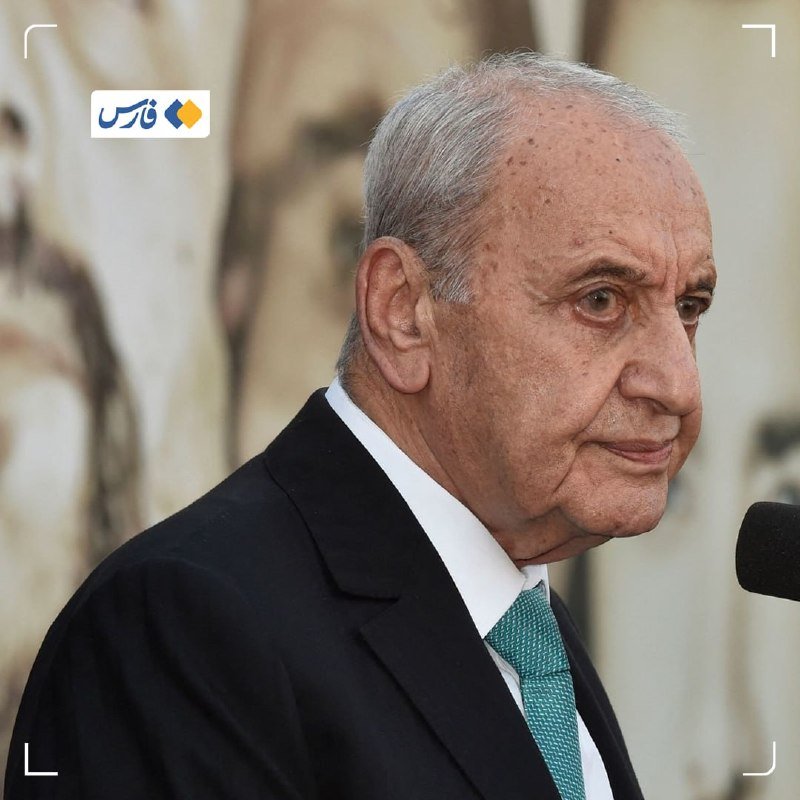
Demonstrators filled central Beirut on the evening of 26 June 2026, marching toward the prime minister's office hours after a US-brokered agreement between the Lebanese government and Israel was announced. Iranian state-aligned outlets PressTV and Tasnim, along with Fars News, carried footage of crowds moving through the capital and clashing with Lebanese security forces deployed around the government quarter. The outlets reported army and internal security units moving against protesters, with some videos purporting to show security personnel striking demonstrators near barricades.
The protests mark the first sustained street challenge to a deal whose contours have yet to be disclosed publicly, and they reveal how a diplomatic process conducted between two governments can detonate politically inside the country that has to live with its terms.
What is being signed
Iranian state media described the package as an "initial agreement" between the Lebanese government and Israel, brokered by the United States. PressTV frames it as a deal whose terms Beirut signed under external pressure, while Fars News treated the protests as a direct response to that signature. The agreement itself remains largely undescribed in publicly available reporting — neither the text nor the specific commitments on either side have been released for independent verification by the time these demonstrations began.
This matters. A Lebanon-Israel understanding that touches on border demarcation, security coordination, or the disarmament of non-state actors would each carry very different political costs inside Lebanon. Without the text, every claim about what was conceded is a claim about a document the public has not seen.
The street response
The protest geography is consistent across the Iranian-aligned feeds: crowds moved from gathering points in central Beirut toward the prime minister's palace, where Lebanese security forces had erected barriers. PressTV, citing on-the-ground footage from its PressTVFootage account, described demonstrators reaching the vicinity of the palace before security units moved in. Tasnim used the more pointed language of "brutal suppression" to characterise the security response. Fars News emphasised the youth composition of the march and the movement toward the prime minister's office.
The framing across these outlets is openly adversarial toward the Lebanese state — they cast the security forces as the instrument of a government that has betrayed its constituency by signing the deal. That is the line an Iranian-aligned information environment would be expected to push, and it does so without hedging. Lebanese state media was not represented in the thread items this article draws on, which is itself a meaningful gap: the government's account of what happened on the ground, and the security forces' account, are absent from the inputs.
The information environment
What is striking about the reporting of this event is not the protests themselves — Lebanon has a long, well-documented history of mass mobilisation against perceived government overreach — but the channel through which the international picture of those protests is currently being filtered. The visible footage is being curated and narrated by outlets that have a structural interest in depicting the Lebanese government as a US-Israeli client and the agreement as an imposition rather than a negotiation.
That does not mean the footage is fabricated. PressTV and Fars have correspondents on the ground, and the protest images are consistent with each other across the three feeds. It means the analytical frame — what the protests mean, who is responsible for the violence, what political trajectory Lebanon is on — is being supplied by actors with a stake in one specific reading. The structural pattern here is familiar: when mainstream Western wire coverage of a Middle Eastern event is thin, the vacuum tends to be filled by state-aligned regional outlets, and the resulting English-language picture carries their editorial priorities whether or not the underlying footage does.
What remains uncertain
Three things are not established by the available reporting. First, the content of the agreement — the publicly available feeds describe its existence and characterise its provenance, but the operative clauses remain opaque. Second, the scale and casualty profile of the security response. The Iranian-aligned outlets describe a violent crackdown; without Lebanese state or independent wire reporting, the number of injuries, arrests, or fatalities is not verifiable from the present source set. Third, the political trajectory inside Lebanon: whether the protests represent a localised reaction or the opening of a sustained challenge to the government's diplomatic posture is a question the next 48 hours will answer rather than the current reporting.
A US-brokered Lebanon-Israel agreement would, on its face, attempt to lock in a period of quiet along a border that has seen regular fire for the better part of two years. If the deal holds, it constrains the operational space of non-state actors on the Lebanese side and gives both governments a jointly policed status quo to defend. If the street opposition builds, the Lebanese government's ability to enforce any commitments it has made will be the first casualty — and the deal will exist on paper while collapsing in practice.
Desk note: This article draws exclusively on Iranian state-aligned feeds (PressTV, Tasnim, Fars) and their Telegram distribution because that is what the underlying thread supplied. Where Monexus would normally triangulate against Reuters, AFP, the Lebanese state press, or independent Beirut-based outlets, that material is not yet available. We have flagged the gap rather than padding the source list with wire URLs we have not verified.
Wire provenance
This editorial synthesis draws on the following public wire/social posts:
- https://t.me/tasnimplus
- https://t.me/presstv
- https://t.me/presstv
- https://t.me/presstv
- https://t.me/farsna
Follow the event.
These dated source records provide context. They do not retrospectively verify this archive article.
Separate what the nuclear watchdog reported from what it could not determine after the June 2025 strikes.