The Bosnia Joke, the Data-Center Map, and the Two Americas of 2026
An on-air confession of ignorance about Bosnia went viral within hours of a separate finding that 38% of Americans now live within five miles of a data center. Read together, the two items sketch a country that builds the future without being able to locate its past on a map.
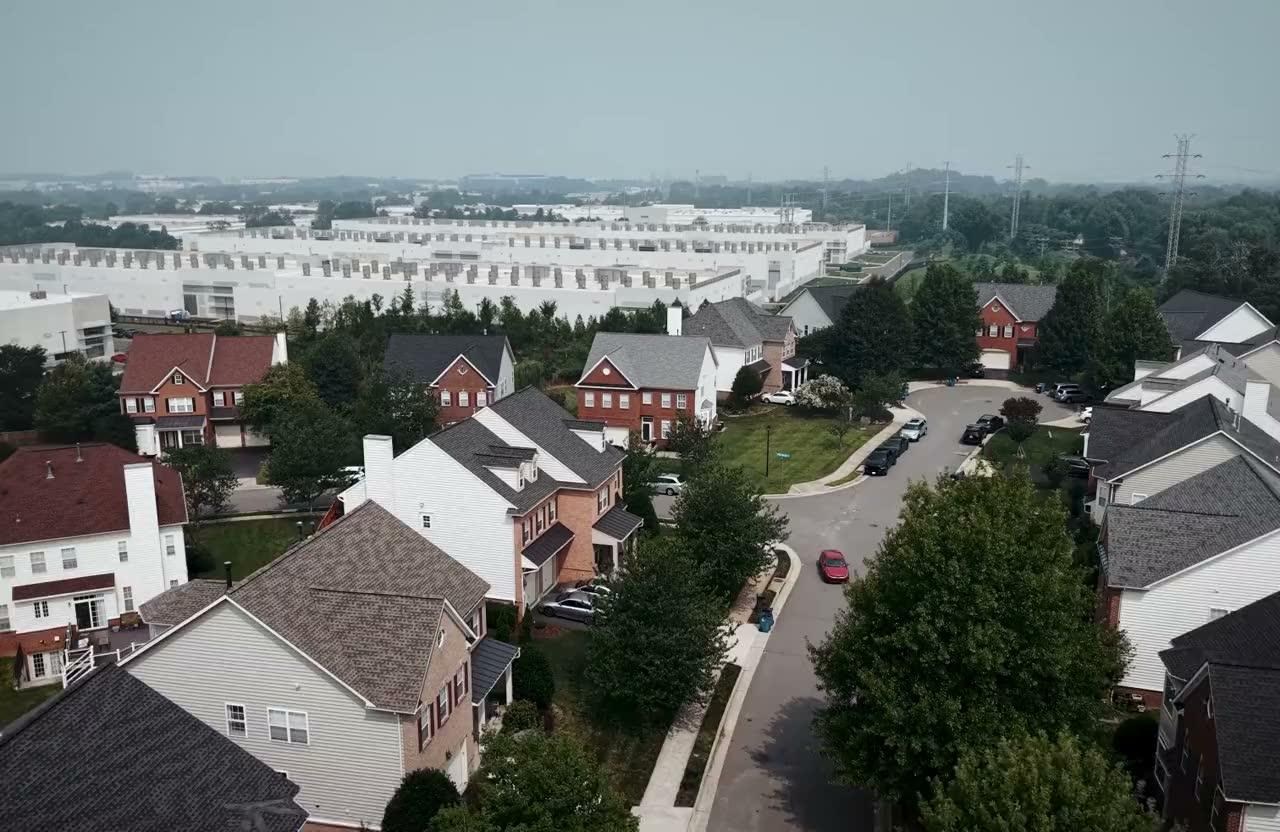
At 17:10 UTC on 27 June 2026, a Telegram channel called DDGeopolitics reposted a short clip from an American network segment in which an ABC reporter told a viewer, with evident pride, that she could not place Bosnia on a map and did not want to learn. Two hours earlier, an account called ClashReport had circulated the same exchange under the headline "ABC reporter brags about not knowing where Bosnia is." Within minutes the clip had migrated to X, where it stacked up against a different, quieter story: a Unusual Whales post citing Pew research that 38% of Americans now live within five miles of a data center. The two items travelled the same news cycle without ever touching. Read together, though, they describe the same country — one that builds the physical future at speed while losing fluency in its own political memory.
The ABC moment is not, on its own, the story. Cable news has always generated a generous supply of geography gaffes. What gives this one a longer half-life is the boast attached to it. The reporter framed ignorance as a stance rather than a gap: she could not point to Bosnia, she said, did not know the first thing about it, and did not want to know. The line belongs to a broader pattern in which fluency about the world is treated as a partisan affectation rather than a working prerequisite for the job of reporting on it. The clip circulated not because viewers were shocked that an American could not find Sarajevo, but because the indifference felt familiar.
A confession, not a discovery
The clip itself is brief. A reporter, addressing an unseen questioner, says that she could not locate Bosnia on a map, that she does not know the first thing about it, and that she does not want to know. The exchange is short enough to be transcribed, which is how it became content; long enough to betray an attitude that print cannot quite convey. Both the DDGeopolitics repost at 17:10 UTC and the ClashReport version at 15:17 UTC carry the same core line, which suggests the clip had stabilised into a single, repeatable artefact by the time it reached Telegram audiences already primed to read American network news as a foreign broadcast.
There is a counter-reading worth taking seriously. The reporter may have been performing for the camera, exaggerating her distance from the topic to satisfy a producer's brief for a confrontational segment. Producers on American daytime cable often prefer on-air indifference to on-air humility, because indifference produces clean conflict and humility produces awkward pauses. Read that way, the moment is a workplace artefact rather than a worldview. The clip would then indict the format that asked for it — the segment built around an anchor who does not know the subject matter and a guest who does — rather than the individual who delivered the line. Both readings can be true. The clip is a workplace artefact precisely because the workplace is structured to produce it.
The infrastructure that asks no questions
Two hours before the clip circulated, an account on X that aggregates market and policy data posted that 38% of Americans now live within five miles of a data center, citing Pew research. The number is striking for what it omits. It does not ask whether those neighbours know what a data center is, what it powers, what it costs in water and electricity, who owns it, or which jurisdiction's law governs the data that flows through it. The figure is a footprint statistic, not an informed-consent statistic. The 38% is the geographic reach of the new utility; the consent is presumed.
The geographic fact and the Bosnia clip sit on the same page of the day's news for a reason. The data-center build-out has been the most consequential piece of domestic infrastructure in the United States since the inter-state highway system, and it has proceeded with almost none of the civic ritual that used to accompany projects of that scale. Local hearings have been short. State legislatures have written tax carve-outs under tight windows. Federal siting policy has lagged the build by years. The result is that a server farm the size of a small town can appear in a county that cannot reliably place Bosnia on a wall map, in front of a planning commission that cannot place the data center in a national security framework, and in a country whose flagship cable networks employ correspondents who treat geographic literacy as optional.
Two literacies, one newsroom
The contrast is sharper than it needs to be because the two stories illuminate two different kinds of illiteracy, and they sit on opposite sides of the same paycheck. One is the inability to locate a country where a war killed more than a hundred thousand people between 1992 and 1995, a war whose political aftershocks still shape European Union politics, whose exported diaspora still sets the terms of debates over intervention in the Balkans, and whose surviving structures still anchor the careers of senior diplomats. The other is the inability to see a server hall from the kitchen window as anything other than a property-tax line item.
A serious press would treat both gaps as failures of the same civic project. Geographic literacy is not a decorative skill. It is the precondition for understanding where American troops have been, where American money has gone, and where American sanctions bite. Infrastructure literacy is not a technical skill reserved for engineers. It is the precondition for understanding which corporations have bought which counties, which utilities have signed which contracts, and which communities will absorb the load when the next regional grid tightens. The reporter who cannot find Bosnia and the planner who cannot name the hyperscaler building next door are reading from the same map, with the same blank spaces.
The structural frame, in plain language
What both stories reveal is a country that has stopped treating knowledge of the outside world and knowledge of the inside world as civic obligations. The cable-news desk treats foreign geography as content to be performed, not as a working prerequisite. The county council treats a data-center campus as a line in a budget, not as an industrial-policy event with security and labour consequences. In both cases, the institutional response has been to narrow the aperture until the question stops being asked. The reporter's boast is the on-air version of a much larger pattern of editorial indifference to the world beyond the continental United States. The data-center footprint is the off-air version of a much larger pattern of indifference to the material consequences of the infrastructure that funds that indifference.
The two patterns reinforce each other. A press that does not know where Bosnia is will not ask why the U.S. Embassy in Sarajevo matters. A planning commission that does not know what a hyperscaler is will not ask why a particular data-center tenant should be subject to a particular export-control regime. Each gap licenses the other. The country ends up with a foreign policy conducted in broad strokes by people who do not need to read maps, and a domestic industrial policy conducted in fine print by people who do not need to read the local paper.
Stakes, over what horizon
If the trajectory holds, the consequences will not arrive as a single dramatic event. They will arrive as a slow drift. European and Asian partners will notice that American delegations arrive without geographic preparation and adjust the briefings accordingly, narrowing the substantive scope of bilateral meetings to topics the home audience can follow. Domestic communities will discover that the data centers they welcomed as property-tax miracles have reorganised their electricity markets around a single industrial customer, and that the contracts were signed in years when no one on the council could read a megawatt-hour curve. The clip and the Pew figure are early markers of the same drift.
There is a more optimistic reading available, and the evidence does not entirely foreclose it. The viral spread of the Bosnia clip suggests a public that still expects journalists to know what their correspondents do not know; the Pew figure has begun to circulate precisely because voters are starting to feel the load-shed risk from new data-center demand on constrained grids. Both are forms of attention. The question is whether the institutions that consume that attention — the cable networks, the county commissions, the state legislatures — will treat it as a prompt to widen the aperture or as a prompt to perform widening while continuing to narrow.
What remains uncertain
The sources for this piece do not include the full Pew release behind the 38% figure, only the X post that cited it; the methodology and the definition of "within five miles" are not in the public record from these items alone. The ABC segment is documented only through Telegram reposts, which preserve the line but not the segment's broadcast timestamp, the reporter's name as it appeared on screen, or the editorial context within the program. Any specific claim about the reporter's broader work, her prior beats, or the show's editorial standards would exceed what the available sources support. The most that can be said with confidence is that the clip exists, that it was circulated on 27 June 2026 by two separate channels in the space of two hours, and that the line it preserves is consistent across both versions.
This piece was filed by the Monexus staff desk and read against the day's wire rather than against any single network's editorial frame.
Wire provenance
This editorial synthesis draws on the following public wire/social posts:
- https://t.me/DDGeopolitics
- https://t.me/ClashReport
- https://x.com/unusual_whales/status/
- https://en.wikipedia.org/wiki/Bosnian_War
- https://en.wikipedia.org/wiki/Interstate_Highway_System
- https://en.wikipedia.org/wiki/Hyperscale_data_center
- https://en.wikipedia.org/wiki/Data_center
- https://en.wikipedia.org/wiki/Cable_news_in_the_United_States
- https://t.me/DDGeopolitics
- https://t.me/ClashReport
- https://x.com/unusual_whales/status/
- https://en.wikipedia.org/wiki/Bosnian_War
- https://en.wikipedia.org/wiki/Interstate_Highway_System
- https://en.wikipedia.org/wiki/Hyperscale_data_center
- https://en.wikipedia.org/wiki/Data_center
- https://en.wikipedia.org/wiki/Cable_news_in_the_United_States