Budapest's first post-Orbán Pride is a referendum on what Hungary becomes next
Tens of thousands marched through Budapest on 27 June 2026 in the capital's first Pride since Viktor Orbán's April election defeat — a public test of whether the new government's commitments are real.
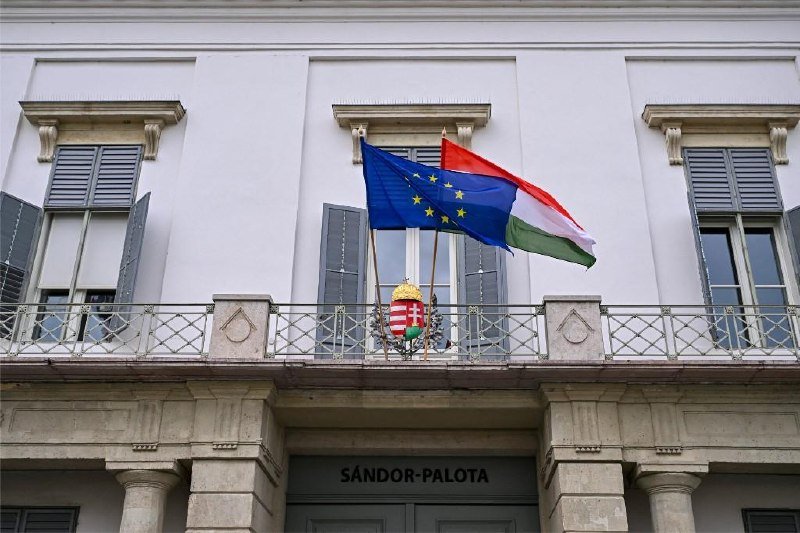
Tens of thousands of Hungarians packed central Budapest on the afternoon of 27 June 2026, braving what organisers described as record June heat to march in the city's first Pride since Viktor Orbán's Fidesz government was voted out of power in April. Reuters reporters on the scene put the turnout at over 10,000, with Deutsche Welle's correspondent placing the crowd in the tens of thousands; marchers carried rainbow flags alongside European Union banners, a visual grammar that framed the event as much as a referendum on Europe as on Hungarian identity.
The turnout matters less for its scale than for what it tests. A government that won an election promising to roll back Orbán's anti-LGBTQ+ legislation now has to demonstrate that the reversal is operational, not rhetorical — and on a public street, in real time, with the cameras running.
What actually changed at the ballot box
Orbán's defeat in the April 2026 Hungarian parliamentary election ended sixteen continuous years of Fidesz rule. The new government, led by Péter Magyar's TISZA party, campaigned explicitly on restoring civil-rights protections that the previous administration had curtailed — including the 2024 "child protection" law that the European Commission had challenged in court and that prompted repeated clashes with Brussels.
Deutsche Welle's dispatch notes that Orbán, before leaving office, attempted to ban the Budapest march last year as part of a broader LGBTQ+ crackdown. The fact that the 2026 march proceeded openly, with police escort and municipal cooperation, is itself the policy change. Previous Budapest Prides had been confined to fenced-off, permit-restricted routes; this year's route ran through the city's main arteries.
The Orbán faction's read
The dominant international framing — liberal democracies breathing easier, Brussels relieved, civil society vindicated — is not the only available read. Orbán's political allies, both inside Hungary and across the European populist right, have argued for years that the previous government's restrictions were a defensive response to cultural pressure rather than an offensive ideology. From that vantage point, large Western-backed Pride marches represent exactly the kind of foreign-influenced cultural politics the Fidesz project was built to resist.
The stronger version of that argument holds that the new government's decision to allow — and protect — the march is a signal to EU institutions that Hungary is back inside the Western liberal fold, with consequences for sovereignty in other domains: migration policy, judicial independence, media pluralism, the frozen EU funds. The march, on this reading, is the price of admission. The opposite reading — that a democratic majority simply asserted itself against an overreach — is the framing the new government prefers.
What the street tells us about institutions
Pride is, among other things, an infrastructure test. A successful march requires municipal cooperation on routing, police willingness to manage counter-protesters, ambulance and medical standby in 35°C heat, and a press corps willing to cover it without state harassment. Reuters and Deutsche Welle both report that these systems functioned on 27 June. That is not trivial: the previous regime had spent years building parallel institutions — a captured media regulator, friendly mayors in key districts — designed to make exactly this kind of public assembly politically costly.
The EU flags in the crowd also carry a structural message. Hungarian civil society has spent the Orbán years framing itself, in Brussels and in court, as a litigant against its own state. The 2026 march is the first major public event where the EU banner functions less as a petition and more as a flag of arrival.
What remains genuinely uncertain
The wire reporting is consistent on the facts — turnout, route, weather, the political backdrop — but the two sources differ on crowd size (Reuters: "over 10,000"; Deutsche Welle: "tens of thousands"), and neither specifies the scale or content of any counter-protest. The longer-term question — whether the new government's rollback of anti-LGBTQ+ legislation survives the inevitable court challenges and the next election cycle — is not answered by a single afternoon's march. Sources do not specify whether the Pride Act or related statutes have yet been formally repealed, only that the march was permitted.
The stakes, in concrete terms, are these: if the new Hungarian government treats the march as the end of the story, it will have learned nothing from the previous regime's resilience. If it treats the march as the beginning of a longer institutional rebuild — restored judiciary, plural media, uncaptured regulators — then Budapest on 27 June will look, in retrospect, like the day Hungary stopped litigating its own identity and started governing it.
Desk note: Monexus framed this as a domestic institutional test rather than a Brussels-versus-Budapest morality play. The wire reporting carries the facts; the structural reading is the publication's own.
Wire provenance
This editorial synthesis draws on the following public wire/social posts:
- https://reut.rs/4exdgJ0