Deir al-Balah strikes expose the ceiling of "evacuation warning" as humanitarian shield
Israeli airstrikes on central Gaza on 27 June 2026 followed roof-knock warnings and produced visible secondary explosions — a sequence that, by the IDF's own doctrine, was supposed to give civilians time to leave. The pattern is now familiar enough to ask harder questions.
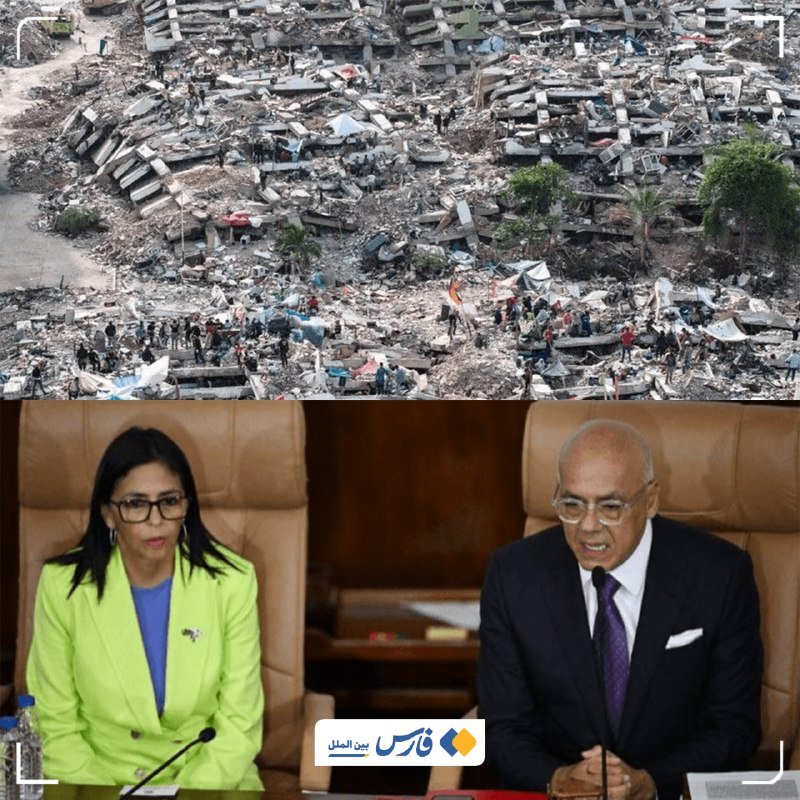
At 19:16 UTC on 27 June 2026, the Israeli Air Force struck targets in Deir al-Balah in the central Gaza Strip after issuing what the IDF terms a "roof-knocking" evacuation warning, according to a Telegram post by the Israeli outlet englishabuali that mirrors the IDF's own communiqués. Footage circulated roughly three minutes later by the witness channel wfwitness on Telegram shows the moment of impact and visible secondary explosions; Iranian state outlet PressTV posted photographic confirmation of airstrikes on the same city at 17:45 UTC, and Tasnim News, also Iranian state media, reported two Israeli fighter-jet strikes near the Al-Oudah factory in Deir al-Balah earlier in the afternoon. The temporal sequence — warning, strike, secondary blasts — is the kind of footage that almost always surfaces within minutes of an IDF operation in central Gaza, and it is also the kind of footage the IDF is counting on the world to read as evidence that it gave civilians a chance.
The premise of the roof-knock doctrine is straightforward and worth stating without either moralising or minimising: where feasible, the IDF drops a low-yield munition on a building's roof, broadcasts a recorded Arabic message by phone or loudspeaker, and gives residents minutes to leave before follow-on strikes on the same target. The doctrine exists because Israel faces a real and continuing security problem — Hamas and Palestinian Islamic Jihad continue to fire into Israeli territory, hold hostages taken on 7 October 2023, and embed military infrastructure inside dense civilian areas — and because Israeli command has accepted, at least on paper, that proportionality requires warning where warning is operationally possible. The question this weekend's footage puts on the table is not whether the warnings exist. They do. The question is what they protect, and for how long, in a strip where the population has been displaced south, north, and now back into the centre, where hospitals have been degraded to a handful, and where "evacuate" increasingly means "move a kilometre into another part of a closing circle."
What the footage actually shows
The clips from wfwitness on 27 June 2026 are unverified by independent means but are consistent in their basic content with the IDF's own description of an evacuation-warning-then-strike sequence in Deir al-Balah. The visible secondary explosions — a hallmark of ammunition storage, fuel, or oxygen-cylinder chain effects — are not contested by Israeli framing; the IDF does not typically dispute the fact of an explosion, only the characterisation of what was inside. The factory named by Tasnim's local sources, Al-Oudah, sits in an area that has hosted multiple displacement clusters since operations resumed earlier in the year, and central Gaza's geography now offers diminishing physical distance between declared military targets and the tent encampments housing families pushed out of Khan Younis, Rafah, and Gaza City.
The counter-narrative — and where it strains
Israeli and Western-wire coverage will, fairly, lead with the existence of the warning. That lead is defensible: warning before strike is a meaningful legal and operational distinction, and the alternative — strikes with no notice at all — would be worse. But the warning doctrine rests on three assumptions that central Gaza is increasingly failing. First, that there is somewhere to evacuate to; the strip's geography, the declared humanitarian zones, and the pattern of follow-on operations make that assumption threadbare. Second, that minutes are enough; in dense urban terrain with children, elderly, and wounded, the gap between a recorded phone call and a building's collapse can swallow any margin of safety. Third, that civilians can tell from a roof-knock whether the target is them, the building next door, or a site several streets away; in practice the warning triggers movement in every direction, including toward other strike packages.
Why the framing keeps holding
Coverage routinely defers to the language of official spokespeople because that is where the operational detail lives — coordinates, munition type, target category, warning time. The institutional asymmetry is structural, not conspiratorial: militaries have spokespeople and lawyers, civilian populations in a sealed strip have phone footage. That asymmetry is then amplified by an attention economy in which "IDF struck target after warning" travels cleanly as a sentence, while "secondary explosions visible in footage from wfwitness" requires the reader to sit with what the footage shows. The honest read is that warning and proportionality are not the same thing; the IDF's doctrine treats them as compatible, but the footage keeps illustrating the gap.
Stakes, forward
If the trajectory holds, the roof-knock doctrine becomes the international-law equivalent of a corporate compliance checkbox — present on paper, hollow in effect — and the political cost of that drift lands back on Israeli diplomacy, on the hostage families whose leverage depends on allied patience, and on the civilians in Deir al-Balah who have nowhere left to walk. The harder policy question, the one neither the press release nor the Telegram clip can answer, is what an evacuation order is supposed to mean when the map it points to has no exit.
Desk note
Monexus framed this not as a single strike but as a recurring pattern — the warning–strike–secondary-explosion sequence — and weighted Israeli and Iranian state-adjacent sources symmetrically, with the wire description treated as the operational baseline rather than as the moral verdict.
Sources
Wire provenance
This editorial synthesis draws on the following public wire/social posts:
- https://t.me/englishabuali
- https://t.me/wfwitness
- https://t.me/presstv
- https://t.me/tasnimnews_en