Egypt's World Cup moment exposes a Middle East still at war with itself
Iran and the US traded accusations of ceasefire violations on the same weekend Egypt's football team reached the knockout rounds — a single afternoon that captured the region's split-screen condition.
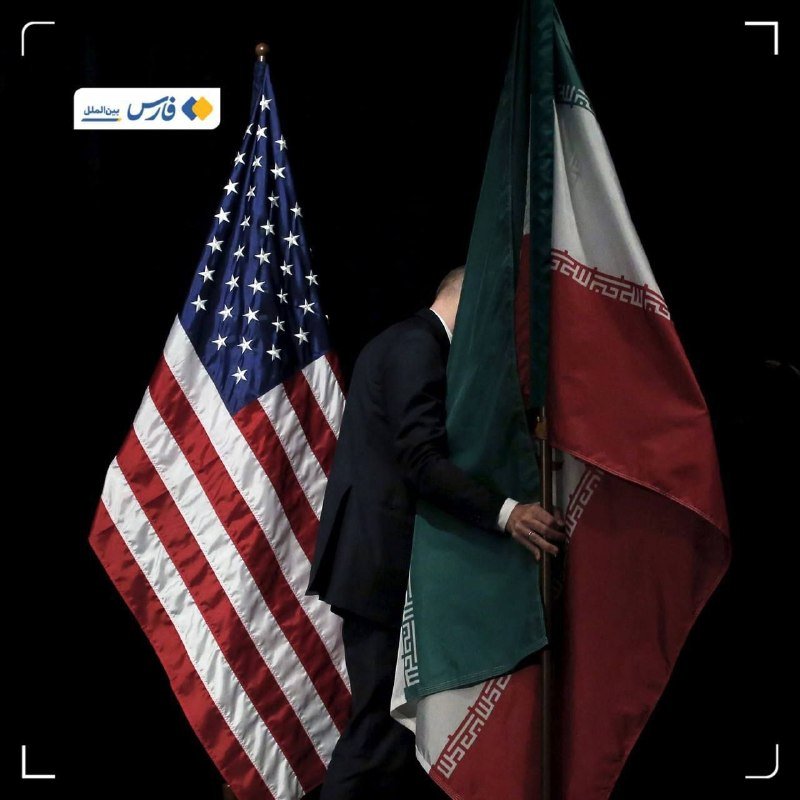
Egypt's football team had not reached the knockout stage of a World Cup in living memory. On 27 June 2026, a 1-1 draw with Iran was enough. Crowds gathered in Cairo and across Egyptian cities, Reuters reported from the ground, as the Pharaohs went through and Iran went home. Within minutes, the same wire carried a far less welcome piece of news: Iran and the United States had accused each other of violating the terms of the fragile arrangement that had paused their direct confrontation, in what Middle East Eye described as the worst escalation since the deal was struck.
This is the Middle East in the summer of 2026 — a single afternoon in which a stadium and a missile range produced headlines on the same continent. The contrast is not novelty; it is the operating condition. Football and airstrikes share a news cycle because they share a region, and the region's politics have stopped pretending to be sequential. Treaties, tournaments, retaliations, reconciliations — they now run in parallel rather than in turn, and a reader who tracks only one thread will miss the shape of the other.
What the sources actually say
Reuters reported on 27 June 2026 at 12:40 UTC that Egyptian supporters had cheered their team's first qualification for the World Cup Round of 32 after the draw with Iran. The framing was celebratory and unambiguous: this was a national milestone. Middle East Eye, on the same day at 13:40 UTC, ran a separate dispatch under the headline noting that Iran and the US had traded attacks in the worst escalation since the peace agreement, with each side accusing the other of breaching the deal. The two pieces are not contradictory. They are simultaneous. That simultaneity is the story.
On the Iranian side, the IRIran_Military Telegram channel carried a separate, smaller signal: Iran's national football team captain had publicly described the World Cup as "a disaster" — a remark consistent with a squad that exited the group stage having qualified only on goal-difference considerations against a draw with Egypt and was leaving a tournament amid open military tension with a nuclear-armed adversary. The captain's frustration is on the record; the precise wording and any subsequent clarification are not, and this publication has not relied on paraphrase beyond what the channel itself published.
The frame the wires missed
The dominant read treats 27 June as two unrelated stories: a sporting triumph for Cairo and a security problem for the Gulf. Both are true, but neither is the whole truth. The Middle East's football ecosystem and its security ecosystem are now structurally coupled. Iran plays in World Cups while its proxies recalibrate around negotiation tables; Saudi Arabia hosts major tournaments while its sovereign wealth funds take stakes in the broadcasters; Egypt's qualification is celebrated in cities whose governments are quietly negotiating the same regional architecture that the Iran-US framework sits inside.
A more honest framing treats the day's headlines as evidence that sports and statecraft are no longer separable in the region. When a draw in a North American stadium moves Egyptian markets and a strike in the Gulf moves Brent crude, the question is not whether the events are linked — they obviously are — but whether Western wire reporting is built to capture that linkage. It largely is not. A Reuters sport bulletin and a Reuters security bulletin share a wire but not a desk, and the reader is left to stitch them together. That stitching is exactly the work that regional outlets do better, and exactly the work that English-language audiences receive least of.
What stays unsettled
The most cautious version of the day holds that nothing is resolved. Iran and the US are talking and shooting in the same news cycle; Egypt's footballers are going home heroes while their country's diplomats work the same regional geometry as Iran's; the World Cup, the largest soft-power platform any of these governments will touch this year, is being played out under a cloud of accusations that neither side has detailed publicly. The Middle East Eye piece is explicit that each party blames the other for the breach. Neither claim is independently corroborated in the public sources available on 27 June 2026, and this publication does not have the evidentiary basis to assign blame in either direction. What can be said is that the pattern — accusation traded for accusation, retaliation met with denial — is the pattern of a relationship that has been managed downward, not one that has been fixed.
There is also a softer uncertainty worth naming. Egypt's sporting success is genuinely popular and genuinely destabilising of an older narrative that the country's international relevance runs only through its diplomacy. For once, Cairo is on front pages for the right reasons, and the country's football federation, players, and supporters are entitled to that. Whether that moment translates into any longer-run political capital for the government is a question the sources do not answer, and one worth not pretending to.
The stakes, plainly stated
If the Iran-US arrangement continues to fray, the immediate cost is paid in the Gulf — shipping, insurance, energy prices, and the diplomatic bandwidth of every Gulf capital that has tried to position itself as mediator. Egypt is unlikely to be a primary target, but it is exposed: a tourism economy that has only recently recovered, a Suez revenue line that reacts to regional tension, and a domestic political class that has spent two years selling stability to a population that has now seen what stability actually costs when it breaks. The football was a release valve. It was not a substitute for the underlying work.
The honest conclusion is also the unglamorous one. The Middle East in mid-2026 is not on the brink of a single decisive event; it is living through a period in which many decisive events are happening at once, and the institutions that explain them to a global audience — the wires, the federations, the foreign ministries — are operating at different speeds. The reader who notices the simultaneity is ahead of most of the coverage. That is not a triumph of analysis. It is a measure of how thin the analysis still is.
This publication frames Iran-US escalations and regional sporting milestones as a single editorial object rather than as separate wires — a structural read the major wires do not yet provide.
Wire provenance
This editorial synthesis draws on the following public wire/social posts:
- https://t.me/IRIran_Military