Iran's Assembly of Experts steps into a succession fight Tehran cannot afford
A public letter from Iran's clerical electors backing Mojtaba Khamenei signals the succession contest is no longer sub rosa — and exposes the cost of choosing before the country's enemies have stopped watching.
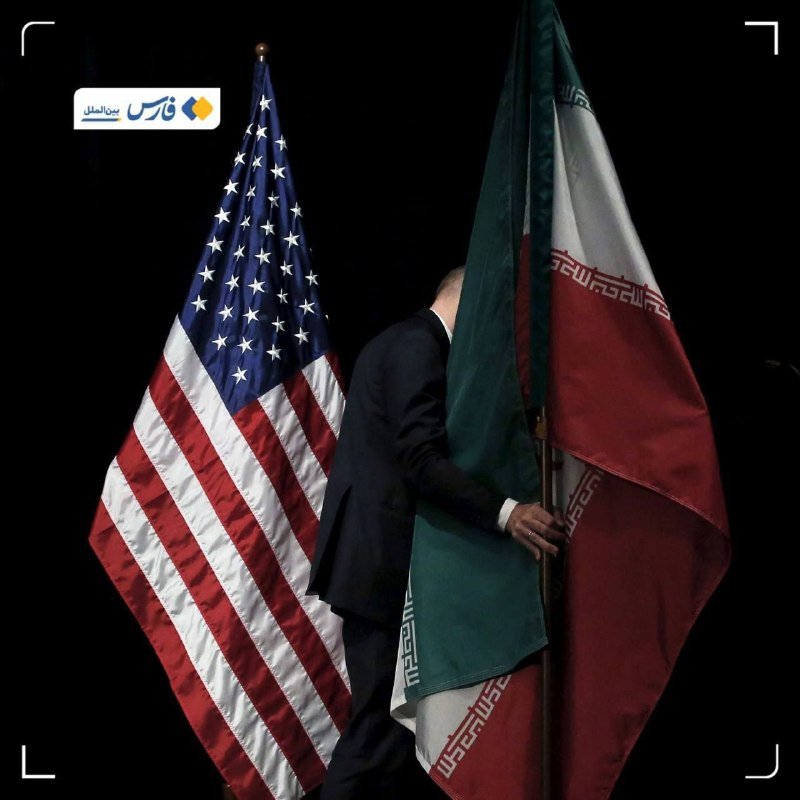
On the evening of 27 June 2026, Iran's Assembly of Experts — the eighty-eight clerical electors nominally charged with selecting the next Supreme Leader — broke a silence that has defined its institutional life for the better part of a decade. According to a Telegram dispatch carried by the DDGeopolitics channel at 20:37 UTC, the body has circulated a letter to senior government officials backing Seyyed Mojtaba Khamenei, the second son of the incumbent Supreme Leader, as its preferred successor. Two further mirrors of the same item, posted by the Middle East Spectator channel at 20:05 UTC and 19:54 UTC, treat the statement as a breaking political development rather than routine commentary. The unanimity of the framing across three posts in under an hour is itself the story.
This publication reads the move as the moment Iran's succession question stops being sub rosa and starts being a public contest — and as a window into just how narrow the room for manoeuvre inside the Islamic Republic has become. Tehran does not normally surface its intramural fights in front of foreign audiences. The fact that it is doing so now says more about the pressure on the system than about the strength of any single faction.
What the letter does, and what it does not
The Assembly of Experts is, on paper, the institution that picks the Supreme Leader after the incumbent dies or is incapacitated. Its membership is vetted and its proceedings are not public. For that reason, a written statement circulated to officials — not to the press, not to the public — carries a specific bureaucratic weight. It is a coordination signal, not a coronation. The succession itself only happens on the death of the incumbent, and Iran's constitution does not let the Assembly pre-select.
The DDGeopolitics dispatch frames the letter as "unprecedented," and on the literal question of whether the body has previously named a preferred successor while the incumbent lives, that word is defensible. Mojtaba Khamenei has long been the subject of chatter inside Iranian political circles — a cleric with limited scholarly standing, considerable administrative experience inside the office of the Supreme Leader, and the obvious dynastic signal that his appointment would send. The letter elevates that chatter from rumour to record.
Why this moment, not another
Iran is not picking a leader in a vacuum. The country is absorbing the cumulative cost of years of sanctions, an economy that runs substantially on discounted oil sales to a shrinking pool of buyers, and a regional posture that has been forced into defensive crouch since the Gaza war began. The clerical establishment has every reason to want a known quantity in the top job — and every reason to fear an open contest that splits the security services, the bazaar, and the office-holding clerics.
Publicity is therefore not an accident. Whoever drafted the letter calculated that the cost of a visible preference — being seen to pre-empt the process, to elevate one faction, to ratify a hereditary reading of the republic — was lower than the cost of letting the question fester through another year of regional crisis. Read that way, the letter is less about Mojtaba Khamenei and more about the price of uncertainty inside a system already running hot.
The counter-read worth taking seriously
Two cautions deserve airtime. First, Telegram channels covering Iran are not a neutral wire; they aggregate state-adjacent and diaspora material with very different agendas. The "unprecedented" framing may originate with a faction that wants the letter read as a done deal — and a rival faction that wants it read as a provocation could equally well amplify it. The full text of the letter has not, on the evidence available here, been published by a verifiable wire of record. Treating the substance as confirmed and treating the political meaning as confirmed are two different moves, and only the first is safe.
Second, even an "unprecedented" statement from the Assembly does not bind the institution when the moment comes. Iranian succession has been interrupted before — the 1989 transition from Khomeini to Khamenei was managed by a small inner circle, not a formal vote of the electors. A letter circulated today can be quietly superseded tomorrow if the security balance shifts. The signal is real; the constraint is provisional.
Stakes
If the letter holds, Iran is signalling that it intends a managed, dynastic succession at a moment of maximum external pressure — confident enough in its institutions to risk the appearance of monarchy, nervous enough to do it in writing. That combination is the news. It tells outside powers, and Iran's own elite, that Tehran prefers a known cleric with a familiar last name to an open contest between rivals, and that it is willing to pay the legitimacy cost of saying so out loud.
The near-term losers are the figures who might otherwise have run — senior clerics and former commanders whose names circulate in commentary from Beirut to Baku. The near-term winners are the office-holders who would rather inherit a settled question than fight one. The medium-term question, which the letter does not answer, is whether a system that cannot let its next leader emerge through an open contest has the political bandwidth for the regional fights it has already committed to.
What the sources do not yet settle
The Telegram threads do not give a date for the letter, do not name the officials it was sent to, and do not reproduce its text. They do not record any reaction from the office of the incumbent Supreme Leader, nor from the Guardian Council, the judiciary, or the IRGC. A reader should hold the central fact — that the Assembly has, on the available evidence, broken its institutional silence on succession — more firmly than the surrounding claims about who benefits and how decisively. Confirmation will need to come from verifiable wire reporting or from text released inside Iran, not from Telegram mirrors.
Desk note: Monexus has reported this straight because the action itself — a public-facing signal from an institution that does not usually signal — is the news. Where the underlying text and the institutional reactions are not yet verifiable, that gap is named in the piece rather than filled with speculation.
Wire provenance
This editorial synthesis draws on the following public wire/social posts:
- https://t.me/DDGeopolitics
- https://t.me/Middle_East_Spectator
- https://t.me/Middle_East_Spectator