The Hormuz Card: Why Iran's Waterway Leverage Is Now the Story
Israeli Prime Minister Benjamin Netanyahu claims his government is 'breaking Iran's diplomatic axis' by attriting Hezbollah. Tehran is answering with the one lever it does not need to build: control of the Strait of Hormuz.
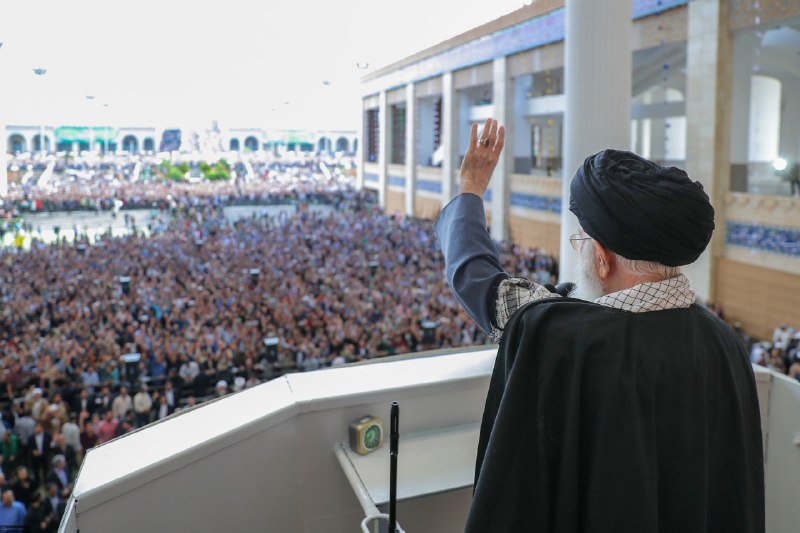
On 27 June 2026, Prime Minister Benjamin Netanyahu publicly claimed that Israel is "breaking Iran's diplomatic axis" by attriting Hezbollah — and credited the pressure campaign as the reason a framework of understandings had become reachable. The boast landed the same day a Washington war-think-tank readout, carried by Iranian state media, asserted that Tehran insists on confirming the passage of ships through the Strait of Hormuz. Two signals, broadcast within ninety minutes of each other, describe the same contest from opposite ends.
The diplomatic axis Netanyahu is claiming credit for dismantling is not a metaphor. It is a chain of forward-deployed partners — Hezbollah above all, plus a lattice of Iraqi militias, Syrian networks, and Houthi units in Yemen — through which Iran projects power without flying a single Iranian flag. The Israeli theory of victory, repeated in briefings throughout 2025 and into 2026, has been that if you remove the chain's load-bearing link in Lebanon, the rest bends. Tehran's answer, increasingly visible in its own messaging, is to make the chain redundant by leaning on the one asset no Israeli strike can degrade: geography.
The framework Netanyahu is selling
The prime minister's framing, transmitted via the Tasnim Plus wire on 27 June at 19:28 UTC, attributes diplomatic movement directly to military pressure on Hezbollah. The implied chain of causation is straightforward: degrade the proxy, isolate the patron, extract terms. It is the same logic that animated the autumn 2024 campaign in Lebanon and the sustained tempo of strikes that followed. Israeli officials have spent the better part of two years arguing, publicly and in leaks to Western outlets, that Hezbollah's leadership cadre and communications infrastructure were the binding agent of the so-called "unity of fronts" — the doctrine under which any war on Iran would trigger fire from Lebanon, Syria, Iraq, and Yemen simultaneously.
The claim deserves scrutiny on its own terms. A framework of understandings is not a treaty; it is closer to a working arrangement, the kind that survives on mutual exhaustion more than mutual trust. Netanyahu is right that something has moved. Whether what has moved is the axis itself, or merely its outer sleeve, is the question the next quarter will answer.
The lever Tehran keeps in reserve
The American think-tank assessment circulated on 27 June at 18:43 UTC and repeated at 18:37 UTC by the Jahan Tasnim channel is blunt: Iran uses the Strait of Hormuz lever "significantly," and insists on confirming the passage of ships. The Strait is a twenty-one-mile-wide chokepoint between Iran and Oman through which a substantial share of seaborne crude transits each day. The Islamic Republic does not need to close it to use it. The mere credible threat of inspection, escort, or selective delay is enough to push insurance rates, freight rates, and Brent crude in directions that the world's importers notice within hours.
This is the asymmetry the Israeli campaign cannot reach. Bombing a missile convoy in Beqaa degrades a launcher. Bombing a coastline does not. The Strait is a piece of seabed Iran sits on, and the Western navies charged with keeping it open operate from bases that are themselves within range of the same missiles that have just been demonstrated against Hezbollah. The leverage is not symmetric, and pretending otherwise is the kind of analytical comfort that produces surprise.
What a 'confirmation regime' would look like
The Tasnim-summarised demand is precise enough to be operational. Iran wants to confirm the passage of ships — meaning a right of inquiry, identification, or escort on terms Tehran defines. Western energy importers and Gulf Arab monarchies would view such a regime as a sovereignty transfer by another name. Saudi Arabia and the United Arab Emirates, which export through the Strait from terminals across the Gulf, have an obvious interest in keeping the waterway ungoverned. So, for different reasons, does China, whose crude imports from the Gulf run at volumes that make even a week of disruption a strategic event in Beijing.
The structural point: in a hegemonic transition where the incumbent security architecture is visibly stretched, control of chokepoints becomes a negotiating instrument rather than a logistical nuisance. The lever is not new. What is new is the willingness to articulate it as a precondition for any wider arrangement.
The counter-read
The dominant Western framing treats Iran's Hormuz posture as brinkmanship designed for domestic audiences and arms-control theatre. There is something to that. Threats that are not exercised compound into credibility, and Tehran has historically calibrated its use of the Strait to messaging moments rather than sustained campaigns. The honest counter-read is that the same logic could apply in reverse: a credible threat kept in reserve is also a deterrent, and Israel — which has demonstrated a willingness to strike Iranian assets directly — gives Tehran strong reasons to keep deterrents live rather than trade them away in a framework.
What is not contested is that the two announcements on 27 June are not independent events. They are the two ends of the same negotiation, transmitted in the same news cycle, to the same audience. One side says the proxy network is broken. The other side says the waterway is not.
What remains uncertain
The framework Netanyahu references is not described in publicly available text; Tasnim transmits the claim, not the document. The American think-tank readout is paraphrased through Iranian state media, which has its own reasons to amplify any signal of Western acknowledgement of Iranian leverage. Neither the size of the understandings reached, nor the parties to them, nor the enforcement mechanisms, are confirmed by primary documents in the public record as of 27 June 2026. The Strait posture, similarly, is described at the level of demand rather than action. Until traffic data, insurance pricing, or naval deployments confirm otherwise, the picture remains two competing broadcasts rather than two verified facts.
— Monexus framing note: the wire led with Netanyahu's claim of diplomatic gain; this publication inverted the sequence and led with the leverage Tehran chose to broadcast the same afternoon, on the reading that the framework's durability will be set by the asset Israel cannot destroy.
Wire provenance
This editorial synthesis draws on the following public wire/social posts:
- https://t.me/tasnimplus
- https://t.me/tasnimplus
- https://t.me/JahanTasnim