Iran stages a martyr's farewell: a state-organised choreography of grief
Iranian state media is choreographing a two-day farewell to a martyred leader, with logistics overseen by a named brigadier-general. The staging itself is the story.
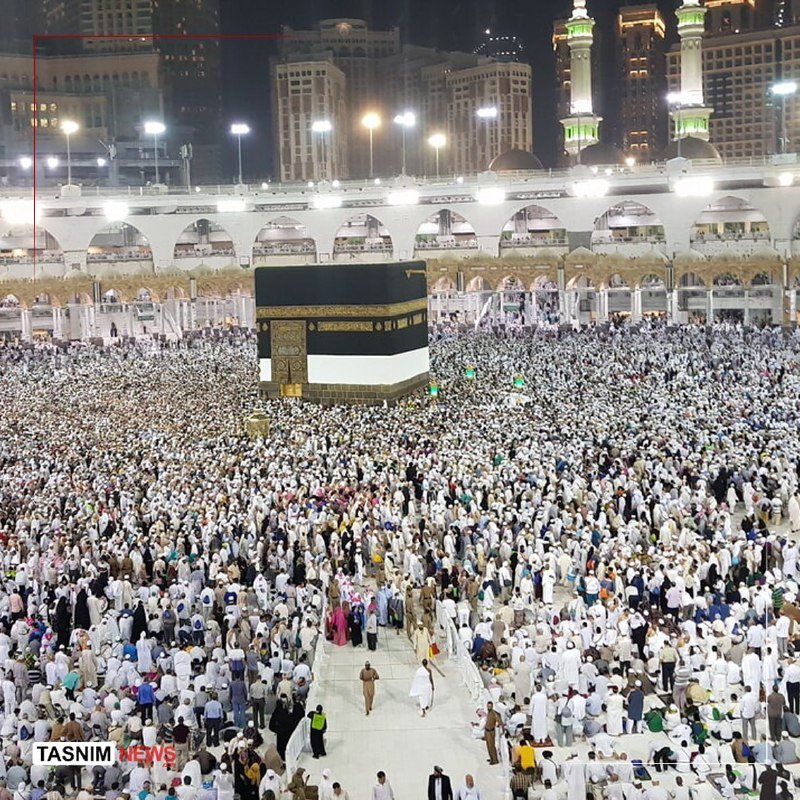
At 19:23 UTC on 27 June 2026, a brigadier-general named Sardar Hassanzadeh stepped before Tasnim's cameras and read out the schedule. The farewell to a martyred leader, he said, would begin at 06:00 on the thirteenth and continue until 20:00 on the fourteenth. Hours later, he returned to confirm that the body, and the bodies of his family, would be placed on an elevated platform visible from the courtyards of the central mosque. By 19:38 UTC he was offering logistical advice: plan at least the time to be in Tehran.
Theatre of state, conducted at speed, in a foreign-press register that takes no questions.
What is unfolding in Tehran over the next forty-eight hours is less a funeral than a piece of political choreography designed to do four jobs at once: dignify the dead, project continuity, demonstrate administrative competence, and turn grief into a usable public asset. The detail matters. In a country where official media is also the principal narrator of legitimacy, the staging of the farewell is the policy.
The schedule as political text
Hassanzadeh's briefings, carried in near-real time by Tasnim's English channel between 19:23 and 19:38 UTC, are a masterclass in the bureaucratic aesthetics of the Islamic Republic. There is a start time and an end time. There is a head of the farewell and funeral staff, a named official with operational authority over a national moment. There are arrangements for passage, accommodation, and reception of pilgrims. There is, crucially, an instruction to the audience: come to Tehran.
This is the language of an institution that has spent decades refining the conversion of mass mourning into mass mobilisation. It is not improvisation. It is the same template applied to the funerals of Quds Force commanders, to the annual commemorations of Imam Khomeini, and to the martyrdom anniversaries of the Iran–Iraq war. The grammar changes; the structure does not.
Read the briefings closely and a particular picture emerges. The state is treating the farewell as a logistics problem first and a religious observance second. The named officer is a soldier, not a cleric. The schedule is a production run-sheet. The location — a high place in the main area of the mosque courtyard, visible from everywhere — is a set-design decision.
What the wire tells us, and what it does not
Tasnim's English feed is the only thread available to outside observers at this hour. There is no parallel Iranian state-media bulletin offering casualty figures, the circumstances of the killing, or the identity of the actor responsible. There is no international wire confirmation of the events leading to the martyrdom, no Reuters read-out, no Western embassy statement. The story, as it stands, is the Iranian state's story.
That is a meaningful limit on what can honestly be written. The frame the public sees is the frame the state has built. The named planner is a serving officer. The platform is a set piece. The advice is an invitation dressed as logistical counsel. None of this is speculation; all of it is in the bulletins.
What is not in the bulletins is at least as important. There is no death toll beyond the leader and his family. There is no forensic account. There is no rival claim from an opposition outlet, no footage from the scene, no geographic fix beyond "Tehran." For a reader outside Iran, the farewell is the entire known event.
A structural read, in plain prose
The pattern is familiar across the region. When a state owns the camera, the camera owns the meaning. Coverage routinely defers to the language of official spokespeople; dissenting accounts get less column-inches, because there is no apparatus to produce them at scale. A two-day farewell, announced by a serving general and transmitted by state media, is not merely a tribute. It is a soft assertion that the institutional order remains intact, that command is exercised through familiar bureaucratic forms, and that the population is expected to perform its assigned role in the choreography.
The structural point is not whether the grief is real — grief at the death of a senior figure in a closed political system is, of course, real for those who experience it. The point is that the production of public grief is itself an instrument of governance. The elevated platform, the named officer, the time-stamped schedule, the call to travel — these are the inputs of a state that has decided what the next forty-eight hours will mean before the first mourner arrives.
What to watch next
Three things are worth tracking in the hours ahead. First, whether the schedule announced by Hassanzadeh holds — a slipped timetable would be the first crack in the narrative of competence. Second, whether any independent Iranian outlet, diaspora channel, or foreign bureau produces footage from outside the state camera's eye. Third, whether Western and Gulf wire services acquire any sourcing beyond Tasnim.
Until then, the image the world receives is the image Iran has chosen to send. That is not nothing. It is, in its own way, the most informative fact available.
This publication framed the story around the logistics bulletins because that is what the source material supports. The surrounding political context — the identity of the martyred leader, the actor responsible for his death, the regional implications — remains undisclosed in the available reporting and will be addressed once independent sourcing emerges.
Wire provenance
This editorial synthesis draws on the following public wire/social posts:
- https://t.me/tasnimnews_en
- https://t.me/tasnimnews_en
- https://t.me/tasnimnews_en
- https://t.me/tasnimnews_en