Israel's New Lebanon Frame: Disarm Hezbollah by Other Hands
A framework agreement and an Israeli anchor's blunt aside have reframed the Lebanon file: the goal is no longer merely to contain Hezbollah, but to push Beirut's own state to disarm it.
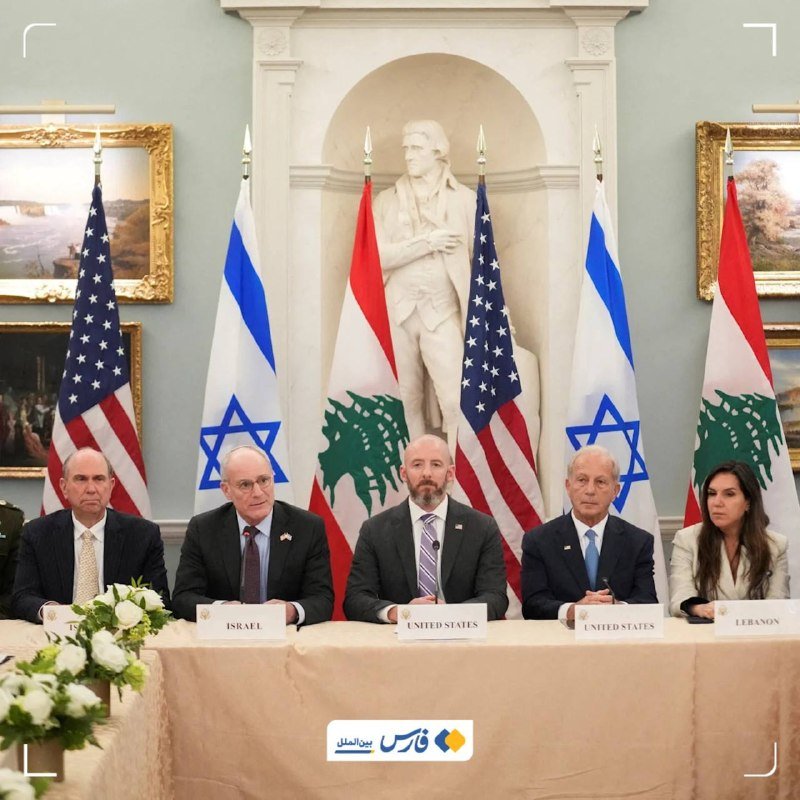
A rare piece of on-air candour from an Israeli broadcast anchor has done more than any communique this week to clarify the strategic logic behind the new Lebanon–Israel framework agreement. On 27 June 2026, an anchor on Israel's Channel 13 told viewers that the arrangement is designed to push Lebanon toward civil war, leaving the Lebanese government to dismantle Hezbollah rather than the Israeli army doing the job directly. The remark, circulated in Hebrew and English clips by regional monitors, landed within hours of Hezbollah supporters physically sealing off Beirut's central government district, the airport road, and other arteries of the capital in protest at the deal. Prime Minister Benjamin Netanyahu, speaking the same morning, added the security-floor layer: Israel will remain in southern Lebanon, he said, for as long as Hezbollah does not disarm.
Taken together, the three data points — the framework, the protests, and the anchor's aside — describe a single bet. Israel is wagering that an internal Lebanese confrontation, rather than continued Israeli ground operations, is the cheaper path to disarming the Shia militia. The bet has domestic Lebanese politics, the post-war Lebanese economy, and the stability of an already fragile state as its collateral.
What the framework does
The framework agreement, struck in the days preceding 27 June, sets out a sequenced disarmament track in which the Lebanese Armed Forces assume responsibility for collecting Hezbollah weaponry south of the Litani and in mixed urban areas, with international monitoring attached. Israeli coverage, including the Channel 13 anchor's commentary, frames the arrangement not as a ceasefire in the traditional sense but as a redirection: the pressure shifts from Israeli units to Lebanese institutions, with the explicit understanding that if those institutions fail, the Israeli security footprint in the south remains.
Netanyahu's morning statement, reported by Middle East Eye at 06:55 UTC, made that conditionality explicit. Israel, he said, will stay inside its southern Lebanon security zone for as long as Hezbollah remains armed. The wording re-anchors the Israeli position to a verifiable condition rather than to a calendar, and it leaves open the prospect of a long, indeterminate presence on Lebanese soil.
The street response in Beirut
Hezbollah's reaction has been to escalate politically without, so far, breaking the framework. According to Telegram channels monitoring the movement's base, supporters blocked the area of the main government complex in Beirut overnight on 26–27 June, along with the airport road and additional arteries of the capital. The protest was framed, in on-the-ground reporting, as a rejection of the disarmament track rather than as a direct challenge to the Lebanese state. That distinction matters: the Lebanese Armed Forces and the government of Prime Minister Nawaf Salam are still the formal counterparties, but the constituency the framework most antagonises is Hezbollah's own.
Lebanese political space has narrowed accordingly. The framework presupposes a Lebanese state willing and able to enforce disarmament on a militia that remains the country's most potent non-state military force and the political vehicle of a substantial Shia constituency. The Beirut protests are an early, public test of whether that capability exists. If the framework holds against the street pressure, the Salam government will have demonstrated something it has not demonstrated in two decades: a willingness to coerce Hezbollah rather than negotiate with it.
The strategic wager
The Israeli anchor's remark — that the goal is to drag Lebanon toward internal fracture so that the Lebanese state fights Hezbollah on Israel's behalf — should be read as a description of preferred outcome rather than a stipulated policy. But it captures the underlying logic of an approach that Western diplomats have been quietly urging for the better part of a year: that the cost of containing Hezbollah is unsustainable for Israel alone, and that any durable solution requires Lebanese institutions to carry more of it. The framework operationalises that view by tying Israeli withdrawal to Lebanese performance, and by making the performance itself the pressure point.
The structural risk is that an overstretched Lebanese state, already navigating a post-2024 reconstruction and a banking sector under long-term restructuring, may not be able to absorb the political shock of disarming a constituency that retains significant leverage. Internal Lebanese fragmentation is the predicted mechanism; civil war is the tail risk. Israeli planners, if the Channel 13 framing is taken at face value, are pricing that risk as acceptable relative to the alternative of indefinite ground presence.
Stakes and what remains unresolved
If the framework holds, Israel transfers the cost of containment onto Lebanese shoulders, retains a residual security presence, and emerges with a verifiable disarmament narrative useful in Washington and European capitals. If it collapses, the Lebanese state bears the visible failure, Hezbollah re-arms in a domestic justification, and Israel retains a justification for a deeper, longer southern presence. The Lebanese population — already labouring under economic crisis and reconstruction debt — sits in the middle of that calculation either way.
The honest uncertainty is on the Lebanese side. The sources available at publication do not specify the exact sequencing of the disarmament track, the composition of the monitoring mechanism, or the timetable for Israeli withdrawal from the southern security zone. They also do not show whether Hezbollah's leadership has formally rejected the framework or is allowing its base to absorb the political cost while preserving space for negotiation. What is on the record, as of 27 June 2026 at 08:30 UTC, is the framework's existence, the street response, and the candid Israeli framing of what it is meant to produce.
Wire provenance
This editorial synthesis draws on the following public wire/social posts:
- https://t.me/thecradlemedia
- https://t.me/megatron_ron
- https://t.me/englishabuali
- https://t.me/abualiexpress