Kyiv under fire again: what an Iskander salvo tells us about the next phase of the war
Four Iskander-Ms out of Bryansk hit Kyiv in a single evening. The pattern matters more than the payload.
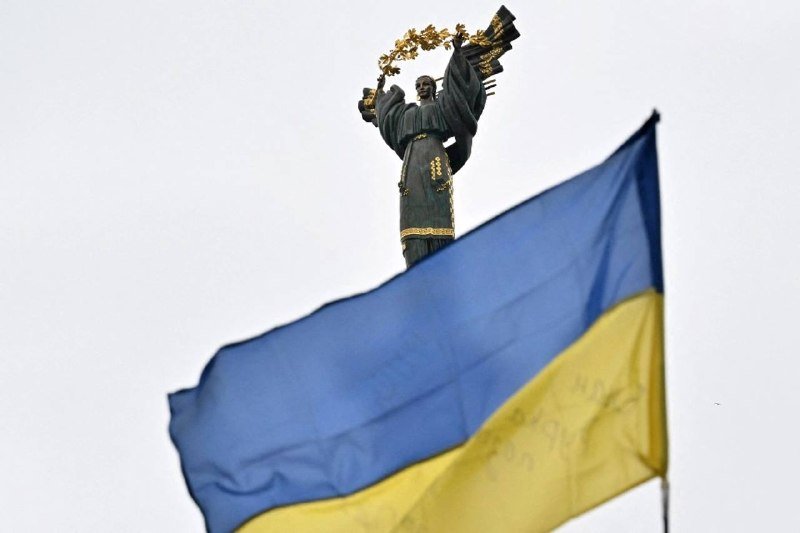
Four Iskander-M ballistic missiles left launch positions around Bryansk and reached Kyiv in the space of an hour on the evening of 27 June 2026. Air-defence units intercepted at least some of them; one impact produced a large fire in the city, and a PAC-2 interceptor was caught on camera self-destructing over eastern Kyiv. That is the thin factual record from open-source channels — and it is already enough to say something useful about the trajectory of the war.
The strikes are not exceptional by the count of the conflict. They are exceptional by their tempo. A coordinated salvo of four precision ballistic missiles fired from a single axis, at a single capital, inside a sixty-minute window, is the kind of attack Ukraine's defenders describe as "saturated" — a salvo designed not merely to hit, but to overwhelm the arithmetic of interceptors versus warheads. If even two of the four get through, the political cost compounds; if interceptors burn out and PAC-2 rounds self-destruct on their own arcs, as the footage suggests, the depletion rate becomes the story.
What the pattern shows
Open-source mapping from channels tracking the launches places the salvo's origin in Russia's Bryansk region, directly north of the Ukrainian border. The timing — late evening on a Saturday — is consistent with Moscow's preference for strikes at moments that combine the fatigue of defenders with maximum media visibility inside Ukraine. A single Iskander-M costs roughly a few hundred thousand dollars at launch, against an interceptor that costs multiples of that. The economics matter because they dictate what Moscow can sustain, and what Kyiv can sustain defending against.
The visible fire in Kyiv and the self-destructing PAC-2 interceptor both surfaced in the same hour. That co-occurrence is what tells the analytical story: the strike was not merely a weapons test or a one-off act of harassment. It was a salvo designed to consume Kyiv's interceptor stocks faster than they can be replenished. Ukrainian air-defence performance to date has been genuinely impressive by any historical comparison — interception rates for shorter-range threats have held up well into the war's later phases — but a repeated ballistic-missile tempo at this scale is the metric that actually bites.
Why the Western framing understates the moment
Wire coverage of Russian strikes on Kyiv has tended toward two registers: either cataloguing the immediate damage and the official Ukrainian response, or stepping back to invoke "war weariness" and the political question of continued Western aid. Both are legitimate framings. Neither names the structural issue. Kyiv is being asked to defend a capital the size of a small European country against a missile force that is being deliberately paced to exhaust the defenders' interceptor stocks, while the Western discussion centres on whether the package due in autumn will arrive on time.
That gap between the operational tempo on the ground and the budgetary tempo in donor capitals is the war's binding constraint. It is also the constraint that Ukraine cannot solve unilaterally. The defender does not need better interceptors — though more is better — as much as a sustained and predictable supply that does not depend on monthly political theatre in Washington, Berlin, or Brussels.
The structural frame, in plain prose
What this moment sits inside is a classic contest between an attacker with deep, centrally-ranged missile reserves firing from inside its own territory and a defender who depends on foreign supply chains for the counter-munitions. The war's direction in any given month is increasingly set by which side's logistics recover faster from depletion. Ukraine's defensive posture has held in part because Western allies have accepted that the cost of an interceptor is cheap compared to the cost of losing the capital. That calculation has held. It is not automatic.
Stakes and what remains uncertain
If a salvo of this tempo becomes routine — four Iskanders in an hour, once or twice a week — then the political stakes shift from individual incidents of damage to the cumulative drawdown of the air-defence magazine. The interceptors that go up tonight are not replaced by tomorrow's morning announcements. The lead times for Patriot and SAMP/T rounds are not in the public record, and the war's defenders have reason to be opaque about them.
What the open-source record cannot tell us is the hit count. The footage shows interceptors working and one impact producing a visible fire, which together suggest partial success for Kyiv's defence rather than total failure and total success. That is the most plausible reading of the available evidence, and it is also the most useful: a working defence with thinning margins, not a broken one or an impregnable one.
Desk note: Monexus framed this as a tempo story — what the salvo's rhythm tells us about depletion economics — rather than the wires' default frame of damage tally and political reaction. Both are factual; only one explains where the war is going.
Wire provenance
This editorial synthesis draws on the following public wire/social posts:
- https://t.me/s/AMK_Mapping
- https://t.me/s/AMK_Mapping
- https://t.me/s/AMK_Mapping
- https://t.me/s/AMK_Mapping