A Lebanese ceasefire on paper, an occupation still in place
A new Israel–Lebanon deal lands in Washington. Its mechanism for ending the occupation is conspicuously absent.
Lebanon and Israel signed a US-brokered arrangement in Washington on 27 June 2026 that begins to wind back eleven months of open war — but the document stops precisely where the hardest questions begin. Five rounds of direct talks produced a framework rather than a settlement: a pilot effort under which Lebanese soldiers would take control of two areas currently held by Israel, and a process aimed at disarming Hezbollah south of the Litani River. Withdrawal timelines, territorial scope, and the conditions under which Israel would leave the broader swathe of south Lebanon it occupies are not specified. They are tied, instead, to "security developments" still to be defined by the parties themselves.
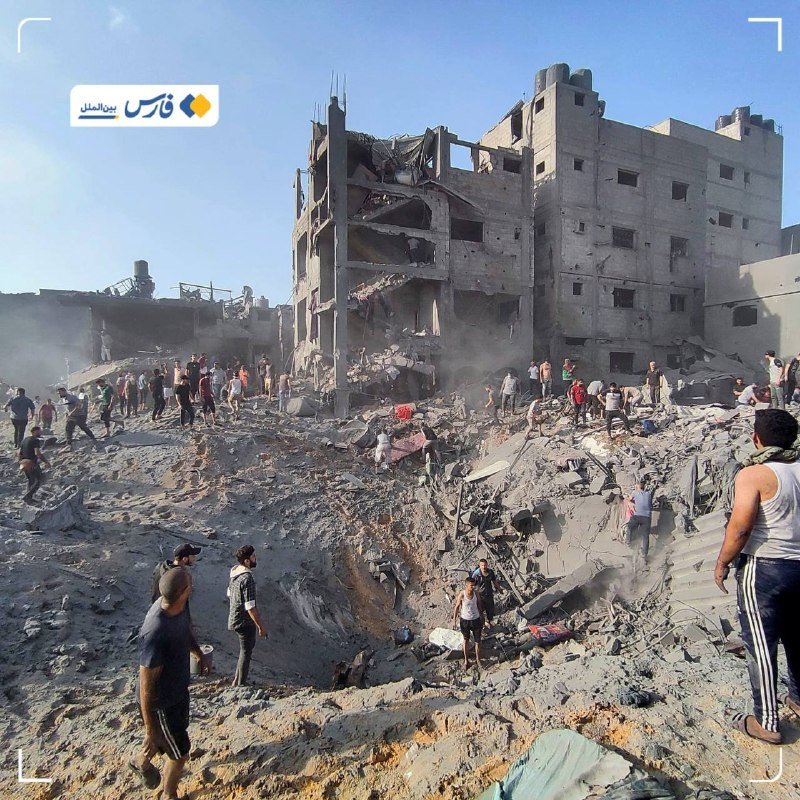
The framing on offer in Washington is that this counts as a breakthrough. After a year of daily strikes, mass displacement, and an Israeli ground operation that pushed deep into southern Lebanese towns, any document that re-inserts the Lebanese army as the sole internal security actor south of the Litani is more than the status quo a month ago. That deserves to be acknowledged plainly. But a ceasefire whose end-state is conditional on the very dynamics that produced the war is not a resolution; it is a pause with an off-ramp that can be revoked by either side. The Lebanese public, which has absorbed the bulk of the war's civilian cost, has good reason to read the small print before celebrating.
What the document actually does
According to the Middle East Eye reporting circulating this evening, the agreement centres on a pilot deployment of Lebanese Armed Forces into two specific areas now occupied by Israel, paired with a sequenced process to remove Hezbollah's military infrastructure from the border strip. Five rounds of direct Israeli–Lebanese talks — an unusual format after a year of indirect channels — produced language both governments could sign without immediately repudiating their core constituencies. For Beirut, the LAF is back in the picture as a sovereign institution. For Jerusalem, the arrangement is presented as a Lebanese takeover of responsibility that does not require Israel to name a withdrawal date.
Israeli Prime Minister Benjamin Netanyahu, quoted in reporting from Clash Report, characterised the deal in magnanimous terms: the Lebanese government, he said, had taken "an extremely courageous step" by signing, and "still has more work to do." That framing — Lebanon as the actor that must perform — is consistent with the document's architecture. The pilot areas are defined; the timeline is not. The disarmament sequence is defined; the trigger that ends it is not. The Israeli withdrawal is the variable, not the constant.
Why the absence of a timeline is the story
The hardest word missing from the public summary is "when." In any ceasefire architecture that depends on a sequencing of steps, a missing date is not a technicality; it is the central fact. The arrangement hands Israel the ability to assess whether "security developments" have advanced sufficiently to justify further pullback, on terms Israeli defence planners — not the Lebanese government or the international guarantors — will set. That is not a balanced mechanism. It is a deferral with an Israeli veto.
The structural problem is familiar. The November 2024 arrangement that preceded the current war also relied on phased implementation tied to security milestones; it collapsed in roughly a year when each side accused the other of slow-walking. The lesson of that episode is not that diplomacy failed, but that the failure mode was designed in. When the dominant military actor controls the criteria for satisfaction, the weaker party's compliance is permanent and the dominant party's compliance is provisional. South Lebanon's villages — most of them Shia-majority, many still buried under rubble — are paying the rent on that asymmetry in real time.
The Lebanese army as the lynchpin — and the liability
The deal leans heavily on the Lebanese Armed Forces as the institution that converts paper commitments into facts on the ground. That is a defensible choice in principle: the LAF is the only Lebanese state body with a national, non-sectarian command, and it has a long, if uneven, history of asserting state authority in the south. It is also a fragile choice. The army does not control Hezbollah; it never has. It operates under fiscal constraint, with a budget that has historically depended on external donors, and its southern brigades have been deliberately kept out of direct confrontation with the party for the past two decades. Asking those same units to take ownership of a border the Israeli Air Force struck daily until weeks ago, against a militia that has not publicly accepted disarmament, is to ask a lot of generals who are already being asked to do what the state apparatus cannot.
The Hezbollah question is the second hard word missing from the summary. The framework envisions a disarmament process south of the Litani. It does not specify who verifies compliance, what counts as a satisfied milestone, or what happens if the process stalls. That omission is not accidental. Hezbollah's political position inside Lebanon — including seats in parliament and ministerial portfolios — means any Lebanese government that signs a document perceived as surrendering the resistance will struggle to govern. The deal is, in effect, a tripartite bargain among Beirut, Jerusalem, and Washington that does not yet have a signed fourth party in Tehran.
What changes, what doesn't, and what to watch
If the pilot areas take hold — if LAF brigades actually deploy and Israeli forces actually thin out of two named zones — the document will have done something concrete. Civilians from those areas will be able to return; reconstruction financing, which donors have been holding back pending a political track, can begin to flow; and the daily rhythm of cross-border fire, which both governments claimed to want ended, can plausibly quieten. That is a real outcome, not a cosmetic one, and it would mark the first durable reduction in hostilities since the war resumed in earnest in late 2024.
What does not change is the underlying structure: Israel retains the ability to set the pace of its own withdrawal; Hezbollah retains a residual military posture that the document does not fully dismantle; and the Lebanese state retains neither the fiscal capacity nor the political consensus to unilaterally enforce the deal's most ambitious elements. The arrangement therefore resolves the easy part of the war and leaves the hard part — who decides when the occupation is over — exactly where it started.
Over the next sixty to ninety days, three signals will indicate whether the framework is a real off-ramp or a managed pause. First, whether the named pilot areas actually see LAF troops in uniform on Israeli-acknowledged positions, and whether Israeli units visibly thin from those zones. Second, whether Hezbollah's public posture moves from non-acceptance to grudging acquiescence, or hardens into open opposition that the Lebanese government cannot absorb. Third, whether the US, which has been the principal mediator, treats the next milestone as a checkpoint or a tripwire — applying pressure for follow-through, or accepting verbal compliance. On the current text, the burden of performance falls disproportionately on Beirut. Until that balance is corrected, the document is best read as a beginning, not a settlement.
This publication has framed the arrangement as the document reads: a pilot, not a resolution. The wire consensus has leaned on "breakthrough"; the lived experience of south Lebanon's displaced population, which will return home or not on the strength of the implementation now underway, deserves a more cautious read.
Wire provenance
This editorial synthesis draws on the following public wire/social posts:
- https://x.com/middleeasteye/status/...
- https://x.com/middleeasteye/status/...
- https://t.me/ClashReport/...