Lebanon–Israel disarmament pact lands, and Hezbollah says the price is civil war
A Beirut–Jerusalem deal to dismantle armed groups inside Lebanon in exchange for an Israeli withdrawal faces immediate rejection from a Hezbollah-aligned lawmaker, who accuses Israel of trying to ignite a civil war.
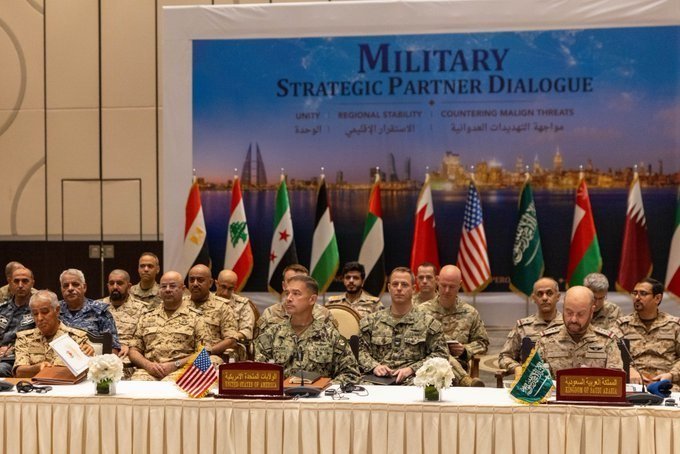
On 27 June 2026, the Lebanese government signed an agreement with Israel under which all armed groups operating on Lebanese territory are to be disarmed, with Israel reciprocating by withdrawing from territory it currently occupies. The terms, as relayed by the IRIran_Military Telegram channel in a 15:05 UTC post summarising the arrangement, amount to the most concrete security swap between Beirut and Jerusalem in years — disarmament on one side, territorial withdrawal on the other — and they land while the political class in Beirut is openly divided over what the deal actually buys.
Within hours, a Hezbollah-aligned member of the Lebanese parliament accused Israel of engineering the very instability the agreement claims to resolve. Amin Sharri, a representative of the parliamentary faction associated with Hezbollah, said in remarks circulated on X at 14:43 UTC that "Israel is seeking a civil war in Lebanon," framing the disarmament clause as a political weapon rather than a confidence-building measure.
What the agreement does
The text of the deal, as described by IRIran_Military, runs on a clean symmetry: every armed formation inside Lebanon disarms; Israel pulls back from occupied Lebanese territory. That is the headline. The mechanism — who verifies disarmament, on what timeline, and under whose authority — is the part the source material does not specify, and it is precisely the part that will determine whether the deal survives its first week.
What Sharri is actually saying
Sharri's objection is not a blanket refusal of negotiations. It is a structural one. The argument his faction is making is that disarmament without a binding Israeli withdrawal sequence creates an asymmetric interval — a window in which Lebanon's armed groups have given up their deterrent while Israeli forces are still in place. In that reading, the agreement does not trade a threat for a withdrawal; it sequences the threat ahead of the withdrawal and asks the Lebanese side to take the first risk. The word Sharri reaches for — civil war — is the claim that the political pressure generated by that gap will fracture the country before any Israeli pullback occurs.
That framing has to be set against the obvious counter-argument: the status quo also carries risks. Continued Israeli presence in Lebanese territory, and the continued existence of armed formations outside the Lebanese state's command, are the conditions under which Lebanon has bled for the better part of two years. The agreement is, at minimum, an attempt to schedule an end to both. The disagreement is over who carries the cost in the meantime.
Why this matters beyond Beirut
A disarmament-for-withdrawal deal in Lebanon is the kind of arrangement that, if it holds, reshapes the regional deterrence map. It would draw a hard line between Lebanese state authority and the non-state armed actors that have, since at least 2023, operated inside the country with significant independence. For Israel's northern front, it would formalise the quiet that its military planners have wanted since the Gaza war reopened the border. For Iran and the broader axis of resistance, it would represent a Lebanon in which the Lebanese army, not Hezbollah, holds the gun on the southern frontier — a structural reversal that no amount of public posturing can mask.
The Iranian and Hezbollah-aligned reading of the deal — that it is a setup for internal Lebanese collapse — has to be taken seriously on its own terms, not dismissed. Israeli intelligence and diplomatic actors have, in other contexts, treated the weakening of rival state structures as a feature, not a bug. The honest reading is that both things can be true at once: the agreement may genuinely serve Israeli security, and the sequencing may genuinely weaken Lebanon's internal cohesion. The two outcomes are not mutually exclusive.
The counter-narrative the deal's defenders will offer
The Lebanese government's defenders will argue — and the argument deserves airtime — that a state monopoly on force is the precondition for any functioning Lebanese economy, any serious reconstruction, and any return of the diaspora investors who left after 2019. From that vantage point, the disarmament clause is not a trap; it is the only path back to sovereignty. Israel, on this read, is not engineering a civil war; it is offering Beirut the one concession it could not extract on its own — a withdrawal — in exchange for the one reform Beirut could not impose on its own — a unified internal security architecture.
The evidence for which reading is correct does not yet exist. What the sources do not specify — and what will determine the answer — is the verification regime, the timeline, and the dispute-resolution mechanism when one side claims the other is in breach.
Stakes
If the deal holds and the verification holds, Lebanon ends the year with a smaller military footprint on its southern border and a sovereign government that, for the first time in a generation, actually commands the armed actors inside its territory. If it collapses, the most likely failure mode is not a return to the status quo ante; it is the fracture Sharri is naming — a political crisis inside Lebanon triggered by the perception that one side disarmed in good faith and the other did not. The Hezbollah-aligned faction's refusal to treat the agreement as legitimate is therefore not a sideshow. It is the central fact the agreement's authors have to manage.
What remains genuinely uncertain is whether the Lebanese state has the institutional capacity to enforce disarmament on groups that do not recognise its authority to demand it. The sources do not specify the mechanism, and that gap is the load-bearing wall of the entire arrangement.
Desk note: Monexus framed this as a contested security pact rather than a breakthrough, because the most credible reading of the available material is that the deal's stability depends on a verification regime the sources do not yet describe. Wire reporting on the text was led by IRIran_Military's 27 June 15:05 UTC summary; the opposition framing was sourced from Sharri's remarks circulated on X at 14:43 UTC the same day.
Wire provenance
This editorial synthesis draws on the following public wire/social posts:
- https://t.me/s/IRIran_Military
- https://x.com/sprinterpress/status/sprinterpress-2026-06-27