Beirut's framework deal rewards the strongman play, and exposes Europe's leverage gap
Brussels endorsed a US-Iran framework it did not negotiate, drafted in a capital where Europe no longer sets the terms. The single sentence of approval is what surrender looks like when it is dressed as diplomacy.
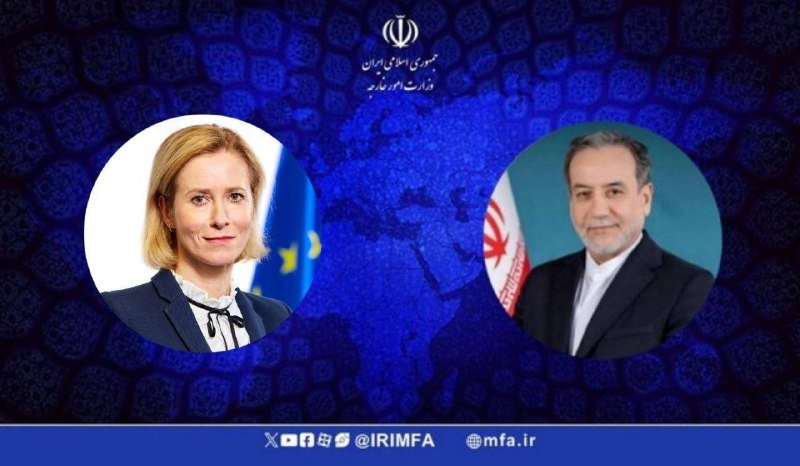
On 26 June 2026, European Commission President Ursula von der Leyen offered Brussels' quiet endorsement of a US-Iran framework deal negotiated in Beirut. The single sentence, delivered in the EU's usual monotone, confirmed what most European foreign-policy professionals already suspected: the continent had been informed of an arrangement it had no hand in drafting.
The asymmetry is the story. A framework concluded in a Lebanese capital, brokered by a third party, with a sanctioned regime that has spent four decades treating European diplomats as background furniture: that is the deal Europe now finds itself nodding through. The question worth asking is not whether the framework is a breakthrough. It is what Brussels received in exchange for its silence.
The deal on the table
What is publicly known is thin and second-hand. A framework, not a treaty. A venue, Beirut, that signals who is now mediating between Washington and Tehran. A European response that arrived after the architecture had already been agreed, expressed in a single approving sentence rather than a substantive policy statement.
That sequencing matters. Frameworks of this kind live or die on what gets traded away in the rooms the cameras never enter. The European reflex in such moments is to treat endorsement as a free option: agree in principle, claim credit for the diplomacy, retain the option to object to specific provisions later. The reflex has been wrong before, and the record suggests it is wrong again here.
What Europe actually controls
The leverage Europe once possessed over Iran's economy has been steadily dismantled, mostly by European hands. The 2015 Joint Comprehensive Plan of Action gave Brussels a structural role: the formal European parties to the deal, France, Germany and the United Kingdom (the E3), held the institutional pen alongside the US, China and Russia. That institutional seat came with something rarer, a permanent channel into both Iranian decision-making and the American negotiating room.
The US withdrawal from the JCPOA in 2018 under the first Trump administration began the erosion. The subsequent failure to revive it after 2021 removed the European rationale for treating Iran as a multilateral project at all. Sanctions enforcement, INSTEX, the special purpose vehicle designed to circumvent US secondary sanctions, all of it became academic. By the time a Beirut framework appeared, Europe had spent years demonstrating, to itself and to Tehran, that its Iran policy was a commentary on someone else's negotiations.
The strongman premium
Frameworks reward the party most willing to walk away. That is the durable lesson of the past decade of Middle East diplomacy, and it applies whether the relevant party is Tehran, Riyadh, Ankara, or any of the sub-state actors now hosting talks. A European Union that cannot articulate an independent red line in negotiations it is not invited to cannot complain when the outcome reflects someone else's priorities.
This is what the von der Leyen endorsement, in its brevity, actually concedes. Not the substantive merits of the framework itself, which remain opaque, but the proposition that Europe's role in Middle East security architecture is reactive rather than constitutive. The continent is informed; it is not at the table.
The Lebanon variable
The choice of Beirut as venue is not incidental. Lebanon has spent two years hosting a fragile cessation of hostilities arrangement between Israel and Hezbollah, an arrangement that has held intermittently and broken repeatedly. Beirut as a diplomatic venue signals that the framework rests, at least in part, on the durability of that Lebanese equilibrium. It also signals which regional actors the US and Iran now consider indispensable to managing the file.
Europe's diminished footprint in Lebanon is itself a product of choices made in Brussels and the European capitals. The macroeconomic stabilisation effort that might have anchored Lebanese state capacity has been repeatedly deferred. The border security assistance, the customs reform, the energy sector support: all of it arrived late, in tranches, and conditioned on a Lebanese political class that has shown limited capacity to absorb it. When the next regional framework needed a host city, Beirut was available partly because Europe had failed to make it less so.
What comes next
The framework will now enter the phase where language drafted in private becomes law in public. European parliaments, in particular the Bundestag, the Assemblée Nationale and the House of Lords, will be asked to consider implementing legislation that reflects commitments to which they were not party. The political space to object narrows quickly once endorsement has been given.
Brussels' working assumption appears to be that quiet acquiescence preserves optionality. The historical record suggests the opposite. Endorsements granted without leverage tend to become obligations enforced without consent. Europe will discover, in the implementing rounds, how much of the framework it actually owns, and how much it has merely been lent.
The Beirut framework is not a European diplomatic failure in the conventional sense, because Europe was never the principal. It is a European strategic position that has been made visible by the simple absence of a seat. The next test is whether any European capital treats that visibility as a problem to be solved, or as a condition to be managed.