Messi in Steel: A Patagonian Statue Chases the World Cup
In the dry scrubland outside General Roca, a sculptor is racing against the calendar to finish a monumental Lionel Messi — and to read the man in steel before the tournament decides whether the statue flatters or haunts him.
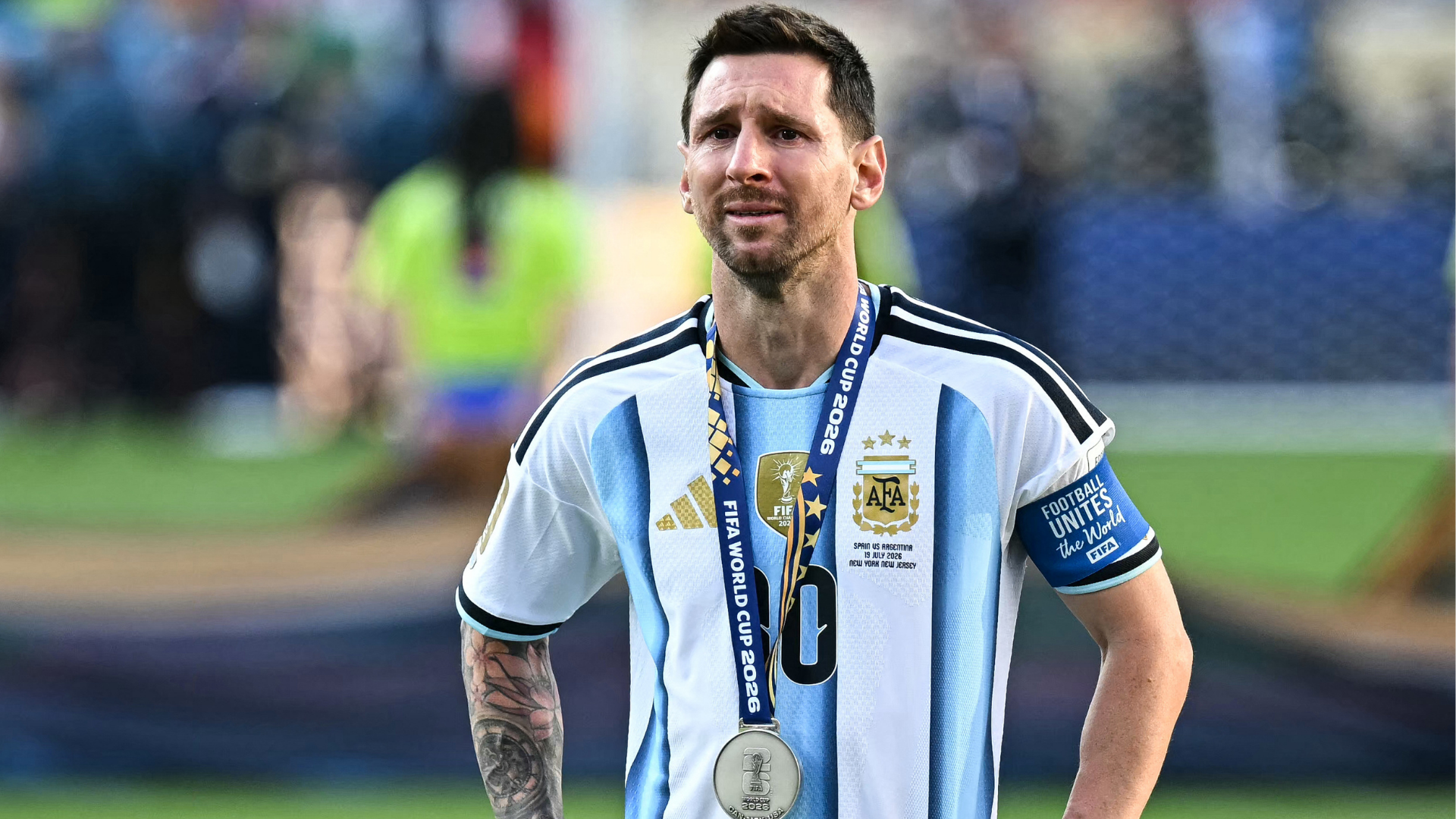
At 2026-06-27T09:02 UTC, a wire from The New York Times introduced a small story with an outsized frame: somewhere in the dust-blown steppe north of Patagonia, an artist is welding the last plates of a colossal Lionel Messi before the United States-hosted World Cup puts its stamp on the global sports calendar. The piece is the kind of human-interest dispatch editors love in tournament years — colour, scale, the footballer as national allegory — and it is also a useful lens onto something larger: the way a single body becomes a country's working shorthand, especially in a year when that body is on its last credible run.
The statue is not a private indulgence. It is being raised in the open pampa, visible from passing highways, sized so that a bus looks like a toy at its base. That choice is itself a statement: in a country where Messi's image has been re-cut every time the national team either saved or broke the public mood, the most durable portraits have always been the ones built, literally, in metal and concrete. The sculptor is betting that the next four weeks will deliver either vindication or fresh heartbreak, and that in either case the steel will outlive the verdict.
The race against the calendar
Work on the figure accelerated once Argentina confirmed its 2026 squad cycle and the broadcast schedule locked in the marquee fixtures. The artist's central problem is not craft — the silhouette of Messi, headband and all, is reproducible from any still photograph — but capture: building a face that a country will accept as the face. Argentine public sculpture has a long, uneven record with living athletes; the result is usually judged not by anatomy but by the mood of the moment it is unveiled. A statue raised before a triumph is a coronation. The same statue raised before a defeat is a monument to overconfidence.
The sculptor quoted in the NYT dispatch was explicit about the timing pressure: the metal must be sealed, the surface finished, the lighting rigs tested before the first ball is kicked. World Cup windows are unforgiving. A statue unveiled in the tournament's first week is read as national confidence; one unveiled in the last is read as desperation. The deadline is therefore not just artistic but rhetorical.
The body as national shorthand
Argentina's relationship with Messi has always been more contractual than sentimental. He left for Barcelona as a child, returned to Newell's briefly, went to Paris, went to Miami, and only intermittently put on the albiceleste. Each absence was registered; each return was negotiated. The 2022 World Cup in Qatar turned that contract into something closer to a covenant — a final, unlikely settlement of a generational argument about whether a genius who chose Europe over Buenos Aires could still be claimed as Argentine.
The Patagonian statue sits inside that argument. It is not a private commission and not a federation project; it is the kind of unofficial monument that a country builds when it wants to seal a memory in place before the memory has finished settling. The choice of Patagonia — far from the stadia where Messi will actually play, far from Buenos Aires, far from Rosario — is also a quiet admission: the man being honoured is no longer local. He is climatic, distributed, a weather system. Putting him in the open pampa is, in that sense, accurate.
What the counter-narrative looks like
There is, of course, a less generous read. Monumental sport statues in Latin America have a track record of outlasting the careers they commemorate and then embarrassing the people who built them. Statues of Diego Maradona were raised, defaced, raised again, and re-defaced across Buenos Aires as the national mood swung. A Messi in steel, finished before the 2026 tournament resolves, risks the same fate: a permanent artefact tied to a result that has not yet happened.
There is also a more pragmatic objection. In a country where public-works budgets are tight and cultural funding has been contested, the resources going into a privately financed but nationally legible statue in the desert are a choice. The sculptor is betting that the symbolic return — the photographs, the pilgrimages, the inevitable slow-motion broadcast shots — justifies the spend. Critics will read it as another case of a country building shrines to millionaire athletes while its libraries, clinics, and smaller arts infrastructure go wanting. Both readings are coherent. The dominant one will depend, as it always does, on what Messi does between now and mid-July.
The structural frame, in plain language
What the statue actually captures is the conversion of athletic labour into national hardware. A generation ago, Argentine footballers were exported as talent and imported back as brand value; the statuary, the murals, the airport lounges named after them were a way of reclaiming a percentage. The Messi in the pampa extends that logic into the country's emptiest geography, on the assumption that a figure of his scale can carry meaning across distance the way a transmission tower carries signal. Whether it does so with dignity, or with the slightly shrill quality of a country talking too loudly about a man who has stopped needing the volume turned up, is the artistic question the next month will answer.
Stakes and what to watch
For the sculptor, the stakes are concrete: a finished work that reads correctly to a global television audience of hundreds of millions. For the locality around General Roca, the stakes are commercial — tournament-year tourism to a non-host region of Argentina, photographs that travel, a line on the map. For the federation and the broader project of Argentine football, the stakes are narrative: a statue that the country can live with for a generation, or one that joins the long ledger of monuments that the public mood eventually has to answer for.
The reasonable forecast is that the work will be finished on time, that it will be photographed extensively, and that its reputation will track Argentina's run in the tournament with a fidelity the sculptor cannot control. The thing being raced against is not just the World Cup schedule. It is the long, slow verdict that follows.
Desk note: Monexus carried the NYT human-interest dispatch as the seed and read it against the country's longer history of athletic statuary. The piece is filed under culture rather than sport because the action — the welding, the unveiling, the framing — is cultural, even when the body is athletic.