Netanyahu's Lebanon gambit: a framework, a map, and the hard politics of demilitarising Hezbollah
Israel's prime minister says a deal is taking shape to push Hezbollah north of the Litani. The Lebanese army, he says, will do the policing — and he is not mincing words about who inside it needs to go.
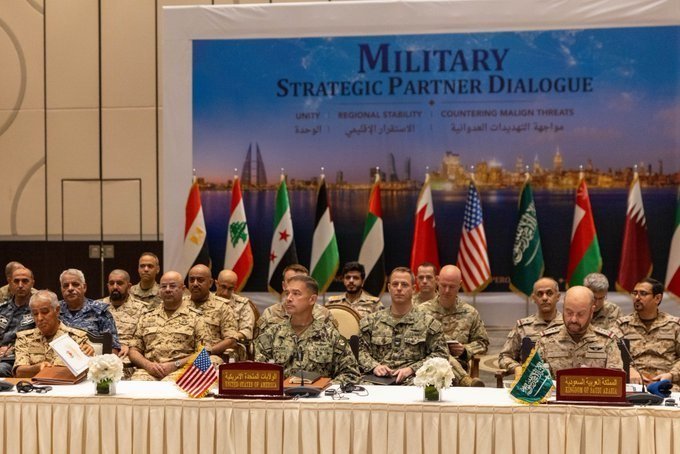
On 27 June 2026, in a sequence of public remarks carried by Telegram channels Open Source Intel and Clash Report, Israeli Prime Minister Benjamin Netanyahu presented what he called a framework of understandings with Lebanon and laid out a map showing zones in the country's south where the Lebanese Armed Forces (LAF) would take over from Hezbollah. He framed the moment in sweeping terms: Israel, he said, was "breaking the Iranian diplomatic axis" because it had "struck Hezbollah hard," and the political opening now on the table was a direct consequence of that military pressure.
The argument Netanyahu is selling — to his cabinet, to Washington, and to a domestic audience still raw from the 7 October shock — is that Israeli firepower has converted a problem that looked intractable into a negotiable one. The negotiating instrument is not new: it is the long-standing UN Security Council framework demanding that armed groups other than the Lebanese state operate north of the Litani River. What is new is the sequencing. The LAF, not UNIFIL alone, is being asked to do the disarming.
The pitch, in three sentences
Netanyahu's framing, as reported by Open Source Intel and Clash Report, runs in three layers. First, the LAF must "make changes within itself," because there are "jihadists inside that army" who will need to be removed before Israel trusts the institution as the guarantor of any deal. Second, the Lebanese government knows it has its own work to do on that front, and the deal cannot hold unless Beirut is seen to be doing it. Third, the Iranian axis — Tehran's network of partners and proxies that for two decades gave Hezbollah strategic depth on Israel's northern border — is being broken, and this framework is one of the visible results.
That is the argument. It is delivered as triumphalism, and the domestic Israeli audience is plainly the immediate audience. But the diplomatic payload is harder to read: who has agreed to what, on what timetable, with what enforcement mechanism.
The map, and what it actually says
The map Netanyahu displayed, as cited by Open Source Intel, identifies specific southern Lebanese zones in which the LAF will "begin deploying to carry out Hezbollah's demilitarization." The geography matters. Hezbollah's deployment south of the Litani — a violation of UN Security Council Resolution 1701 — has been the standing grievance from Jerusalem for two decades, and the central justification offered for the long campaign of strikes that followed 8 October 2023. If the LAF now moves back into those positions in a sequenced, verifiable way, Israel gets most of what it says it needs from a diplomatic track: a hostile paramilitary pushed off the border, an indigenous state institution replacing it, and a multinational monitoring regime with the LAF as the lead.
The political substance is therefore in the enforcement — whether the LAF has the capacity, and the will, to confront a militia that is still the most powerful non-state military force in the Levant. That is the question Netanyahu himself put on the table when he insisted on "changes within" the LAF. He is not being polite. He is signalling that any framework is contingent on a Beirut willing to police its own security services.
The counter-narrative from Beirut and Tehran
From Beirut, the read is different. The Lebanese state's posture, as conveyed through reporting carried by Open Source Intel and Clash Report, is that the country is being asked to absorb the cost of Israel's war — rebuild destroyed villages, demobilise a militia that is also a political party and a social services network, and trust that the political settlement is durable. The army's professional preference, public and private, has long been to deploy south of the Litani in partnership with UNIFIL; the objection is not to deployment but to the precondition that Hezbollah be disarmed by an institution still listed by parts of the Lebanese political class as a national resistance movement.
Iran's read, by inference from the same reporting, is the inverse of Netanyahu's triumphalism. Tehran does not accept that its "axis" is being broken — it argues that Hezbollah retains its weapons, its political weight inside Lebanon, and its cross-border deterrent capacity, and that what is being negotiated is a tactical rearrangement, not a strategic defeat. Both of these readings — Beirut's and Tehran's — deserve equal weight against the Israeli framing, particularly because the public reporting on the framework's actual text, enforcement mechanism, and timeline remains thin.
What this sits inside
Read against the longer arc, the pattern is familiar. The dominant regional powers have, since the early 2000s, repeatedly used the language of "framework" to describe arrangements whose substantive content is decided on the ground by force. The Lebanese file has been through several such cycles — Resolution 1701 in 2006, the Special Tribunal, the 2020 maritime deal — and each time the political text trailed the military reality rather than the other way round. The current moment differs in degree: Hezbollah has taken a serious material hit, and the political cost of rebuilding its presence south of the Litani is higher than at any point since 2006. That is a real change. It is not the same as the disarmament that Netanyahu's language implies.
The structural question is whether a Lebanese state under severe fiscal and political stress can credibly disarm a paramilitary that retains legitimacy in significant sections of the Shi'a community — and whether Israel, having spent twenty years insisting that only the LAF will do, will accept any outcome short of full dismantlement. Those are the two pressure points where the framework is most likely to crack.
Stakes, and what remains genuinely unclear
For Israel, the upside of a working framework is a quiet northern border, a verification regime it can defend politically at home, and a wedge driven between Tehran and its most important forward asset. The downside — and it is the one Netanyahu did not address in these remarks — is that a partial deal, with Hezbollah's weapons intact north of the Litani, returns Israel in a year or two to the same strategic geometry it has complained about since the Second Lebanon War.
For Lebanon, the upside is reconstruction, an end to daily strikes, and re-integration into the Western financial and diplomatic architecture. The downside is that the LAF is asked to do the politically impossible, and that Beirut's bargaining position in any subsequent negotiation collapses once it has accepted the premise that Hezbollah north of the Litani is its problem, not Israel's.
What remains genuinely unclear, on the evidence available in the public reporting carried by Open Source Intel and Clash Report, is the text of the framework itself, the identity of the guarantors beyond Israel and Lebanon, the verification regime, and the timeline. Until those are on the record, what we are watching is a confidence-building display, not yet a settlement.
Monexus framed this around the enforcement question — who polices the deal, with what capability, and against whom — rather than the diplomatic theatre of "framework" announcements. The wire services have largely carried Netanyahu's framing as headline; the harder reporting sits in the conditional clauses.
Wire provenance
This editorial synthesis draws on the following public wire/social posts:
- https://t.me/ClashReport
- https://t.me/osintlive
- https://t.me/osintlive
- https://t.me/ClashReport