'Pinocchio Unstrung' and the rise of the Poohniverse: low-budget horror's IP-sharecropping economy
Rhys Frake-Waterfield's 'Pinocchio Unstrung' adds a fourth property to the Poohniverse — a grassroots horror franchise built by skirting the studios and owning the brand nobody else will touch.
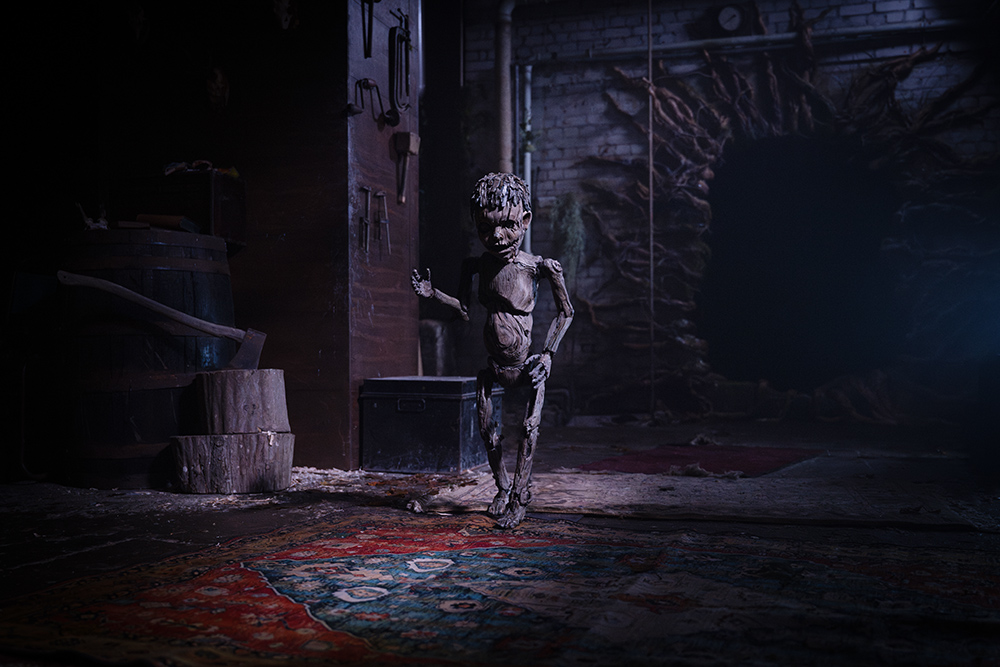
The wooden boy is flesh now, and bleeding. On 27 June 2026, Variety confirmed that Rhys Frake-Waterfield is moving forward with Pinocchio Unstrung, the latest entry in the so-called Poohniverse — the loose, low-budget horror franchise that has, in just over three years, assembled a rogues' gallery of once-sacred children's characters and put them on a collision course. Variety describes the project as "kooky, crazy and fun" and frames it as the Avengers-style pivot point of a shared universe that already includes Pooh, Bambi and Peter Pan, with more characters queued to barge through the same doors.
The Poohniverse is the clearest case yet that horror's centre of gravity has migrated from the studio lot to the laptop. Understanding how a director with no Marvel-sized marketing budget got four recognisable brands aligned under one roof tells a larger story about who can build an IP today — and on whose terms.
From YouTube to a shared universe
Frake-Waterfield's commercial break came with Winnie-the-Pooh: Blood and Honey (2023), a film that succeeded not despite its limited resources but because of them. By stripping the Hundred Acre Wood of its cartoon warmth and recasting its residents as feral killers, the project sidestepped the obstacle that stops most fan horror: the copyright thicket surrounding Disney's Pooh, which had lapsed into the public domain with the expiry of the 1926 milestone. The same logic now extends to Bambi (whose original 1923 novella entered the US public domain in 2022) and Peter Pan (whose first appearance in J. M. Barrie's The Little White Bird is comfortably out of copyright). Variety's reporting on Pinocchio Unstrung implies the same strategy — Collodi's Le avventure di Pinocchio dates from 1883 and is firmly out of copyright worldwide.
That sequence matters. The Poohniverse is, structurally, an IP-sharecropping operation: it cultivates ground that copyright law has rendered temporarily ownerless and harvests recognition it did not pay to build. Hollywood's own pending live-action Pinocchio, a Disney prestige release, sits on the opposite side of that line — fully cleared, fully branded, and visibly expensive. The Unstrung version costs less and arrives hungrier.
Why 'Avengers-style' is doing a lot of work
The Variety framing leans hard on the Marvel comparison: Poohniverse, the pitch goes, is a horror multiverse in waiting. The mechanics are uneven. Blood and Honey was effectively a one-shot; the Bambi-starring sequel Blood and Honey 2 (2024) gathered the wider cast; a third instalment has been signposted. Peter Pan's Neverland Nightmare and now Pinocchio Unstrung are pointedly described as "Avengers-style," in Variety's wording, with characters destined to collide.
The Marvel analogy overstates the production reality. There is no shared script bible, no Kevin Feige-shaped creative overseer, and the films are visibly cut from different cloth — Peter Pan's Neverland Nightmare, distributed through ITN Distribution, has a darker palette and a more serial-killer register than the Pooh films. Audiences who treat the Poohniverse as a single continuity are doing the franchise-building work that the studio system normally performs; the marketing benefits from a feeling of inevitability that the production schedule has not yet earned.
What Marvel did spend on, and what the Poohniverse does not, is sustained press, festival premieres, and cast-screenwriter press tours. Variety's coverage is itself part of the value chain: by reporting Pinocchio Unstrung as a shared-universe beat, the trade press cements the perception of unity without the producer having to underwrite it.
The Scott Jeffrey Production engine
Most Poohniverse titles carry the imprint of Scott Jeffrey, the British producer behind Jagged Edge Productions, who has been the connective tissue across the Pooh, Bambi and Peter Pan films. Variety's piece is positioned around Frake-Waterfield, but the underlying production company repeats — and the same VFX and on-screen talent circulates across the roster. That staffing overlap is the de facto continuity the brand sells: the same cheap-and-cheerful house style, the same gore-practical effects, the same social-media-native poster art.
The economics are equally tight. Blood and Honey was reported to have been produced for under £100,000, a sum that conventional distributors would not even budget for a marketing test. Its sequel budgets reportedly climbed into the low millions, and the Pan and Pinocchio entries have benefited from wider distribution arrangements. Each film functions as both a release and a pilot — proof of demand for the next one. Critics have mostly been hostile; audiences have mostly shown up, in the numbers that define micro-budget success.
Counter-narrative: not quite exploitation cinema, not quite fandom
The dominant critical line holds that the Poohniverse is exploitation cinema in a fandom mask: a calculated use of recognisable brand silhouettes to lift a low-budget slasher above the noise. There is a strong version of that case. The original Disney Pooh remains a sacred property in family homes; placing the same bear in a slasher context leans on cultural recognition without compensating the entity that built it. The defenders' line, advanced in interviews by Frake-Waterfield and Jeffrey, runs the other way: they are exploiting only what copyright allows them to exploit, and where they cannot (Tigger, for example, was kept out of Blood and Honey 2), they have not.
A more structural reading is that the Poohniverse is testing a third path between studio IP and true indie. Major studios guard their old characters as defensive moats — Disney's actual 2023 live-action Pinocchio was an attempt to keep the same brand inside the family, at a budget that Variety and other outlets have placed in the hundreds of millions. True indies, by contrast, build new characters and pay the discovery cost themselves. The Poohniverse picks the unguarded windows — old books, lapsed trademarks — and writes slasher fiction on the inside of the glass. It is neither studio horror nor first-principles indie; it is IP archaeology.
What the Poohniverse is actually buying
The franchise is buying two things, and it knows which is which. The first is recognition: a child of any generation can identify Pooh, Bambi, Peter Pan or Pinocchio on a poster, and the slasher detour is funny or transgressive because the recognition is total. The second is permission: by sticking to works whose US copyrights have lapsed, the production avoids the cease-and-desist letter that has killed other fan-IP projects. Disney has not contested the Pooh films in court; whether it ever will is a question the franchise has so far answered with plausible deniability.
What the Poohniverse is not buying is critical legitimacy. Reviews across the Blood and Honey cycle have, in the trade press, hovered around the threshold of operability; some outlets declined to score the film at all. Critics have written the franchise off as a meme with a release schedule, and there is something to that. The Poohniverse is also not buying Marvel-scale profit. Blood and Honey 2 cleared a reported profit, but the unit economics are still those of a niche horror label.
Stakes: a slow remaking of horror's economics
If Pinocchio Unstrung performs, the most consequential effect will be on a layer of the industry above the Poohniverse itself. Studios watching the model will note that a property can be rehabilitated into a horror brand for the cost of a single feature, provided the underlying text is public domain. The opposite risk — that Disney or another rights-holder moves to extend protection, or that public-domain exhaustion is litigated — is also live. Either way, the precedent that four shared-universe films can exist without a single nine-figure marketing push is now established.
The next twelve months will tell whether the Poohniverse holds together as a brand or fragments into its constituent cheap shocks. Variety's framing of "Pinocchio Unstrung" as the Avengers moment is, for now, an aspiration dressed as a fact. The films themselves are the only audit that matters.
The desk covered this as a structural story about IP economics rather than a genre release, on the read that the Poohniverse is most legible as a copyright-arbitrage play with slasher aesthetics layered on top.