Sirens in Bahrain: What an Iranian Retaliatory Strike on the Gulf Would Actually Mean
Initial reports of explosions and air-raid sirens across Bahrain on the evening of 27 June 2026 have set off the Gulf's worst-case planning. The framing of the next 48 hours matters as much as the missiles themselves.
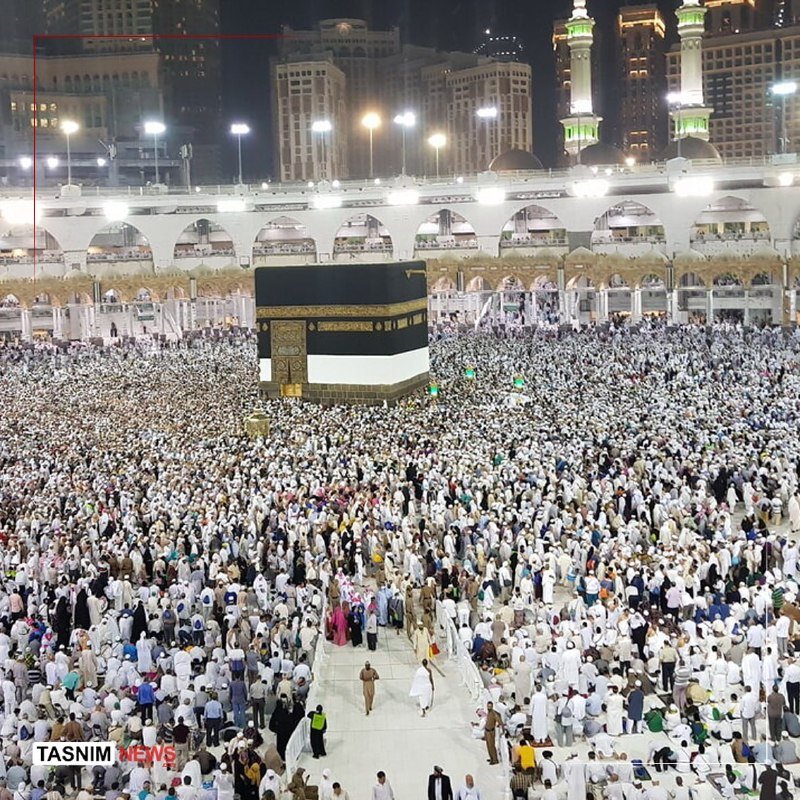
Air-raid sirens sounded across Bahrain shortly before midnight UTC on 27 June 2026, with the Telegram channel @wfwitness reporting initial accounts of explosions on the island and the OSINT account @AMK_Mapping flagging the possibility that an Iranian retaliatory attack was underway. The two channels, separated by minutes, drew the same conclusion: something in the Gulf had just changed, and it had changed quickly.
The temptation, in moments like this, is to treat the sirens as the story. They are not. They are the warning light on a dashboard that has been flashing for years. The actual story is what Bahrain represents in the regional geometry — and what a strike on it, even a limited one, would do to the American posture in the Gulf that has anchored Western energy policy since 1945.
Why Bahrain, why now
Bahrain is small, Sunni-ruled, and sits roughly 130 miles across the Gulf from the Iranian coast. It hosts Naval Forces Central Command — the operational headquarters of the US Fifth Fleet — and has done so since 1948. That single fact makes Bahrain the most American piece of sovereign territory in the Gulf by a wide margin, and therefore the most exposed. A strike on Manama is not a strike on a neutral bystander; it is a strike on the architecture that makes US power projection in the Gulf possible.
Initial reports from @wfwitness and @AMK_Mapping do not yet specify what was hit, or whether the explosions were the result of intercepts, missile impacts, or drone activity. The sources that move first in a crisis like this are almost always the loudest rather than the most reliable. But the framing matters: an Iranian retaliatory strike on Bahrain would not be the opening shot of a new war. It would be the second move in one that is already underway — Tehran's response to whatever prompted the original Israeli or US action that preceded it.
What the wire consensus leaves out
Western coverage of any Iranian move in the Gulf tends to flatten two things at once. First, it treats Iran as the sole aggressor, bracketing out the chain of action that produced the strike in the first place — the Israeli operation, the US posture change, the sanctions escalation that pushed the diplomatic track off the rails. Second, it strips the Iranian position of its strategic logic and recasts it as theology or irrationality, which is a way of saying the actor is not really an actor.
Neither framing survives contact with the evidence. Tehran has, for two decades, run a calibrated escalation ladder in the Gulf: harassment of tankers, the 2019 strike on Aramco facilities attributed to Iran by Saudi Arabia, the seizure of commercial vessels, periodic drone attacks on US positions in Iraq and Syria. Each move was calibrated, reversible, and designed to produce a negotiating posture change rather than a war. Reading the next one as irrational is a luxury of analysts who are not on the receiving end.
The counter-narrative worth holding in mind is simpler: a strike on Bahrain, if confirmed, would be the most escalatory move Tehran has made in years, and the most directly aimed at American personnel and infrastructure. That deserves to be said plainly, without either inflating it into a casus belli or relativising it into routine posturing.
The structural frame, in plain terms
The Gulf has been run, since the second world war, on a simple bargain: the United States guarantees the security of the oil-producing monarchies in exchange for dollar-denominated energy trade and the stationing of Western military power along the shipping lanes. That bargain is the spine of the petrodollar system, and it is also the spine of every American grand-strategy document written since 1980. Bahrain is the operational hinge of that spine.
What we are watching in the next 48 hours, if the initial reports harden into confirmed strikes, is not a regional skirmish. It is a stress test of that spine. A successful Iranian strike on Bahrain — even a symbolic one — would do two things simultaneously. It would expose the limits of the US missile-defence umbrella over the Gulf, which has been sold to every Gulf monarchy as the price of admission to American protection. And it would force a choice on Washington between escalation and acknowledgement that the deterrence posture has been penetrated. Both options carry cost.
The deeper structural point is that Gulf security has been run as an American service for forty years. The customer base — Saudi Arabia, the UAE, Bahrain, Qatar, Kuwait, Oman — has been paying in dollars, basing rights, and arms purchases. If the service is no longer reliable, the customers will eventually diversify their providers, and the architecture of dollar-denominated energy trade that depends on US naval supremacy in the Gulf begins to fray.
What remains uncertain
The sources available as of 2349 UTC on 27 June 2026 are limited to two Telegram channels reporting initial accounts. Neither has been corroborated by a Western wire, an Israeli military spokesperson, an Iranian state-media briefing, or a US Central Command statement. The pattern of events — explosions plus sirens plus an Iranian retaliation frame — could harden into a confirmed strike within hours, or it could resolve into a missile interception, a drone that missed, or an incident with an entirely different origin. The sources do not yet allow a confident call.
What they do allow is the recognition that Bahrain is the most consequential square on the Gulf board, and that any move against it — Iranian, American, Israeli, or otherwise — rewires the regional calculation. The next confirmed statement from a Western wire, the IDF, USCENTCOM, or the Iranian foreign ministry will be the one that matters. Until then, the sirens are a warning, and the warnings should be read as such.
This publication writes the regional desk on the principle that the sirens are usually less informative than the geometry that produced them.
Wire provenance
This editorial synthesis draws on the following public wire/social posts:
- https://t.me/wfwitness
- https://t.me/AMK_Mapping