Second day of strikes near Iran's Strait of Hormuz: what is known, what isn't, and what is at stake
For the second consecutive day, explosions were reported near the Iranian port town of Sirik in Hormozgan province. The wire is thin, the sources adversarial, and the geography critical.
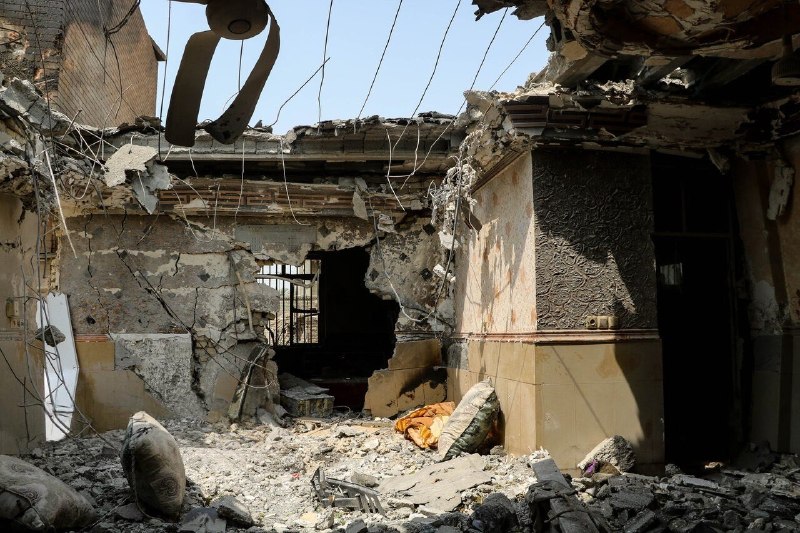
At 21:35 UTC on 27 June 2026, residents near the village of Tahrui in the Iranian coastal district of Sirik reported hearing a fresh series of explosions, the second consecutive day of strikes or impact events along Hormozgan province's Makran coast. The reports — carried first by Telegram channels Clash Report and GeoPWatch, and amplified within minutes by Intelslava and The Cradle — described blasts close to a telecommunications site and, in one channel's account, near Iran's Sirik naval base. No Iranian state body had, at the time of writing, issued a confirmed casualty count or attributed the strikes. The pattern, however, is unambiguous: a geographic repeat, on a stretch of coast that sits a short distance from the Strait of Hormuz, against an infrastructure target set that includes both civilian communications and a known naval installation.
What is unfolding is not a one-off. It is a sequenced escalation, conducted in a corridor of water through which roughly a fifth of the world's traded oil moves on a typical day. The official record will lag the tactical record by hours, perhaps days. The interpretive record — the read-as-it-happens account carried by Telegram channels of varying provenance — is already coalescing around a presumption of US or allied action. That presumption is plausible, but the sourcing is contested, and this publication treats it as such.
What the sources actually say
Four Telegram accounts provide the spine of what is known. Clash Report, a London-based open-source channel that has covered Iran-adjacent strikes since at least 2024, posted at 21:35 UTC that several explosions had been heard near Tahrui village in Sirik. Intelslava, a channel with a longer track record of carrying Syrian and Middle Eastern battlefield claims, ran the same line under a US–Iran visual frame at 21:40 UTC and located the blasts at the Sirik naval base. GeoPWatch, an open-source intelligence channel known for geo-locating strike imagery, posted at 21:27 UTC a single unconfirmed photograph of smoke over Sirik, and explicitly framed the episode as the second day in a row of "presumed USAF airstrikes."
The Cradle, a Beirut-based outlet often skeptical of Western framing of the Middle East, cited Iranian state broadcaster IRIB at 21:43 UTC. According to The Cradle's reading of IRIB, a single "informed military source" attributed the blasts to "multiple projectiles striking a telecommunications" site — language that does not name a perpetrator but does name a target class.
The convergence across four independent feeds — two open-source-intelligence shops and two regional-political outlets, citing Iranian state media — is the strongest evidence available that something struck, or was reported to have struck, near Sirik on the evening of 27 June. The divergence is on perpetrator and target. Intelslava and GeoPWatch presume US action against a military site. The Cradle's IRIB citation points to a civilian-communications target without naming who fired.
The geography, and why it matters
Sirik is a small port district on Iran's southern Makran coast, in Hormozgan province, facing the Gulf of Oman rather than the Persian Gulf proper. It sits roughly 120 kilometres east of Bandar Abbas, Iran's largest naval base, and within tactical range of the Strait of Hormuz chokepoint. The coast has hosted small Iranian naval installations and IRGC fast-boat facilities for years, and it is one of several plausible launch corridors for Iranian anti-shipping operations in the event of a wider conflict.
The reported target class matters more than the specific village name. A telecommunications installation is not a hardened military target. A naval base is. The same crater — or the same social-media video of smoke — can be claimed by either side as evidence of a legitimate strike or, alternatively, of an attack on civilian infrastructure. Until independent satellite imagery or verified on-the-ground reporting places the impact, the target designation is contestable.
What is not contestable is the corridor. The Strait of Hormuz is the single most consequential energy transit on earth. Roughly 20 percent of global seaborne oil — about 17 million barrels per day in normal flow years — passes through a channel narrower than 40 kilometres at its tightest point. A pattern of strikes on the Iranian side of that corridor, even at low intensity, raises insurance premia, deters tanker traffic, and forces commercial operators to weigh routing decisions on a daily basis. None of those effects require a single vessel to be hit.
The sequencing: day one
GeoPWatch's 27 June framing — "for the 2nd day in a row" — implies an unobserved or under-reported first day of activity near Sirik on 26 June. The thread context provided to this publication does not contain the first day's reporting. That is a meaningful gap. Without confirming the precedent strike, the pattern claim is reduced to two days of Telegram traffic and a single unverified photograph. Iranian, Israeli, US Central Command, and the relevant wires — Reuters, AP, AFP, BBC — have not, in the material available to this publication, confirmed either day's strikes.
In the absence of official confirmation, three interpretive frames are live and worth weighing in the order of their evidentiary weight. The first is the GeoPWatch/Intelslava frame: a US or allied air operation against Iranian military infrastructure in Hormozgan, intended to degrade the Islamic Republic's ability to threaten shipping or to project power through the strait. The second is the IRIB/Cradle frame: an attack on a civilian communications target, with the perpetrator unstated, in language consistent with Iran's preferred framing of external aggression as attacks on national infrastructure. The third is the null frame: an accidental explosion, an Iranian military accident, or ordnance disposal, misread in real time as a strike. None of the three can be ruled out on the available evidence.
What is structurally at stake
Even at low intensity, a sequenced air campaign on Iran's southern coast would mark a meaningful escalation from the pattern of the past decade. The US and Israel have struck Iranian proxies and, on occasion, Iranian Revolutionary Guard Corps assets in Syria and Lebanon. A direct strike on Iranian soil — if that is what is occurring — is qualitatively different. It opens the door to Iranian retaliation against US forces in Iraq, Syria, and the Gulf, against Israeli territory through direct missile and drone strikes, and against commercial shipping in the strait itself.
Iran's doctrine in extremis is to make the strait unusable for everyone. That is not a claim about Iranian intent in normal times; it is a description of the capabilities the Islamic Republic has invested in and exercised in exercises over the past two decades — mines, fast-attack craft, anti-ship cruise missiles along the coast, and the layered air defence network around Bandar Abbas. A two-day strike sequence on the coast that hosts some of those assets does not, on its own, materially degrade the capability. It does, however, raise the political temperature inside Tehran, shorten Iranian decision cycles, and narrow the diplomatic space in which a negotiated off-ramp might be constructed.
The economic stakes are not theoretical. Brent crude's response to even a low-probability Hormuz disruption tends to be sharp and asymmetric — markets price the upside of escalation long before any actual disruption occurs. Insurance war-risk premia for tankers transiting the strait already run several multiples of peacetime rates when regional tension is elevated. A confirmed two-day strike sequence on the Iranian coast, with no diplomatic off-ramp visible, would push those numbers higher in hours.
What remains uncertain
The sources do not agree on the target. Intelslava and GeoPWatch presume a military target; IRIB, via The Cradle, identifies a telecommunications site. The sources do not agree on the perpetrator: only GeoPWatch and Intelslava name the United States, and both name it presumptively. No casualty figures are available. No Iranian ministry has issued a statement in the material reviewed. No Western defence ministry has confirmed an operation. The single photograph circulating on Telegram at 21:27 UTC is described by GeoPWatch itself as unconfirmed.
The pattern claim — "for the 2nd day in a row" — depends on reporting from 26 June that is not in the thread context reviewed here. Until that precedent day is independently sourced, the sequence is two Telegram-flagged episodes, not two confirmed strikes. Readers should treat the dominant US-strikes-on-Iran frame as the leading working hypothesis, not as fact. It is the hypothesis with the most evidentiary support from the available channels. It is not the only one compatible with the facts.
Desk note: Where the wires have not yet filed, Monexus reports from the open-source and regional outlets that move first — Clash Report, GeoPWatch, Intelslava, The Cradle — and labels their claims as the unverified primary record they are. The structural read here is plain editorial prose; the sourcing is the sourcing, and the gaps are named rather than filled.
Wire provenance
This editorial synthesis draws on the following public wire/social posts:
- https://t.me/intelslava
- https://t.me/ClashReport
- https://t.me/GeoPWatch
- https://t.me/thecradlemedia
- https://t.me/TheCradleMedia
- https://en.wikipedia.org/wiki/Sirik,_Hormozgan
- https://en.wikipedia.org/wiki/Hormozgan_Province
- https://en.wikipedia.org/wiki/Strait_of_Hormuz
Follow the event.
These dated source records provide context. They do not retrospectively verify this archive article.
Separate what the nuclear watchdog reported from what it could not determine after the June 2025 strikes.