Sri Lanka's dengue surge crosses 50,000 cases as monsoon season compounds an under-resourced public-health system
Sri Lankan health authorities have confirmed more than 50,000 dengue cases and 29 deaths in 2026, with the country's director of national disease control warning of an epidemic unfolding against a strained hospital network.
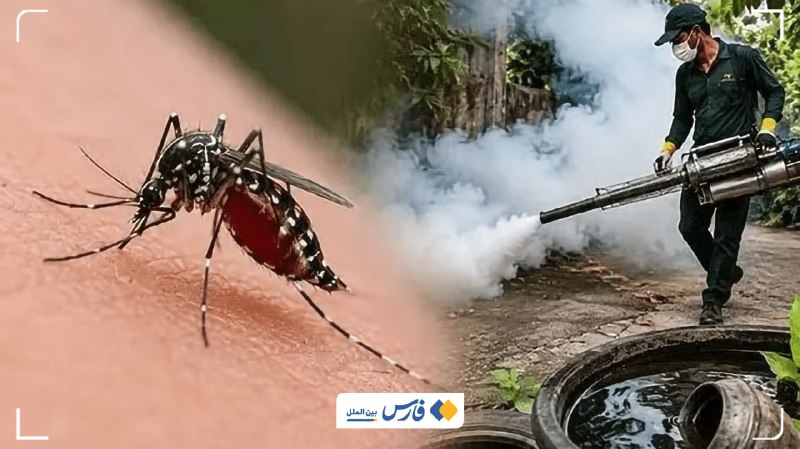
Sri Lankan health authorities have confirmed more than 50,000 dengue fever cases and 29 deaths so far in 2026, with the country's National Dengue Control Unit describing the outbreak as an active epidemic driven by monsoon rains and patchy municipal sanitation. The figure, reported on 27 June 2026 by Iranian and regional outlets carrying the National Dengue Control Unit's briefing, is the highest mid-year caseload on the public record for at least the past several seasons.
Sri Lanka has been here before, but rarely on this scale at this point in the calendar. The disease, transmitted by the Aedes aegypti mosquito, flares every year during the south-west monsoon. What distinguishes 2026 is the speed of accumulation: more than 50,000 confirmed cases and 29 fatalities reported through late June, before the wet season has even hit its August peak. The pattern matters because the worst weeks of dengue transmission are still ahead.
The numbers, as reported
The case total — 50,000-plus confirmed infections and 29 deaths — originates with Sri Lanka's National Dengue Control Unit and was carried in parallel by Tasnim News English, the Fars News International wire, and Jahan Tasnim's newsroom on 27 June 2026. The director of the unit told reporters that the country's medical infrastructure was bracing for a sustained surge rather than a short outbreak. None of the three wires filing on 27 June specified the exact time period covered by the 50,000 figure, though the seasonal framing — pre-peak monsoon — implies a year-to-date count rather than a single week. Sri Lanka's Epidemiology Unit has historically published weekly caseload updates through the monsoon window, and the cumulative total typically climbs into the six figures by December.
For context, the World Health Organization's South-East Asia regional office has repeatedly flagged dengue as one of the top ten causes of global mortality from a vector-borne disease, and Sri Lanka has been one of the higher-burden settings in the region in seven of the past ten years.
Why the curve is steepening
Three structural pressures converge in Colombo and the wet zone each monsoon, and 2026 is hitting all three at once.
The first is water management. Aedes aegypti breeds in clean standing water — discarded containers, blocked roof gutters, construction-site sumps, and the water-storage jars common in dense urban wards. The 2026 monsoon arrived earlier and heavier than the 10-year median in several districts, including Colombo, Gampaha, and Kalutara, leaving more breeding surface area after every downpour. Municipal fogging schedules, already stretched in post-2022 fiscal-consolidation budgets, have struggled to keep pace with new breeding sites.
The second pressure is hospital capacity. Sri Lanka's public-hospital network ran through a药品 and consumables shortage during the 2022–24 economic crisis, and several provincial hospitals have reported continued gaps in adult ICU beds and paediatric fluid-management capacity. Severe dengue — the form that drives mortality — is treatable with aggressive fluid resuscitation if caught early. The bottleneck is not the protocol; it is whether a patient in, say, Ratnapura can reach a unit with available beds within the window that aggressive supportive care still works.
The third is surveillance fatigue. Community health worker networks that helped Sri Lanka bring its 2017 outbreak under control have been rebuilt unevenly since the pandemic and the fiscal crisis, leaving case-reporting lag in some districts. The official 50,000 figure is therefore best read as a confirmed-and-reported floor rather than a real incidence ceiling.
The structural frame
Dengue is, at base, a municipal sanitation story dressed up as a clinical one. Countries that have sustained sharp drops in caseloads — Singapore, parts of Brazil's southern states, Vietnam's urban centres — have done so through sustained source-reduction work: inspecting construction sites, fining households with breeding sites, releasing Wolbachia-infected mosquitoes, and running year-round vector surveillance rather than seasonally.
Sri Lanka's cycle is different. The country has the technical capacity — its Medical Research Institute runs one of the more respected arbovirus labs in South Asia — but the operational layer, the ward-by-ward inspection regime that makes vector control work, depends on funding cycles that contract in lean budget years. When the economy strains, fogging contracts go out late, school-based larva-survey programmes thin, and the mosquito population gets a longer runway.
Stakes for the rest of the monsoon
If the trajectory holds, the 50,000 cases reported by 27 June will look modest by October. The Epidemiology Unit's mid-year totals historically represent 30–40 percent of the year's eventual caseload; a repeat of that ratio would put 2026 on track for a six-figure year, which would surpass the 2017 outbreak's toll and approach the country's worst recorded dengue seasons.
The policy levers are well understood: emergency funding for municipal vector control, activation of triaging protocols at peripheral hospitals, public messaging on water-storage hygiene, and fast-tracking of any remaining stock-outs in paracetamol, oral rehydration salts, and IV fluids. The harder question is whether Colombo will authorise those levers before the curve steepens further or whether the response will arrive in the usual reactive cadence — after the case total becomes politically impossible to ignore.
The alternative reading worth naming: it is possible that the 50,000 figure captures heightened reporting rather than a genuinely larger outbreak, that 2026 surveillance is more complete than in leaner years, and that the eventual year-end total will sit closer to the historical norm than the early data suggests. The National Dengue Control Unit's own framing — "epidemic" — leans against that read, and the 29 confirmed deaths are not consistent with a reporting artefact alone.
What remains uncertain is how quickly hospital capacity will be augmented in the worst-affected districts, whether the World Health Organization and the South-East Asia Regional Office will formally escalate the country's dengue response, and whether the 2026 monsoon behaves like a normal season or extends further into the dry window. The wires carrying the 27 June briefings did not include a forward-projection figure. Until one is published, the safest assumption is that the worst weeks of 2026 are still ahead.
This article drew on wire reporting from three regional outlets that carried the National Dengue Control Unit's 27 June 2026 briefing, and on background framing drawn from the World Health Organization's regional dengue documentation. No specific institutional response from the Sri Lankan ministry of health beyond the unit's own briefing was available at time of publication.
Wire provenance
This editorial synthesis draws on the following public wire/social posts:
- https://t.me/JahanTasnim
- https://t.me/tasnimnews_en
- https://t.me/FarsNewsInt