Strait of Hormuz: Tehran signals escalation even as back-channel opens
A direct US–Iran communication line is open, yet another tanker has been hit. The contradiction is the story: Tehran is talking and shooting at the same time, and the world's busiest oil artery is paying the difference.
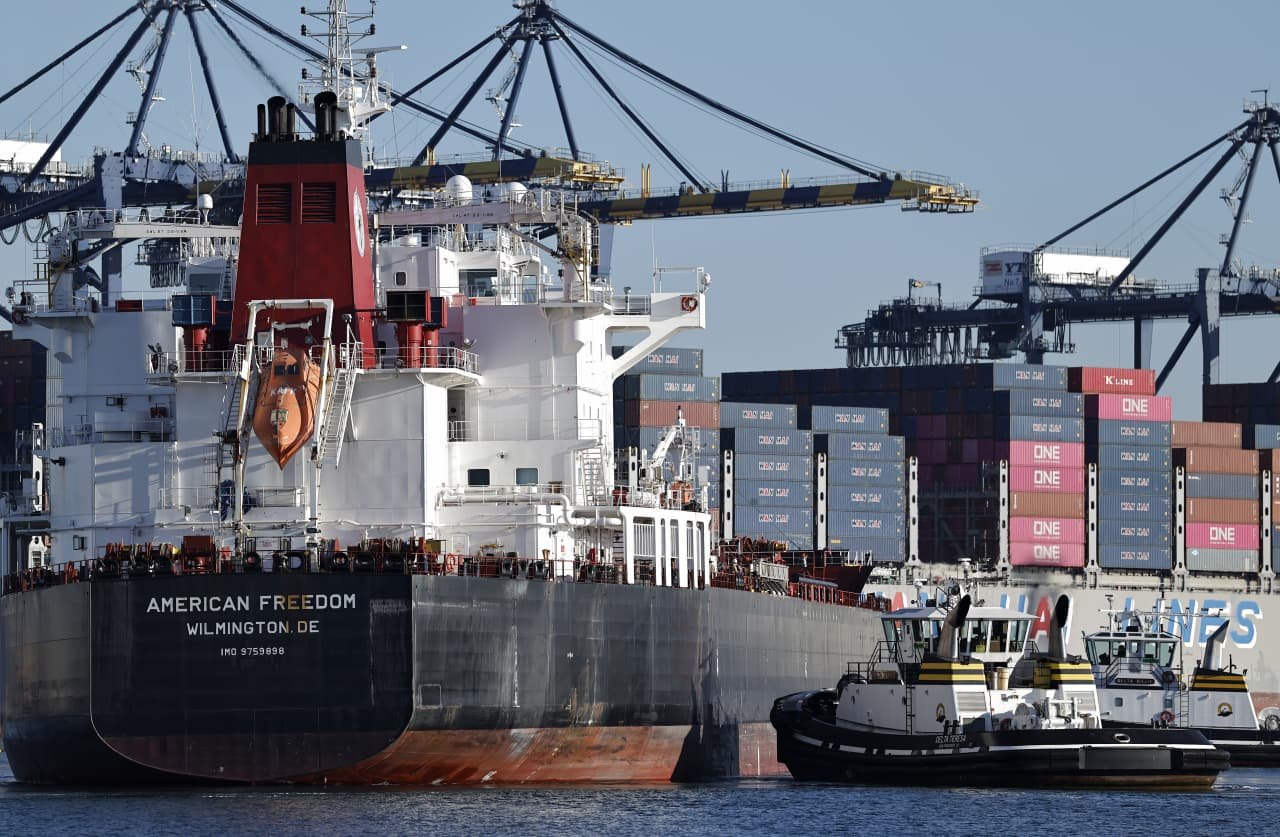
A single day of Iranian diplomacy, on paper, looks reassuring. A day of Iranian action in the water looks anything but. On 26 June 2026 at 14:57 UTC, Iran's state broadcaster Press TV reported that a direct communication line between the United States and Iran in the Strait of Hormuz had been established — a procedural admission, in Tehran's own voice, that the two governments are talking about how, or whether, ships move through the chokepoint that carries roughly a fifth of global oil shipments. Less than twenty-four hours later, at 13:14 UTC on 27 June, Middle East Spectator reported that Iran had struck another oil tanker in the strait. The contradiction is the story.
What the past seventy-two hours in the Gulf have produced is not, on the evidence available so far, a blockade or a war. They have produced something more confusing and harder to price: a deliberate, calibrated ambiguity in which Iran signals that it can disrupt the strait at will while simultaneously signalling that it is prepared to negotiate the terms on which it will not. Energy markets, insurers, and navies are now operating inside that ambiguity, and the cost of doing so is rising.
The diplomatic track
The new US–Iran line, as described by Press TV on 26 June, sits inside a familiar pattern of crisis-management plumbing that has been turned on and off since the 1980s. The channel's purpose, as Iranian officials have framed it in past iterations of these arrangements, is to manage naval encounters and de-conflict commercial traffic — to ensure that when an Iranian fast boat and a US carrier group cross paths, neither side reads the other's movements as a prelude to fire. Tehran's willingness to confirm the line publicly is itself a message: it tells domestic audiences that Iran is being treated as an equal sovereign party at sea, not as a rogue actor to be bypassed.
That posture was made explicit the same day. Iran's Deputy Foreign Minister, as quoted by the X account Unusual Whales at 16:37 UTC on 26 June, warned that safe passage through the Strait of Hormuz without consideration of Iran's sovereignty is "not guaranteed." The phrasing matters. It is not a threat of imminent closure; it is a public restatement of a long-standing Iranian position that the strait is not a free-fire zone for foreign navies and that Iran's coastline confers rights of its own. It is, however, also a line that energy traders cannot ignore, because the same Iranian officials who use it have, on past occasions, the means to back it up.
The kinetic track
The diplomacy and the action sit on the same day. According to a Telegram post by Middle East Spectator at 13:14 UTC on 27 June, Iran struck another oil tanker in the Strait of Hormuz. Less than thirty minutes earlier, at 12:48 UTC, the account GeoPWatch reported that an unidentified projectile had impacted the command deck of a tanker in the strait, describing the incident as following a similar event "from a few days prior, wherein Iran struck the wheelhouse" of a vessel. Read together, the two messages describe a recurrence, not an isolated accident, and they identify the target deliberately: the wheelhouse and the command deck are the nerve centres of a tanker. Strikes there are designed to be visible, on bridge cameras and on satellite imagery, in a way that a strike on a hull is not.
The reporting so far is partial. The accounts are Telegram channels tracking maritime incidents in near real time; they aggregate AIS data, ship-master radio traffic, and unverified visual material. Ownership and flag of the most recently struck vessel, the casualty status of any crew, the type of projectile, and the response of any escort have not been disclosed in the material available to this publication. What is consistent across the messages is the location, the timing, and the targeting logic.
What the pattern resembles
The combination of an open back-channel and a recurring attack on commercial tonnage is not new in the Gulf. It is, in fact, the structural shape of Iran's coercive diplomacy at sea over the past two decades. Tehran uses the threat of disruption as leverage in negotiations it is simultaneously conducting, and it calibrates the violence — which ships, which flags, which corridors, which days — to extract a price without triggering a military response that would overwhelm Iran's conventional forces. The US, for its part, has historically tolerated a level of harassment that would not be tolerated elsewhere because the alternative — open war with Iran — carries costs that successive administrations have judged higher than the cost of doing business in a partly armed strait.
That tolerance has limits, and they are visible in the cable and in the market. Insurance war-risk premiums for tankers transiting the strait are the first price to move on incidents of this kind; charter rates follow. None of those numbers are disclosed in the source material available here, and this publication will not estimate them. What can be said is that the recurrence described by GeoPWatch — a wheelhouse strike "from a few days prior" followed by a command-deck strike on 27 June — is the kind of pattern that, in past episodes, has prompted flag-state advisories, naval escorts, and temporary reroutings around the Cape of Good Hope. The diplomatic channel exists precisely to keep the temperature below that line. Whether it can is the question of the week.
Stakes and what to watch
The immediate losers are the crews on the struck tankers and the insurers and charterers who absorb the next layer of risk. The immediate winners, in the narrow sense, are the actors — Iranian and otherwise — who profit from the perception that the strait is no longer a routine transit lane. The medium-term stakes are larger. A Hormuz that is occasionally but visibly armed forces importing economies in Asia and Europe to diversify supply routes, accelerates strategic-reserve drawdowns, and gives additional weight to non-Gulf pipelines and overland corridors. For Iran, that outcome is both a deterrent and a tax: the same coercion that pressures foreign fleets also accelerates the very infrastructure projects designed to bypass Iranian territory.
Three things to watch in the coming days. First, the identity and flag of the vessel struck on 27 June, and whether its owner publicly attributes the attack; flag-state silence after a strike is itself a signal about the political cost of speaking. Second, whether the new US–Iran line produces a public statement, a joint maritime advisory, or simply continued quiet contact; the absence of an announcement is not the absence of diplomacy, but the presence of one would be material. Third, the framing out of Tehran: whether Iranian official messaging treats the strikes as warnings, as retaliation for an unstated prior incident, or as the new baseline. Each framing implies a different trajectory.
The honest reading is that the available evidence is too thin for confident prediction. The Telegram channels reporting the strikes are reliable on geography and timing and less reliable on attribution; Press TV is a primary source for Iranian intent but not a neutral one; the Unusual Whales quotation is a useful summary of Iranian diplomatic language but is one step removed from the original Farsi. What is not in dispute is the sequence: a communication line opened, an Iranian minister restated sovereign terms, and a tanker was struck on its command deck. Until that sequence breaks — with a credible attribution, a flag-state protest, or a public diplomatic outcome — the strait is operating under the rule that talking and shooting can happen on the same day, and that the world's energy trade must price both.
This publication has framed the events of 26–27 June through the Telegram-channel reporting and the Iranian state-media language available in the public thread, treating kinetic incidents and the simultaneous diplomatic channel as parts of one pattern rather than as contradictions. Where flag, ownership, or casualty details are not disclosed in those sources, they are not asserted here.
Wire provenance
This editorial synthesis draws on the following public wire/social posts:
- https://t.me/Middle_East_Spectator
- https://t.me/GeoPWatch
- https://x.com/unusual_whales/status/
- https://en.wikipedia.org/wiki/Strait_of_Hormuz