Trump's Syria-to-Lebanon gambit and the long shadow of 2005
A renewed US push to enlist Damascus against Beirut's armed movement revives questions Beirut hoped it had buried in 2005 — and Damascus has spent two decades trying to outrun.
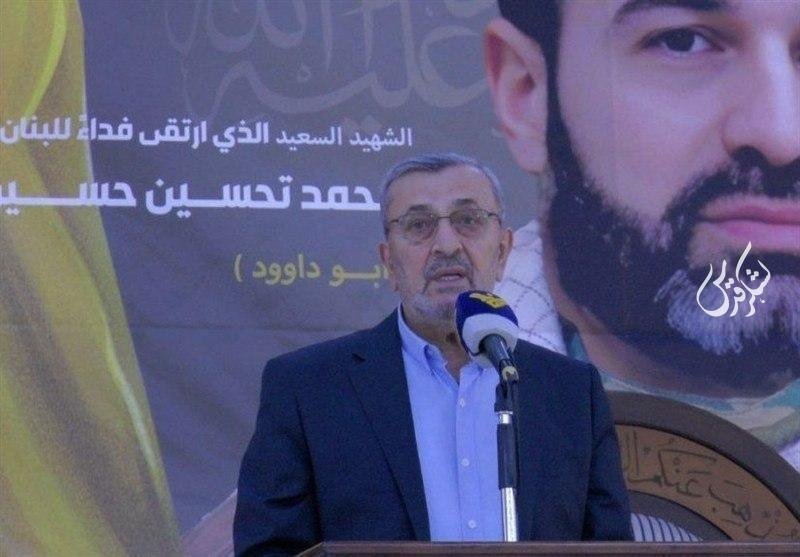
US President Donald Trump has repeatedly suggested handing responsibility for dealing with Hezbollah to Syrian President Ahmed al-Sharaa, according to reporting from Middle East Eye dated 27 June 2026. The framing, which has surfaced in multiple exchanges between Washington and the new Syrian leadership, has reopened a wound in Lebanese public life that the country spent two decades trying to close: the memory of Syrian troops on Beirut's streets, and the political order they sustained until Rafik Hariri's assassination forced their withdrawal in 2005.
That Trump would test the idea tells you less about Hezbollah than about how Washington now reads the post-Assad landscape in Damascus. Al-Sharaa, who led the offensive that toppled Bashar al-Assad in late 2024, is no Syrian Arab Republic successor; he is the head of a transitional administration trying to extract his country from international isolation while keeping a fractured country stitched together. The pitch to him is, in effect: a regional service in exchange for legitimacy and reconstruction access. The trouble is the receiver — Lebanon, where the very word "Syria" in a security role still detonates on contact with public memory.
What the reporting actually says
Middle East Eye's two dispatches on 27 June — one at 15:22 UTC headlined "Damascus races to reassure Beirut as Trump pushes Syria to take on Hezbollah," and a follow-up at 16:29 UTC carrying the wire's fuller statement that "Trump has repeatedly suggested handing responsibility for dealing with Hezbollah to Syrian President Ahmed al-Sharaa" — describe a Lebanese political class that has moved unusually fast to publicly resist the framing. The 15:22 piece frames the dynamic through the lens of "decades of troubled relations and military occupation," the period between 1976 and 2005 when Syrian forces were the principal external arbiter of Lebanon's civil war and its aftermath. The follow-up emphasises that Lebanese fears of "renewed Syrian military involvement" are being voiced not from one side of the confessional spectrum but across it.
Damascus, for its part, has reportedly been racing to reassure Beirut that no such arrangement is in train. That diplomatic scramble is itself the story. A transitional administration that wants sanctions relief, reconstruction financing and a seat at every regional table cannot afford to be read as the heir to the old Syrian presence in Lebanon. It needs to disclaim the role before it is formally offered.
Why the US is asking now
The timing is structural, not sentimental. Hezbollah spent two years degrading its forward positions in Syria after Assad's fall; its overland resupply through Syrian territory, which for most of the past decade was its strategic insurance policy, has narrowed. A Syrian government that is neither aligned with Iran nor at war with it has created the kind of ambiguity Washington is now trying to exploit. The ask is not crude: Trump is not publicly requesting an invasion. The pitch — to the extent it can be reconstructed from the wire reporting — is for Damascus to use its leverage over cross-border movement, militias and former allied networks to constrain Hezbollah's reconstitution, in return for which Syria gets diplomatic oxygen and a quieter ride on Capitol Hill.
This is the kind of arrangement that works on a White House notepad and falls apart on contact with Lebanese and Syrian domestic politics. Lebanese factions that spent fifteen years after 2005 arguing over Syrian intelligence files and Hariri's killers will not quietly accept Damascus back in a security role under any flag. Syrian factions that backed the revolution against Assad will not accept a government that exports repression on behalf of a foreign patron, however transactional.
The 2005 problem
Lebanon's contemporary political order was built on the rubble of the Syrian withdrawal. The Cedar Revolution, the Hariri tribunal, the May 2008 Doha Agreement that ended eighteen months of presidential paralysis, the 2017 Hariri resignation from Riyadh and his subsequent suspension of it — every major inflection in Lebanese politics since 2005 has, in some form, been a referendum on how to live without Damascus calling the shots. Reintroducing Syria into the security conversation, even as an external contractor for an American priority, pulls the thread that holds the whole arrangement together.
This publication reads the framing as calibrated less to Lebanese consent than to an American bet that the post-Assad order is pliant enough to absorb the role. That bet assumes al-Sharaa's need for international recognition outweighs his need to govern a Syria whose population includes large communities with family ties on both sides of the border, and whose recent revolution was in significant measure a revolt against exactly the kind of regionalised security export the US is now requesting.
Stakes and what remains uncertain
If the pressure continues, the most likely outcome is not a formal Syrian role inside Lebanon but a quiet intensification of cross-border interdiction, intelligence sharing and visa-and-trade leverage exercised through Damascus's newly reopened diplomatic channels. That is, in effect, a return to influence without the uniform — which is what the 1976–2005 arrangement ultimately became, and which is what Lebanese opponents of that era remember most clearly. The distinction between a Syrian role and Syrian influence matters less in practice than in the language used to deny it.
What the wire reporting does not yet establish, and what will determine whether this becomes a serious policy or a passing provocation, is whether al-Sharaa has signalled anything beyond public disavowal. Damascus is reassuring Beirut; it has not, in the available reporting, said no to Washington. That gap between the public messaging to Lebanon and the private posture toward the United States is the space in which the next month of diplomacy will be fought. It is also the space in which Lebanese factions will decide whether to treat this as a manageable bilateral irritant or as a foundational break with the post-2005 order.
Desk note: Monexus is reading this as a memory-politics story first and a security-policy story second; the wires have so far led with both, but the political weight in Beirut sits on the historical register, not the operational one.
Wire provenance
This editorial synthesis draws on the following public wire/social posts:
- https://x.com/middleeasteye/status/2070890575641858048
- https://x.com/middleeasteye/status/2070879412132341436
- https://x.com/middleeasteye/status/2070843188773273761