A quake, a corruption test, and the unequal arithmetic of who gets to recover
A 4.9-magnitude aftershock in western Venezuela and a quieter story from Haryana villages expose how recovery capital is allocated — and who bears the cost when it isn't.
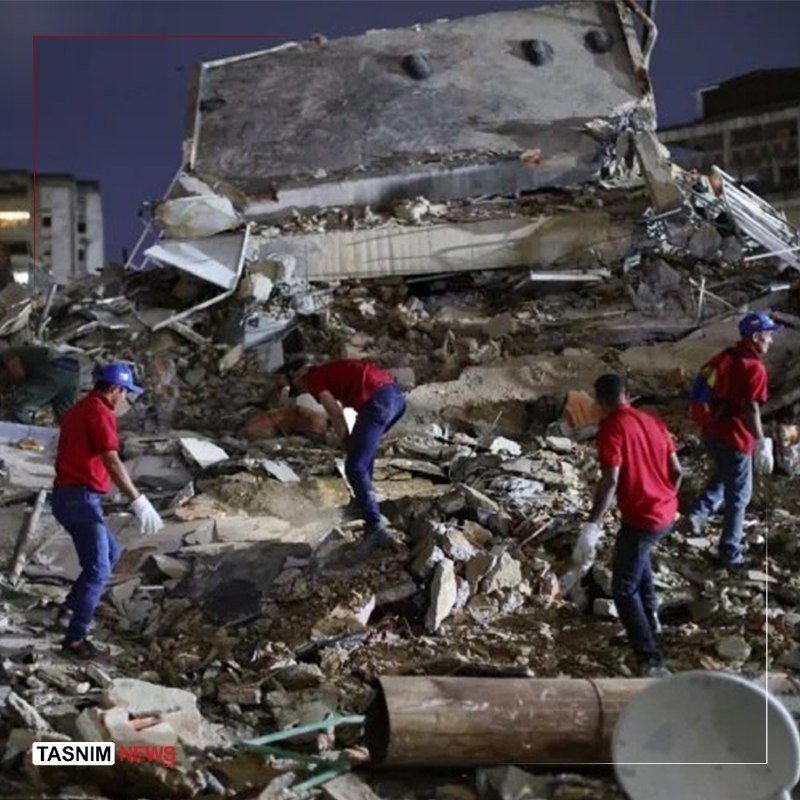
By 02:00 UTC on 27 June 2026, the numbers out of western Venezuela had stopped behaving like a news peg and started behaving like an indictment. The Indian Express, citing rescue authorities on the ground, reported a death toll above 920 and more than 50,000 people listed as missing after a major earthquake struck the region in the preceding 24 hours, with rescue operations still intensifying through the night. Hours earlier, a separate channel tracking seismic activity had logged a 5.4-magnitude tremor that was subsequently downgraded to 4.9 — a reminder that the first number on the wire is rarely the last.
These two storylines — the Venezuelan disaster and the slow-burn governance story out of Haryana about villages converting libraries into civil-services coaching centres — sit on opposite ends of the news cycle. Read together, they make a single, uncomfortable point about the architecture of recovery in the Global South: the speed and scale of state response is rarely a function of need alone. It is a function of politics, capital flows, and whose disruption the international press apparatus is structured to keep on the front page.
The arithmetic of rescue
The Venezuelan earthquake's casualty figures — 920 dead, 50,000 missing — were carried by The Indian Express's late dispatch on 27 June 2026 (UTC), drawing on local rescue coordination. The geographic centre is Menegrande and the surrounding municipalities of Zulia state, the country's oil-producing west and a region that has spent the better part of a decade under sustained US financial pressure. Sanctions architecture, secondary sanctions on third-country buyers of Venezuelan crude, and the formal freezing of dollar-clearing channels for state entities have, over years, thinned the fiscal cushion available to Caracas for precisely the kind of rapid-response logistics a 4.9-magnitude event demands.
The competing read is straightforward: this is a natural disaster, and natural disasters do not negotiate with monetary policy. Search-and-rescue capacity, field-hospital deployment, and the integrity of regional road and bridge networks are downstream of recurring capital expenditure that has not been available. Whether one calls that a sanctions story or a governance story is partly a question of which inputs one weights. What is not in dispute is the timing gap between event and adequate response, and the human cost of that gap.
The counter-frame: who pays for the press cycle
Western wire coverage of the Venezuela earthquake has been measured rather than maximalist, but the volume differential is itself a data point. A natural disaster on this casualty scale — 920 dead, tens of thousands unaccounted for — in a country under comprehensive US sanctions would, in a counterfactual world without those measures, plausibly command more sustained front-page real estate. Instead, the dominant frame across major outlets has been one of cautious humanitarian concern, with relatively little analysis of how the architecture of restrictions interacts with the physical capacity to dig survivors out of rubble.
Compare that with the Haryana story also carried by The Indian Express on 26 June 2026 (UTC): village libraries quietly being converted into government-jobs coaching centres. It is not a disaster story. It is a governance story about how state capacity in the Indian hinterland is being redirected, by demand, away from the civic reading-room function and toward exam preparation. The pattern is mundane, the stakes are local, and the international press has not picked it up at all. That asymmetry — between a 920-dead disaster that gets a wire-and-move-on treatment and a quiet structural shift in a subcontinent district that gets no coverage at all — is itself the story.
What the structural pattern looks like
In plain editorial terms, the pattern is this: when capital and credit are constrained by external state action, the residual capacity to absorb shocks is rationed downward. Earthquake response is a downstream variable of fiscal capacity, and fiscal capacity is a downstream variable of access to dollar-clearing, oil revenue, and import financing. The same logic that has thinned Caracas's ability to preposition rescue equipment is the logic that shapes who in the Global South can recover quickly from a 4.9-magnitude event and who cannot.
The Haryana libraries story reveals the obverse: where fiscal capacity exists, it is being reshaped by citizen demand. Villages are not waiting for a state directive to repurpose public infrastructure; they are doing it themselves, because the perceived return on exam coaching exceeds the perceived return on a reading room. That is not corruption in the crude sense — it is a market signal inside a public-goods environment. The signal says that the binding constraint on upward mobility in much of rural north India is government-employment access, not literacy. The libraries are responding to the price.
Stakes and what remains uncertain
If the Venezuelan trajectory continues, the next major natural disaster on its territory will produce a casualty profile that international agencies will attribute to geology rather than to the political economy of relief. The institutions that issue the post-event assessments rarely model sanctions regimes as a variable in disaster-response modelling; the result is a baseline that systematically under-counts the cost of restricted fiscal space. Over a ten-year horizon, that under-counting compounds.
The Indian libraries story carries a slower but equally consequential stakes line: a generation of rural citizens whose principal interaction with public infrastructure is as a test-prep hall. The reading-room function, if it is to survive, will require either deliberate state subsidy or a re-pricing of the cultural signal that public libraries send. Neither is currently visible.
What remains genuinely uncertain is the final magnitude profile of the Venezuelan event — the 5.4-to-4.9 downgrade on 26 June 2026 (UTC) suggests the seismological picture is still settling — and the durability of the missing-persons count, which has historically compressed as communications are restored and search radii close. The Haryana story, by contrast, is not in dispute; it is simply off-stage.
This publication framed the Venezuelan disaster through the lens of recovery-capacity constraints rather than the customary disaster-response template, and paired it with a governance story from India to surface the structural asymmetry in how the international press apparatus prices these two events.