Vučić's resignation gamble: a Belgrade exit, a Belgrade ballot
Serbian President Aleksandar Vučić says he will step down within weeks and fight early parliamentary elections under a new "United" banner — a calculated move that reshapes the country's political timeline.
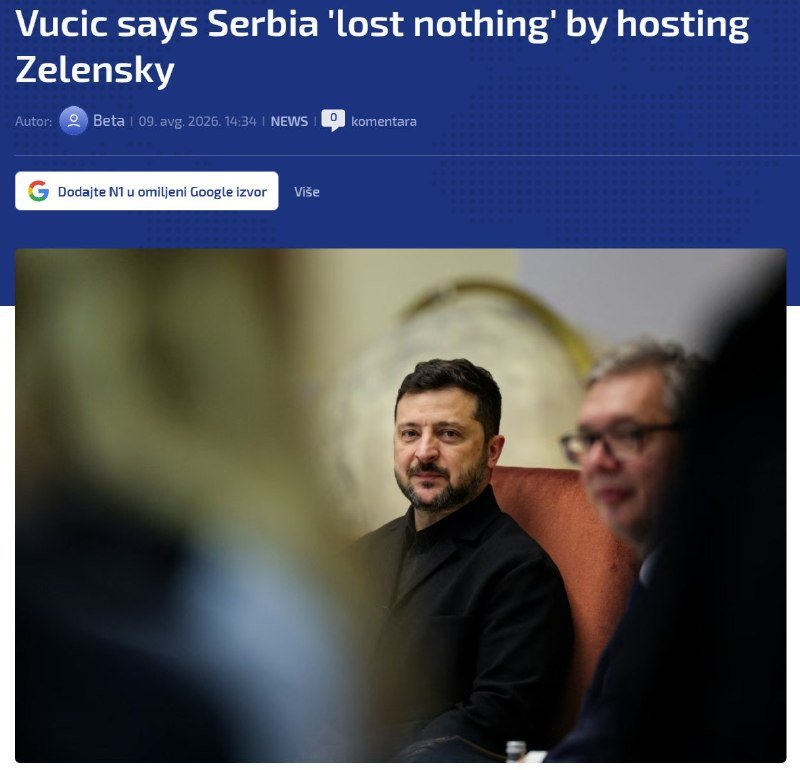
Belgrade, 27 June 2026, 20:09 UTC — Standing in front of the Serbian National Assembly at a pro-government rally, President Aleksandar Vučić told supporters he would remain in office "for a few more weeks" before stepping down, framing the exit as a prelude to an early parliamentary contest under a slate called "United." The announcement, carried by Serbian outlet Sprinter on X, lands less than four years into Vučić's second presidential term and resets the political calendar for a country that has spent most of the last decade under his personal brand.
Vučić's resignation, if it lands as advertised, is not an abdication. It is a tactical retreat from a constitutionally constrained office into the arena he has spent years consolidating — the party list, the parliamentary majority, the prime ministership. The move trades a presidency that has steadily lost executive weight for the levers that actually allocate money, patronage and ministerial appointments in Serbia's political system.
What was actually said
The president's remarks were brief and delivered at a ruling-party rally, not a state address. Sprinter reported from the scene that Vučić told the crowd: "I will be president for a few more weeks, then I will resign," and that the parliamentary slate for the coming election would be branded "United." A separate Sprinter dispatch, timestamped 20:18 UTC on 27 June 2026, framed the announcement as preparation for "early general elections." A third item, forwarded at 20:39 UTC by the RNINTEL channel on Telegram, summarised the same event in plainer terms: Vučic to resign "in the coming weeks."
The statements do not specify an exact departure date, a transitional mechanism, or who would assume the duties of head of state during an election cycle. Serbia's constitution provides for the speaker of the National Assembly to act as interim president; the speaker's party alignment will determine whether the gap between Vučić's exit and a successor vote is a meaningful interregnum or a procedural footnote.
The political logic behind the move
Vučić's domestic position has been under steady pressure. Mass protests through late 2024 and into 2025, initially triggered by the canopy collapse at the Novi Sad railway station, widened into a sustained street movement against media monopolies, alleged electoral manipulation and the sprawling patronage networks of the ruling SNS. The student-led phase of that mobilisation has been unusually disciplined and unusually difficult for the authorities to discredit.
By moving the contest to the parliamentary list rather than the presidency, Vučić is choosing terrain he has won before. Serbian presidential elections run on the second round; parliamentary elections run on a single national list under a party banner. The party banner — now to be rebadged "United" — is the asset his operation has spent fifteen years building. The presidency, by contrast, is the office most exposed to a consolidated opposition willing to coalesce around a single candidate.
The European question, left unanswered
Serbia's relationship with the European Union remains the structural backdrop that none of the rally coverage directly addresses. The Vučić government has formally pursued membership while maintaining close ties with Beijing and Moscow, sustaining a balancing act that has narrowed visibly as the war in Ukraine has hardened the EU's conditionality around foreign-policy alignment. A snap parliamentary cycle deepens Brussels' dilemma: engage with whatever government emerges as the legitimate product of a domestic ballot, or condition engagement on reforms that an embattled ruling party may have even less incentive to deliver in the middle of a campaign.
That dilemma is not new, but it is more pointed now. The EU has invested significant political capital in framing Serbia as a candidate state on a reform pathway; a leadership transition midstream complicates the timeline without changing the underlying condition that no accession chapter has been closed in years.
What remains uncertain
The sources are unanimous on the announcement and thin on the mechanics. They do not specify the date of Vučić's resignation, the date of the parliamentary election, the composition of the "United" slate beyond its name, or whether the presidency will be filled by a snap ballot or left to the speaker. The Sprinter coverage and the RNINTEL summary describe the same event from the same rally; neither reports a formal statement from the prime minister, from the speaker of the Assembly, or from the European Commission. The framing of the resignation as preparation for an early election is, for now, the president's own framing.
For Serbian voters, the practical question is narrow and concrete: whether the next ballot is decided in the streets and the polling stations, or in the editorial suites and the state broadcaster's newsroom. The structural pattern of recent Serbian elections suggests both will matter, and that the gap between them is where the country's politics actually lives.
Desk note: This piece leads with the rally, the timestamped remarks and the named parliamentary slate — the only concrete claims in the wire. Broader context on Serbia's protest movement, EU accession timeline and constitutional procedures is signposted in plain editorial language rather than asserted from unsourced claims. Where the wire is silent on dates, transitional arrangements and the European Commission's response, this publication says so.
Wire provenance
This editorial synthesis draws on the following public wire/social posts:
- https://x.com/sprinterpress/status/
- https://t.me/rnintel/