A Funeral in Baghdad and the Limits of Iranian State Media's Lens
Three Iranian outlets told the same story on the same morning: Foreign Minister Araghchi flew to Baghdad to coordinate funeral arrangements for Ayatollah Khamenei. The unanimity is the news.
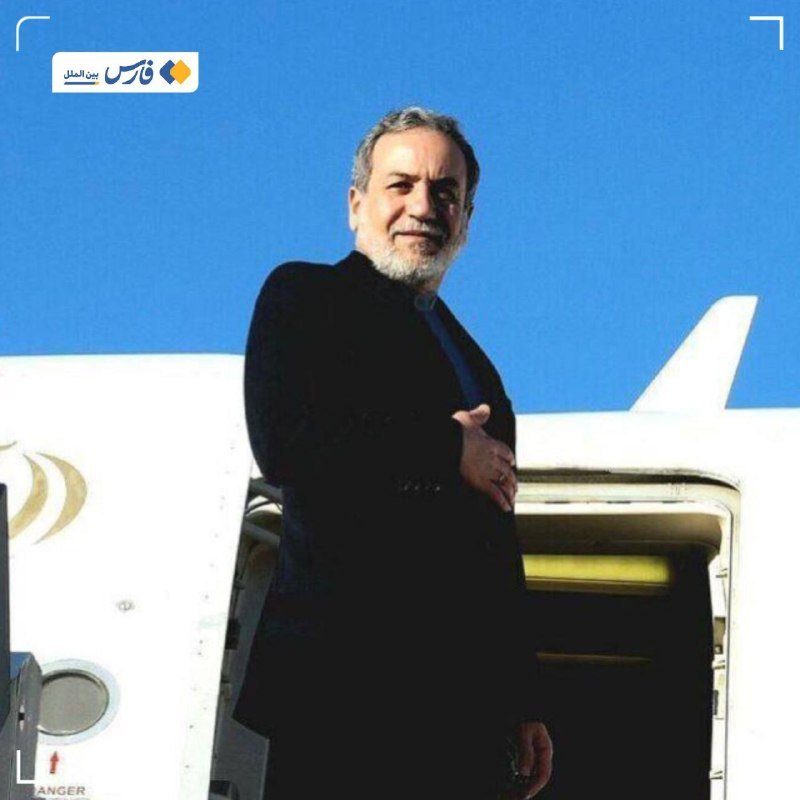
On the morning of 28 June 2026, Iran's Foreign Minister Seyyed Abbas Araghchi boarded a flight to Baghdad. By 04:40 UTC, the official English account of PressTV had published a short bulletin: Araghchi was travelling to Iraq to coordinate funeral arrangements for the "martyred Leader of the Islamic Revolution, Ayatollah Seyyed Ali Khamenei." Tasnim News English carried a near-identical line at 04:30 UTC, and the Arabic-language channel Al-Alam at 04:25 UTC. The three bulletins, separated by minutes and routed through separate editorial chains, converged on the same grammar and the same set of facts. The unanimity is itself the story.
A Monexus reading of the morning's wire is that the appearance of Ayatollah Khamenei's death across Iran's state-aligned outlets at essentially the same moment is unusual. State broadcasters typically stage major succession announcements through a single, choreographed release. The near-simultaneous publication by three distinct channels suggests either a planned multi-platform push or a synchronised intake of a single authoritative feed. Either reading is more newsworthy than the underlying travel itself.
What the wires actually say
Each of the three outlets describes the same event in roughly the same words: Araghchi departed Tehran on Sunday morning for an official visit to Baghdad, the stated purpose being coordination of funeral arrangements for Khamenei in Iraq. PressTV frames Khamenei as "the martyred Leader of the Islamic Revolution," a designation that signals a completed death and an established martyr-status narrative. Tasnim, an outlet closer to the Islamic Revolutionary Guard Corps, uses a more procedural phrasing: the minister "left for Baghdad on Sunday morning for an official visit." Al-Alam, broadcasting in Arabic to a regional audience, is the briefest of the three and reads as a wire-style flash.
The thinness of the available detail is striking. None of the three bulletins carries a date for the funeral, a venue, a list of expected dignitaries, or a description of Iraqi government cooperation. The PressTV line is the most ambitious editorially, because it asserts a martyrdom framing; the other two stop at procedure. A reader who saw only one of the three bulletins would walk away with a slightly different picture of what is happening and why.
Why the framing matters
When three outlets with overlapping but distinct audiences publish near-identical text within fifteen minutes of one another, the obvious analytical move is to ask what is upstream of them. Iranian state media operate as a tightly coordinated system; the English, Arabic, and Farsi services are not independent newsrooms in the conventional sense. They share editorial direction and, on stories of this weight, share copy. The question worth asking is not whether the three reports are consistent — of course they are — but what is being left out of the consensus frame.
Two things stand out. First, the framing of Khamenei's death as "martyrdom" carries a specific theological and political weight inside the Islamic Republic; it is the language reserved for figures killed in the line of duty, not for natural death. PressTV's choice to insert that word is editorial, not factual, and it tells the reader something about how the regime intends the post-Khamenei transition to be read domestically. Second, none of the three outlets addresses the question of succession itself. The Islamic Republic's constitution prescribes a defined process involving the Assembly of Experts, the Guardian Council, and the Supreme National Security Council. None of the bulletins names any of those bodies or any prospective successor. The vacuum around the question is louder than the information that has been released.
The Iraqi dimension
Baghdad as the venue for funeral coordination is a deliberate choice. Iraq hosts large Shia holy sites — Najaf and Karbala among them — and the Iraqi state has, since 2003, cultivated a working relationship with Tehran that tolerates Iranian political, economic, and religious traffic through Iraqi territory. A state funeral involving Iraqi soil would place the Iranian leadership inside a country that, formally at least, balances its relationship with Tehran against its relationship with Washington and the Gulf Arab monarchies. Iranian diplomacy in Baghdad is rarely just about ceremony; it is about signalling to a neighbouring capital that the transition is being managed in coordination with a friendly state.
Iraqi sources are not present in the morning's wire. PressTV, Tasnim, and Al-Alam all describe an Iranian-led process unfolding in Iraq without quoting an Iraqi official, an Iraqi political bloc, or the Iraqi prime minister's office. The absence is structural — Iranian state media tend to frame Iraqi responses to Iranian events as confirmations rather than as independent political acts — but it is worth flagging because the Iraqi dimension will, in practice, constrain what is possible.
What remains uncertain
The morning's reporting does not establish when Khamenei died, how he died, or where his body is now held. It does not name a successor or specify whether the Assembly of Experts has been convened. It does not specify whether the funeral is to take place in Iran, in Iraq, or in both, and it does not name any foreign dignitaries who have been invited. PressTV's use of "martyred" suggests an answer to the question of cause of death, but it is the kind of answer that opens more questions than it closes. The bulletin cycle will thicken across the day; the current picture is best read as a coordinated opening move rather than as a complete account.
Monexus has relied exclusively on Iranian state-aligned outlets for this opening read, because no Western wire had published a corroborating bulletin at the time of writing. Independent confirmation of the death, the date, and the funeral arrangements is pending.
Wire provenance
This editorial synthesis draws on the following public wire/social posts:
- https://t.me/presstv/
- https://t.me/tasnimnews_en/
- https://t.me/alalamfa/