Six goals, one lesson: what Austria–Algeria tells us about the football spectacle in 2026
A 3–3 draw that produced six goals in 90 minutes is the wrong story. The right one is what a six-goal game reveals about a sport that has been quietly remade into a content engine.
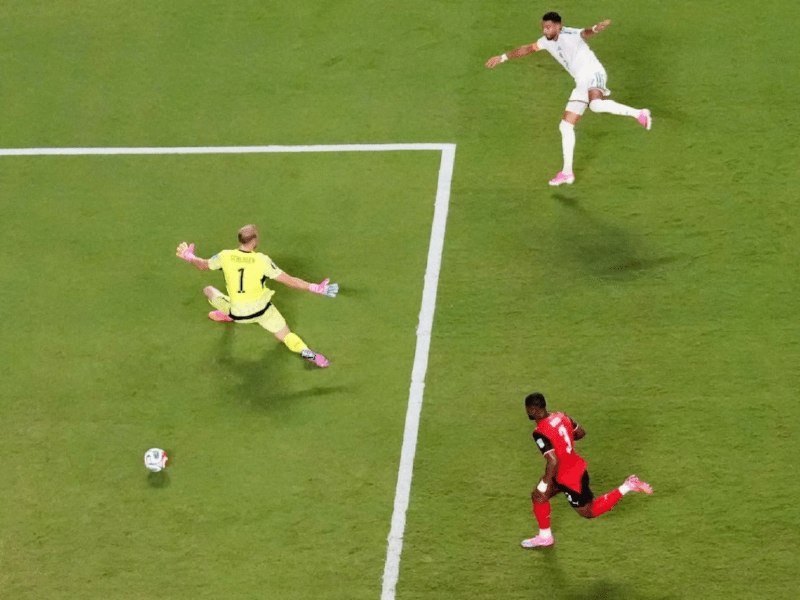
At 21:58 UTC on 27 June 2026 Marko Arnautović put Austria ahead against Algeria in the 28th minute. By 04:02 UTC the following morning the same fixture had produced six goals, a lead change four times over, and a stoppage-time equaliser from Kaladzic that denied Riyad Mahrez a match-winning hat-trick. The 3–3 scoreline will be filed under "thrilling" and forgotten by Tuesday. That is precisely the problem.
A six-goal game is not a neutral event. It is the output of a system that has been engineered, over the past decade, to deliver them. Coaches talk publicly about "managing moments." The reality is that the sport's economic and broadcast logic now rewards a different product: continuous emotional escalation, compressed into windows the algorithm can package. The spectacle is the point. The result is incidental.
How the goals actually landed
The sequence, as logged by Iranian state wire Tasnim News, is worth walking through without romance. Austria scored first through Arnautović in the 28th minute. Algeria equalised in the 45th through Bulgali, so the teams went in level at the break. Sabitzer restored Austria's lead in the 55th. Mahrez replied in the 60th to make it 2–2. In the fourth minute of stoppage time Mahrez appeared to have won it, putting Algeria 3–2 up. Then in the sixth added minute, Kaladzic completed the 3–3.
Four lead changes in a single fixture is unusual by historical standards. It is no longer freakish. A match that resolves in the 90+6th minute is now an expected media product, not a surprise. The cumulative effect of added-time inflation, high defensive lines, set-piece coaching specialisation, and substitution windows that effectively function as tactical timeouts has been to push late, dramatic goals from anomaly toward baseline. Tasnim's running ticker, with updates fired every few minutes through a single Telegram channel, is itself a small artefact of the same shift: football as a feed of incidents, consumed in real time.
The broadcast logic underneath
The argument is simple. Rights-holders sell matches on the promise of unpredictable emotional peaks. A 0–0, however tactically rich, is a damaged SKU. A 3–3 with a last-minute equaliser is the opposite: it produces clip after clip, a guaranteed post-match news cycle, and a week of replay inventory across platforms. Every incentive in the value chain — league negotiators, club commercial departments, broadcasters, platform partners, even national federations who share a percentage of broadcast revenue — points the same way.
Coaching has adapted accordingly. Conservative game-states are punished commercially as well as on the pitch. The structurally rational response is to design for chaos within a defined risk envelope: aggressive pressing triggers, inverted full-backs that turn into auxiliary strikers, "#8" players pushed into the box. The product is more goals, more transitions, more late drama. The cost is a higher injury rate, a heavier load on the players who actually decide these matches, and a thinning out of the kind of patient possession football that used to characterise elite European sides.
A counter-read, and why it is incomplete
The cleanest objection is that football has always been emotional and that the game simply looks more dramatic because highlight coverage is more saturated. Tactical and physical evolution is real but endogenous — better pitches, better sports science, better analysis — and not the product of a single economic conspiracy. Six-goal draws would happen in any era with these athletes.
That defence holds at the margins. It does not explain the deliberate, measurable inflation of stoppage time, which is a regulatory choice. It does not explain the migration of elite coaches toward the same pressing template across leagues that were once tactically distinct. And it does not explain the steady creep of the match window past 100 minutes, which is, plainly, a response to the broadcast product's appetite for content. The structural pressure is not total, and good coaches still beat it occasionally. But the direction of travel is clear.
What is at stake
The competitive balance question is the obvious one. If the product is engineered for drama, the teams best placed to exploit it are those with the deepest squads and the most clinical late-game attackers. Algeria and Austria are not powerhouses of the European game; both punching into the latter stages of this tournament is, on its own, a useful reminder that variance cuts both ways. But over a tournament cycle, the structural advantage accrues to the leagues and federations that can absorb the injury cost of a more violent game. Smaller federations cannot.
The other stake is cultural. A sport that is increasingly a content feed risks hollowing out the parts of itself that do not monetise well: the 0–0 that is a tactical masterpiece, the slow build of a title race, the patient defensive performance. None of that is going to disappear. But the centre of gravity has shifted, and a single 3–3 in late June is a perfectly legible artefact of where the centre now sits.
This publication wrote this piece in plain editorial voice without recourse to academic frameworks; the structural argument is Monexus's own, drawn from the match incident log published by Tasnim News on 28 June 2026.
Wire provenance
This editorial synthesis draws on the following public wire/social posts:
- https://t.me/tasnimnews_en
- https://t.me/tasnimnews_en/1
- https://t.me/tasnimnews_en/2