Baghdad's overnight raid and the Iran file: Iraq's sovereignty test, played out in one night
Counter-terrorism units moved on Iranian-aligned politicians in Baghdad before dawn. The optics are about corruption; the subtext is about who runs Iraq.
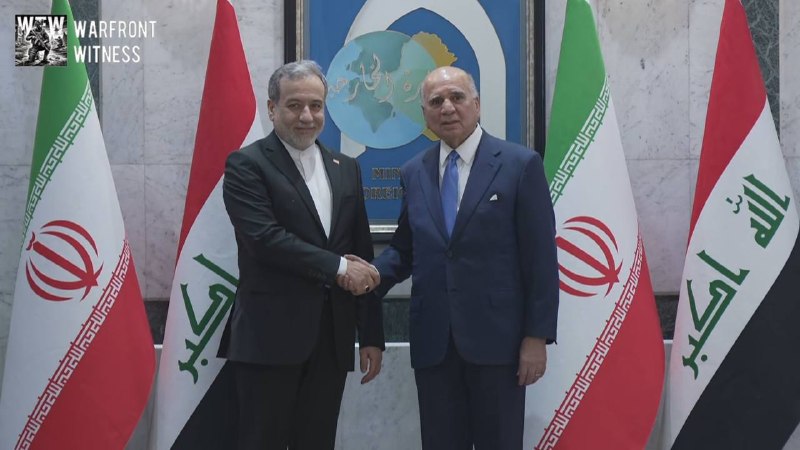
Iraqi counter-terrorism forces moved on Sadr City and tightened the perimeter around Baghdad's Green Zone in the hours before dawn on 28 June 2026, in what Baghdad is framing as an anti-corruption sweep and what regional observers read, more pointedly, as a sovereignty test. Local correspondents reported arrests of several Iranian-aligned members of parliament and political figures, the arrival of Iran's foreign minister at the Green Zone, and a partial reopening of access points once the initial operation concluded.
The pattern matters more than the personalities. For two decades, Iraq's political class has been a brokered class — factions aligned with Tehran, with Washington, with the Sadrist movement, with tribal networks — operating inside a state that nominally commands the monopoly of force but rarely, on its own terms, exercises it. A counter-terrorism deployment inside Sadr City, against sitting parliamentarians, is the kind of operation that, in the older order, would have required quiet coordination across that whole stack. The optics this time suggest Baghdad is willing to act first and absorb the diplomatic noise afterwards.
What actually happened on the ground
The sequence, as reported by the Telegram channel wfwitness tracking Baghdad-based sources across the morning of 28 June, was unusually compressed. Counter-terrorism units deployed into Sadr City, the vast Shia-majority district of Baghdad, as part of what Iraqi authorities describe as a major anti-corruption operation; circulating footage reportedly showed security forces at a residence linked to a political figure under investigation. By 05:31 UTC, local accounts described military reinforcements continuing to move toward the Green Zone, including the access route to the Sikma Complex, which also serves as an entry point to a nearby sensitive facility. By 05:32 UTC, the channel reported that the overnight deployment had resulted in the arrest of several Iranian-aligned MPs and politicians within the Iraqi political framework, with the campaign characterised as likely coordinated with senior political authorities. By 06:19 UTC, Iraqi state media outlet INA was confirming the arrival of Iranian Foreign Minister Abbas Araghchi in Baghdad, even as the Green Zone returned to normal operations and gates reopened for regular personnel. The same thread noted a later Sadr City deployment at 07:12 UTC as part of the same anti-corruption operation.
The compressed timeline — arrests, an Iranian foreign minister on the ground, a quiet Green Zone — is itself the story. Diplomats do not usually arrive in a capital during an ongoing security sweep against their own allies unless something has already been agreed, or unless the sending state is scrambling to limit damage.
The counter-narrative Tehran will push
Read the operation from Tehran, and the frame inverts. Iran does not describe its relationship with Iraqi Shia parties as direction; it describes it as fraternal coordination among sovereign actors inside a shared political community. The arrests of Iranian-aligned parliamentarians, in that telling, are not a corruption case — they are a political hit, delivered under a domestic-law fig leaf, aimed at factions that Tehran considers legitimate Iraqi stakeholders rather than foreign agents. Iranian state media, when it weighs in, will likely frame the visit by Araghchi as protective diplomacy: a senior envoy arriving to ensure that Iraqi Shia leaders are not subjected to politically motivated prosecution, and that Iraq's internal balance is not unilaterally rewritten by Baghdad's security services.
That framing has structural weight. Iraqi Shia parties aligned with Iran are not Iranian proxies in any simple sense; they are Iraqi political organisations with their own vote banks, their own militias, and their own reasons to coordinate with Tehran that pre-date the post-2003 order. A Baghdad-driven anti-corruption campaign that selectively targets those parties will be read in Tehran, in Beirut, and inside Iraq's own Shia street as a campaign with a political target, regardless of what the warrants say.
Sovereignty is the word, but the structure is older
Strip away the anti-corruption language and the structural pattern is familiar across the post-2003 Middle East: a host-state security apparatus, built and trained with external help, reaches a point where it is confident enough to act against the external patron's local partners without prior coordination. In Baghdad's case, the counter-terrorism service (CTS) grew up inside the U.S.-led coalition era, was reorganised under Iraqi command, and has spent the last decade positioning itself as the one institution inside the Iraqi state that operates on a national rather than factional chain of command. An operation like Sunday's is, in part, an advertisement of that fact — to Iraqi audiences, to Washington, and to Tehran.
The deeper pattern is the slow renegotiation of what Iraqi sovereignty actually means in practice. For years, sovereignty in Baghdad has been a layered thing: Iraqi on the surface, partitioned underneath between an Iranian axis, an American axis, a Sadrist current, and a Kurdish north that largely runs its own affairs. When a government in Baghdad uses its national security forces to arrest parliamentarians aligned with one of those external axes, it is testing whether the layered arrangement still holds — or whether the host state is willing to assert itself even at the cost of a diplomatic rupture with a neighbour that hosts, finances, and politically sustains several of Iraq's largest parties.
Stakes, and what to watch next
The near-term stakes are concrete. If the arrested parliamentarians are processed through Iraqi courts on corruption charges that hold up to scrutiny, Baghdad will have demonstrated that its security services can act against the Iranian-aligned axis with a degree of impunity — and that other factions inside the Shia bloc are not automatically off-limits. If the arrests are quietly reversed, the detainees released, and the files buried, the operation will be read in retrospect as theatre — a show of force meant for a domestic audience, withdrawn once Tehran made its displeasure felt. Araghchi's presence in Baghdad is the variable that determines which way this resolves. A foreign minister does not fly in for a courtesy call during a politically charged security sweep; he flies in to negotiate the terms under which the operation continues.
Over the longer horizon, the episode sits inside a wider regional renegotiation. Iraq is being asked, quietly, by multiple capitals — Washington, Tehran, the Gulf, Ankara — to clarify whose security architecture it intends to be part of. Sunday morning's raid is not an answer, but it is a data point: Baghdad is willing to spend political capital on the question. The next 72 hours will tell whether that capital is being spent, or merely displayed.
How Monexus framed this vs the wire: the English-language wires have not yet picked up the overnight Baghdad operation in detail; this piece is built from on-the-ground Telegram reporting from wfwitness, cross-referenced against Iraqi state-media confirmation of the Iranian foreign minister's arrival. Where wire confirmation arrives, we will update; where it does not, we have flagged the uncertainty in prose rather than smoothing it over.
Wire provenance
This editorial synthesis draws on the following public wire/social posts:
- https://t.me/wfwitness
- https://t.me/wfwitness
- https://t.me/wfwitness
- https://t.me/wfwitness