Bahrain's $400 Million Rebuild Quietly Anchors America's Fifth Fleet Posture
A $400 million rebuild of the Naval Support Activity in Bahrain, reported by the Wall Street Journal, lands in the same week that planned US-Iran negotiations were postponed — a coincidence that exposes how hard infrastructure, not diplomacy, is setting the Gulf tempo.
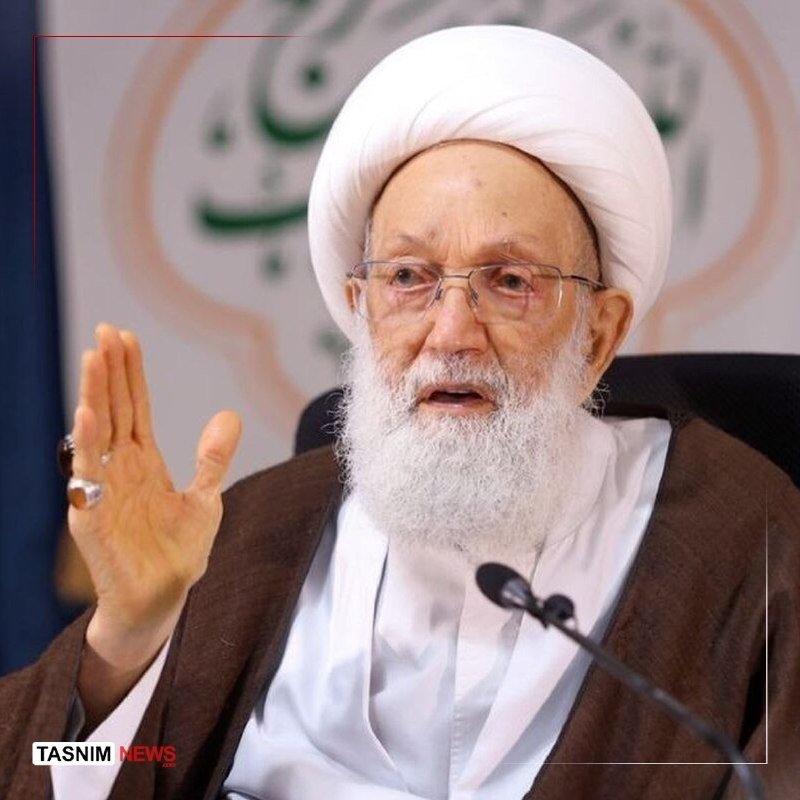
On 28 June 2026, the Wall Street Journal reported that the United States will spend roughly $400 million rebuilding its principal naval installation in Bahrain — including the headquarters complex and at least two satellite-communications buildings damaged in recent months. The figure, channelled through Iranian-linked outlets Jahan Tasnim and OSINTdefender, lands in the same week that Washington and Tehran postponed a new round of talks that had been pencilled in for the weekend. The juxtaposition is the story. While diplomats schedule and re-schedule, contractors are pouring concrete. The tempo of Gulf security is being set by hard infrastructure, not by communiqué language.
The premise of the American presence in Manama has not changed in two decades: the Fifth Fleet, forward-deployed and Iran-watched. What is changing is the physical plant. A $400 million rebuild is not a routine maintenance line item. It signals a posture that expects to be occupied for another generation.
What $400 million actually buys
The Journal's reporting, as relayed by OSINTdefender on 28 June, describes reconstruction of the headquarters and "many other buildings" at Naval Support Activity Bahrain, including two satellite-communications facilities. That is the operational core of any forward-deployed headquarters — the room where fleet commanders watch, and the dishes through which orders travel. Replacing them is the kind of capital decision a navy makes when it intends to keep operating from the same address for a long time. It is the inverse of a drawdown signal.
For Bahrain, the contract is also a domestic-economy event. Gulf hosts of US bases have learned to read construction cranes at foreign facilities as political weather vanes: a new dining hall means a longer stay; a fenced-off parking lot means a quieter year. A nine-figure rebuild of headquarters and comms is, on that reading, a clear forecast.
The diplomatic delay sitting next to the building site
The postponement of the next US-Iran round, also reported by the Wall Street Journal on 28 June and summarised by OSINTdefender, removes the immediate horizon on which Tehran and Washington were expected to meet. The two threads — concrete in Bahrain, no meeting in Muscat or Geneva or Doha — are not in tension. They are reading each other. A negotiation that does not happen this weekend does not require the forward headquarters to be quieter. If anything, the absence of a fixed date argues for hardened infrastructure over improvised surge deployments.
The Iranian framing of the base rebuild, carried by Jahan Tasnim, treats the $400 million figure as evidence of a hardening posture rather than a maintenance cycle. That reading is consistent with how Iranian state-adjacent commentary has long treated the Fifth Fleet: as an occupying force whose presence is itself the negotiation. The Western framing, implicit in the Journal's reporting, treats the rebuild as overdue capital replacement for facilities that have absorbed two decades of salt-air wear and recent strike damage. Both readings can be true at once, and both probably are.
Why a staff-writer voice reads this skeptically
Wire coverage of US basing in the Gulf tends to oscillate between two templates. One treats construction as routine housekeeping. The other treats it as escalation theatre. The harder question — what $400 million committed to comms and headquarters actually signals about the next five years of US-Iran posture — gets less column-inches than either template.
The skeptical reading is this: capitals do not spend nine figures on the nerve centre of a forward fleet they intend to quietly close. They spend it when they expect the building to be load-bearing in a contingency they have not ruled out. That does not mean war is imminent; it means the option is being preserved at full strength while diplomats talk — and, this week, do not.
Stakes and what remains uncertain
If the trajectory holds, Manama emerges as the durable anchor of US maritime power in the Gulf for the rest of the decade, with Bahraini contractors and US taxpayer dollars underwriting a headquarters built for the next crisis, not the last one. Tehran, in turn, faces a more permanent adversary on its seaward flank than the one it was bargaining against. The Gulf monarchies get a guarantee whose price is permanent entanglement. The losers, in the structural sense, are diplomatic tracks that depend on the implicit threat of withdrawal to function.
What the open reporting does not yet establish is the timeline of construction, the contracting path, or which specific satellite-communications systems are being replaced. The Wall Street Journal figure — roughly $400 million — is the load-bearing number, and it comes from a single sourcing chain via Iranian-aligned aggregators. Monexus treats that number as the working figure until contradicted by a primary Pentagon or Navy release. Until then, the most honest framing is the most boring one: while the diplomats' calendar slipped, the builders' calendar advanced.
Desk note: Monexus carried the $400 million figure and the postponed-talks line as two separate threads from the same Wall Street Journal reporting cycle and read them together — a deliberate departure from wire framing, which typically treats basing decisions and negotiation schedules as distinct stories.
Wire provenance
This editorial synthesis draws on the following public wire/social posts:
- https://t.me/JahanTasnim
- https://t.me/osintlive