Lebanon's Berri denounces new deal as 'ten times worse' than 17 May accord, warns of internal strife
Lebanon's parliamentary speaker Nabih Berri has dismissed a newly announced agreement as far worse than the May 17, 2026 framework and warned it could entrench domestic division, as Israeli demolitions continue in Khan Younis.
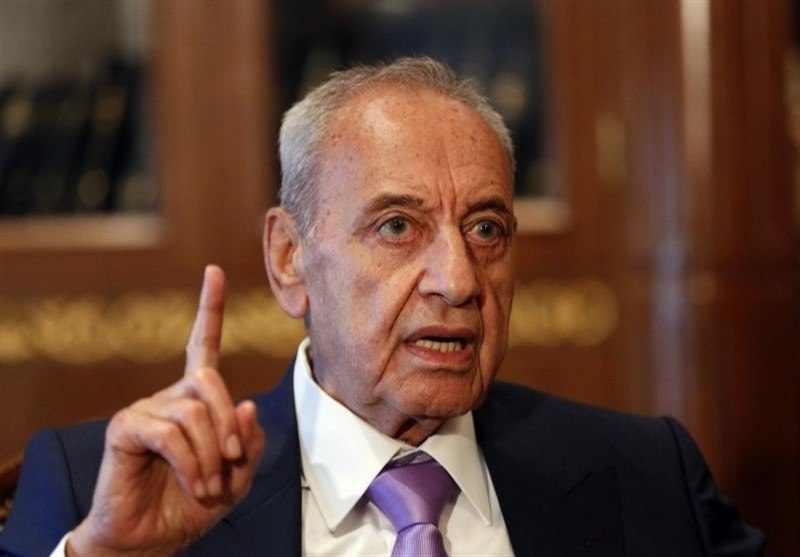
Lead
At 22:19 UTC on 28 June 2026, Lebanon's parliamentary speaker Nabih Berri declared that "the most dangerous thing about the agreement is that it may open the door to strife and division among the Lebanese in a way that serves the Israeli occupation," according to a flash posted by Al-Alam Arabic on Telegram. Two minutes earlier, at 22:17 UTC, the same outlet carried a sharper formulation from Berri: "This agreement is ten times worse than the agreement of May 17, 19," an apparent reference to the May 2026 framework that paused the cross-border phase of the Israel–Hezbollah war. The pairing of the two statements, both flagged as urgent by the Iran-aligned Arabic-language channel, marks the most pointed public attack on the deal from inside Lebanon's political mainstream since negotiations were reported to be in their final stretch.
The shape of the objection
Berri's complaint is not with the existence of an agreement, but with its substance. The Shi'a political establishment he represents has historically been the principal Lebanese interlocutor in any arrangement that touches the country's southern border and the residual armed presence south of the Litani. His framing — that an accord nominally ending hostilities can nevertheless "serve the Israeli occupation" — recasts the diplomatic exercise as a strategic loss dressed in the language of peace. The internal-strife warning is aimed at his domestic audience as much as at external readers: it is a public signal that Lebanon's largest parliamentary bloc may contest the deal in Beirut even if it is signed at the border.
That Berri chose the May 17 framework as his yardstick is itself revealing. The earlier accord, brokered under US pressure in late spring, froze major ground operations in southern Lebanon and was credited at the time with averting a wider Israeli ground push into the Litani corridor. To describe the new draft as ten times worse is to argue, in effect, that whatever was gained in May is now being unwound — that the territorial or security architecture that the earlier deal preserved is being traded away in detail.
The southern front, on the same evening
The Berri intervention does not arrive in a vacuum. At 22:41 UTC, less than half an hour after his second statement, a separate urgent flash from the Gaza-focused channel Gaza Alanpa reported that the Israeli army "is carrying out a demolition operation in northeastern Khan Younis." The two dispatches, taken together, sketch the operational backdrop against which any Lebanon-focused agreement is being negotiated: while one theatre is being publicly contested in Beirut, another remains an active ground zone in Gaza, with engineering work rather than headline combat. The juxtaposition underlines a recurring problem for any diplomatic text in this conflict — that a deal in one arena is judged, in part, by what is happening in another.
What is known, and what is not
The two Telegram flashes do not name the parties to the agreement Berri is denouncing, do not specify which clauses he objects to, and do not record whether the text has been initialled. The May 17 reference is the only dated benchmark supplied in the source material, and it is delivered in truncated Arabic ("the agreement of May 17, 19"), with the year left incomplete — a strong indication the message was abbreviated for distribution rather than read in full. The Al-Alam Arabic outlet is an Iran-aligned state-broadcaster franchise, and its selection of which Berri statements to amplify is itself a framing choice: the channel has chosen to surface the most internally-divisive formulation first, ahead of any line about negotiations continuing or compromise being sought.
The Khan Younis flash, meanwhile, names neither the unit conducting the demolition nor the specific target — it is a one-line operational claim, not a corroborated battle-damage assessment. Independent verification from either wire services or Israeli military spokespeople is not present in the source material consulted for this article.
Why the warning matters
Berri's framing is significant because it elevates the cost of any new deal from a foreign-policy dispute to an internal-Lebanese one. An agreement that Lebanon's principal Shi'a political leader publicly denounces as a vehicle for Israeli occupation will be read inside the country as having been concluded over his objections, and will be mobilised accordingly. The "strife and division" language is not idle — it gestures at the communal fault lines that have opened in Lebanon each time a regional deal has been perceived as one-sided, from the Taif arrangements of 1989 to the immediate post-2005 period. A deal that holds on paper and fractures Lebanese politics in practice is, by that measure, not a durable settlement.
For external readers, the immediate question is whether the warning is a negotiating posture — pressure applied in public to extract last-minute changes to the text — or a substantive signal that Beirut's internal consensus has fractured before the ink is dry. The source material does not let this publication resolve that question. What it does establish is that on the evening of 28 June 2026, the loudest Lebanese voice in the room was telling his constituents that the diplomatic track now on the table is, in his judgement, considerably worse than the one that preceded it, and that the country should expect the political consequences to follow.
This article has been assembled from Telegram wire flashes carried by Al-Alam Arabic and Gaza Alanpa. Monexus has not independently verified the text of the agreement under negotiation, the identity of the demolition target in Khan Younis, or the official transcript of Berri's remarks; the framing above is derived from the abbreviated Urdu-language and Arabic-language statements circulated on those channels.
Wire provenance
This editorial synthesis draws on the following public wire/social posts:
- https://t.me/alalamarabic
- https://t.me/alalamarabic
- https://t.me/gazaalanpa