The climate emergency is not a metaphor — it is a 1,400-person body count in a single week
Europe is baking and Venezuela's earthquake toll has passed 1,400. The two stories share more than a calendar week — they share a media grammar that treats climate rupture as scenery.
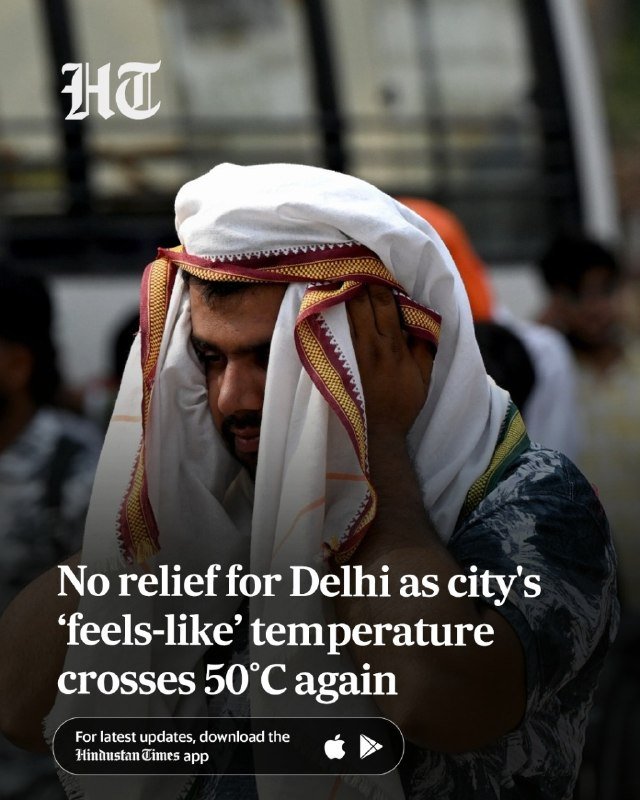
Europe is recording temperature records this week, and Venezuela is burying the dead from an earthquake whose official toll has cleared 1,400 people. The two stories arrived in the same twenty-four hours on the Reuters wire — a heatwave pushing east across the continent that interrupted Paris Fashion Week on 28 June 2026, and rescue crews still pulling survivors, including a baby and her mother, from collapsed buildings in the Caribbean south. The juxtaposition is not editorial cleverness. It is the operating environment of the next decade.
The instinct to file these as separate stories — one about weather, one about geology — is the failure mode. They are the same story told through two different instruments. A warming atmosphere loads the dice on every natural hazard: it intensifies rainfall, heat, drought, and the secondary disasters that follow each. A 6.3-magnitude quake does not become a 1,400-person tragedy because of climate alone, but the capacity of a society to absorb that quake — the heavy machinery, the search teams, the building codes — is downstream of political economy, which is downstream of a world that has spent three decades declining to price carbon. The wire treats these as adjacent items. They are sequential chapters.
The heat is not a backdrop
The European heatwave is being covered as a curiosity because it crashed Paris Fashion Week — a cultural cue, not a climate one. Temperature records shattered across the continent as the system moved east on 28 June 2026, and the wire led with the runway cancellations rather than the public-health implications. That is a framing choice, and it is the wrong one. Heat is the deadliest weather hazard in Europe by a wide margin; the 2003 heatwave killed more than 70,000 people across the continent and produced almost no comparable column inches at the time because the dead were elderly, indoors, and unphotogenic.
When the wire leads with fashion, the audience reads weather as atmosphere rather than as emergency. The structural effect is real: a public that treats a heatwave as a backdrop to celebrity coverage is a public that will not demand adaptation budgets, urban greening, cooling-centre networks, or the labour-code reforms that protect outdoor workers. The reporting choices of one news cycle set the policy ceiling for the next budget cycle. That is not a media-criticism abstraction. It is the mechanism by which preventable deaths remain preventable.
The 1,400 is not a number
The Venezuela earthquake toll crossed 1,400 on 28 June 2026, according to Reuters reporting from the affected region, and locals are publicly decrying the absence of heavy machinery on the ground. The framing worth sitting with is not the figure itself but the complaint attached to it: a society that knows where the rubble is, knows who is under it, and lacks the equipment to reach them in time. That is a political fact dressed as a logistical one.
The same Reuters dispatch that reported the toll also carried the rescue of a baby and her mother by US and local teams working together in the rubble — a small, verifiable counter-narrative to the broader institutional failure. The story is not that rescue is impossible. The story is that rescue arrived in fragments because the macro-capacity was not pre-positioned. Earthquakes are not preventable; their body counts are.
The grammar of foreign disasters
When the wire covers a European heatwave, the grammar is meteorological — high-pressure systems, blocking patterns, jet-stream meanders. When the wire covers a Latin American earthquake, the grammar is humanitarian — death tolls, rescue teams, appeals for aid. The same planetary system, two completely different reporting languages. The European story becomes a puzzle to be explained; the Latin American story becomes a tragedy to be witnessed.
This split has a consequence. Witnessed tragedies produce aid appeals and candlelit vigils. Explained puzzles produce building-code reviews, urban planning reforms, and adaptation budgets. The Venezuela earthquake will, in the next news cycle, be folded into a larger Latin American disaster narrative in which the affected country is treated as recipient rather than as a political entity with agency over its own reconstruction contracts, its own early-warning systems, and its own disaster-preparedness budget. Europe will, in the same period, receive investigative coverage of why its cities were not ready, with named officials, named failures, and named reforms.
What the two stories share
Both stories are, at root, about the distance between scientific knowledge and institutional response. The heatwave was forecast. The earthquake's fault system was mapped. In neither case did the available knowledge translate into the speed or scale of response that would have minimised loss. The pattern is global and it is worsening. Adaptation funding for developing countries remains a fraction of what was pledged at successive COPs; insurance penetration in climate-exposed regions of the Global South remains a fraction of the OECD average; building-code enforcement in the world's fastest-urbanising cities remains underfunded by orders of magnitude.
The stakes, stated plainly: a world that continues to treat climate rupture as scenery, and earthquake disasters as foreign tragedies, will continue to count its dead in thousands per event. A world that treats both as governance failures will, eventually, count fewer of them. The choice is being made in editorial meetings, in budget allocations, and in the framing of a single Reuters dispatch — and it is being made this week.
This article was written by Monexus editorial. The two Reuters dispatches cited above cover, respectively, the European heatwave of 28 June 2026 and the Venezuela earthquake whose toll exceeded 1,400 on the same date; the rescue of a baby and her mother is documented in a third Reuters dispatch from the same day.
Wire provenance
This editorial synthesis draws on the following public wire/social posts:
- https://reut.rs/4uZoKKc
- https://reut.rs/4bcVFDW