Congo's visa humiliation is the wrong World Cup story
Congo reached the World Cup knockout stage after players were denied US visas. The result is the story; the paperwork is the insult.
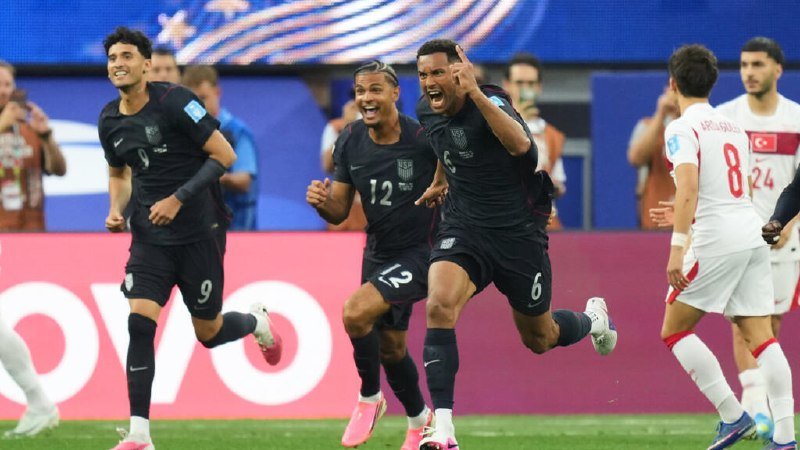
The Democratic Republic of Congo booked a place in the World Cup knockout rounds on 27 June 2026, and the only reason the achievement is not the lead is that several of their players were not allowed onto the pitch where the trophy will eventually be lifted. According to Indian Express wire reporting, the US government denied visas to members of the Congolese delegation, forcing the squad to rely on a thinner rotation of available bodies — among them the forward Wissa, whose goals did the heavy lifting.
That sentence is the whole argument. A World Cup held in the United States, the world's wealthiest sporting market and the country that awarded itself the tournament, is keeping African players out by default. The football is a footnote; the paperwork is the story.
The result is the insult
Congo, a country the global sports economy largely ignores when it is not stripping it of minerals, has now qualified past the group stage of a tournament the United States spent more than a decade lobbying to host. They did so with a squad that was, by definition, smaller than the squad they had planned to bring. A knockout-round appearance is a thin margin for error at the best of times. A knockout-round appearance when several of your first-choice players are in Kinshasa rather than in the hotel in Los Angeles is a small miracle.
The Indian Express dispatch frames Wissa as the standout performer, the player who carried the line when carrying the line was harder than usual. That framing is fair on the pitch. Off the pitch, the framing is obscene: a national federation preparing for the biggest tournament in its history had to write a contingency plan for a visa regime that did not consider their participation essential.
The counter-narrative is paper-thin
The diplomatic version, the one US officials will offer when pressed, is that visa processing is a sovereign administrative matter, that each application is decided on its merits, and that any team facing denials reflects case-by-case adjudication rather than policy. That line is technically true and substantively false. When a tournament is sold to a host nation on the promise of global spectacle, the host acquires at minimum a moral obligation to make entry frictionless for the athletes whose presence generates the spectacle. A World Cup that requires African federations to publicly identify which of their players were granted entry is a World Cup that has failed its own pitch.
The other counter-narrative is that African football federations should have filed paperwork earlier, polished their consular cases harder, and not relied on the goodwill of the host. This is the kind of thing that gets said about countries whose players get stopped at airports. It is also the kind of thing that gets said until it happens to a European federation, at which point it suddenly becomes a diplomatic incident. Congo did not get that version of the script.
What a tournament is for
Strip the football out and a World Cup is a commercial product: broadcast rights, ticket revenue, sponsorship inventory, soft-power projection. The United States bought the rights to that product partly on the explicit promise that the United States would host the world. Visa friction for the athletes whose labour makes the product real is not a minor administrative detail. It is a tax on the very thing being sold.
The deeper pattern here is one Monexus has covered in other contexts. When a host state sets the rules of access, the rules of access become the politics. Countries that are net exporters of players — most of West and Central Africa, much of South America, the lower-tier European leagues — pay the friction in lost preparation time, lost squad depth, and lost credibility at home. Countries whose federations have permanent consular relationships, legal teams on retainer, and dual-nationality pipelines do not. The disparity is structural, and it is older than this tournament.
The stakes going forward
If the pattern holds, the next rounds will deliver two storylines running in parallel. The first is the football: Congo versus whoever they draw, Wissa versus whoever marks him, and the small matter of a knockout tie that an undermanned African side is somehow still in. The second is the meta-story that no broadcaster will lead with: that a US-hosted World Cup required visas to keep its own competition honest, and that African federations once again had to do the asking.
The sources are candid about what they do not specify. Indian Express does not name which players were denied, nor how many, nor at which consulate. The full visa picture will surface only if the Congolese federation chooses to publish it. Until then, the on-pitch result is the answer, and the off-pitch question is the one FIFA, US Soccer, and the State Department will spend the next four years trying not to answer.
Monexus framed this around visa policy and the host state's obligations, rather than the heroic-squad narrative dominant in the wire. The football matters. The access matters more.