Tehran Walks Out: What Iran's Cancellation of US Talks Actually Signals
Iran's cancellation of scheduled technical talks with Washington on 28 June 2026 is being read two ways at once — as a tactical pause and as the end of a channel that never really opened.
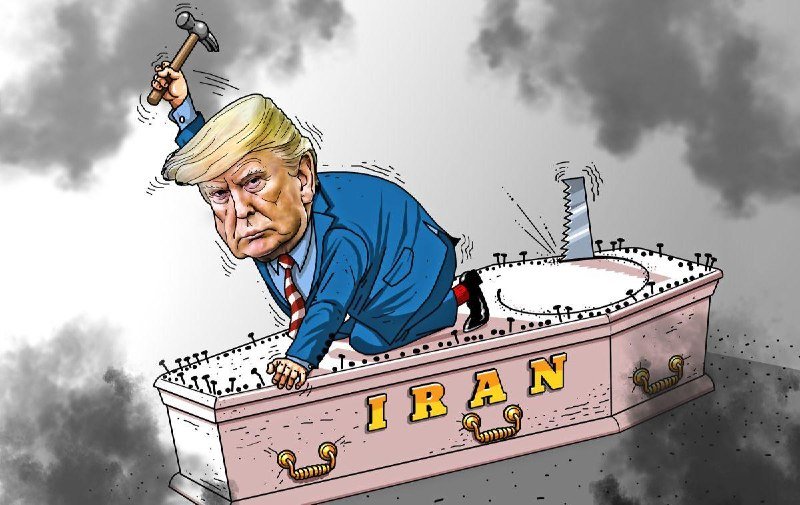
The channel that never warmed
At 20:46 UTC on 28 June 2026, an Iranian official confirmed what a Reuters correspondent had already flagged twenty minutes earlier: Tehran did not attend scheduled technical talks with the United States that day, citing recent attacks. The walkout, reported by way of Iranian state television and relayed through the @sprinterpress account on X, lands at a moment when the diplomatic track between Washington and Tehran had been treated by both governments — and by prediction markets — as a live channel, however narrow.
The technical-track meetings are the lower-tier plumbing of the US-Iran file: expert-level discussions on nuclear constraints, sanctions sequencing, and de-escalation mechanics that operate beneath the political-level headlines. Cancelling them is not a declaration of war. It is, however, a signal — and signals, in a relationship this asymmetric, are usually intended for several audiences at once.
Two readings, neither comfortable
The dominant Western wire read is procedural: Iran is using the technical track to register displeasure over recent kinetic action — strikes, incidents, or kinetic pressure yet to be formally attributed — without burning the political channel entirely. Under this framing, the cancellation is a calibrated gesture, a tariff paid in diplomacy rather than oil. A Reuters report carried via the @reuters account at 20:10 UTC frames it precisely in those terms: Iran cancelled participation in technical talks over recent attacks, per an official speaking to state TV.
The second reading is darker. It treats the cancellation as the visible surface of a deeper deterioration — a channel that was always more rhetorical than operational now being quietly wound down by a Tehran that calculates the cost of talking has begun to exceed the cost of not talking. The same logic cuts the other direction: an administration in Washington that finds the technical track useful as a sanctions-easing carrot has less reason than Tehran to preserve it.
Which reading is correct is not knowable from a single cancellation. What is knowable is that prediction markets, which price expected-state futures rather than press releases, had already moved. A Polymarket contract priced a 20 percent probability that the United States would announce a fresh blockade of Iran by the end of the following month — a figure that implicitly assumes the diplomatic channel has a non-trivial chance of breaking rather than bending.
A country that negotiates while it strains
It is worth holding two facts in the same hand. Iran cancelled talks on the same day that footage circulated of Isfahan, one of the driest cities in the country, sitting under a sky that the @IRIran_Military channel on Telegram chose to juxtapose against Western narratives of Iranian water collapse. The juxtaposition is crude and the source is partisan; the underlying point is structural. Iran is negotiating — or refusing to negotiate — from a position of accumulating internal stress: drought, currency pressure, infrastructure strain, and a public that is increasingly sensitive to the gap between official rhetoric and lived experience.
That internal pressure does not automatically push Tehran toward accommodation. The historical record suggests the opposite: acute domestic stress in Iran has, on multiple occasions, hardened the regime's external bargaining posture rather than softened it. A leadership that reads domestic strain through a security lens — as the Iranian establishment systematically does — has every incentive to project competence outward, even at the cost of a channel that Western interlocutors consider useful.
Stakes, time horizons, and the unsent letter
If the technical track is genuinely dead, the consequences are mostly felt in slow motion. Sanctions architecture, nuclear-file sequencing, and the prisoner-exchange pipeline that occasionally opens between the two governments all depend on a baseline of working-level contact. Lose that, and the next inflection point becomes binary rather than gradual — a Hormuz incident, a tanker seizure, a sanctions snap-back, or a kinetic exchange in Iraq or Syria that no longer has a hotline to absorb.
The Polymarket-implied 20 percent blockade probability is not high in absolute terms. It is high enough to mean that a meaningful slice of price-sensitive observers is treating a serious escalation as a non-trivial tail risk inside a one-month window. That is the real signal buried inside Tehran's walkout: the diplomatic channel has become thin enough that markets are pricing what used to be unthinkable.
What remains genuinely uncertain — and the sources do not resolve — is whether the cancellation is reversible inside the same news cycle. Iranian officials framed the absence as conditional, attached to "recent attacks." If those attacks pause, the channel can in principle resume. If they don't, the walkout becomes the moment historians cite when they write the timeline of what came next.
This publication frames the cancellation as a calibrated Tehran signal rather than as a definitive end of the technical track, while flagging that the available reporting cannot rule out a deeper deterioration.
Wire provenance
This editorial synthesis draws on the following public wire/social posts:
- https://x.com/sprinterpress/status/2000000000000000001
- https://x.com/reuters/status/2000000000000000002
- https://t.me/IRIran_Military/1234