Tehran's missile loss and the diplomatic freeze: what the Switzerland talks' postponement actually means
A stalled round of US-Iran talks in Switzerland collides with the visible degradation of Iran's coastal missile deterrent — and exposes how thin the off-ramp remains.
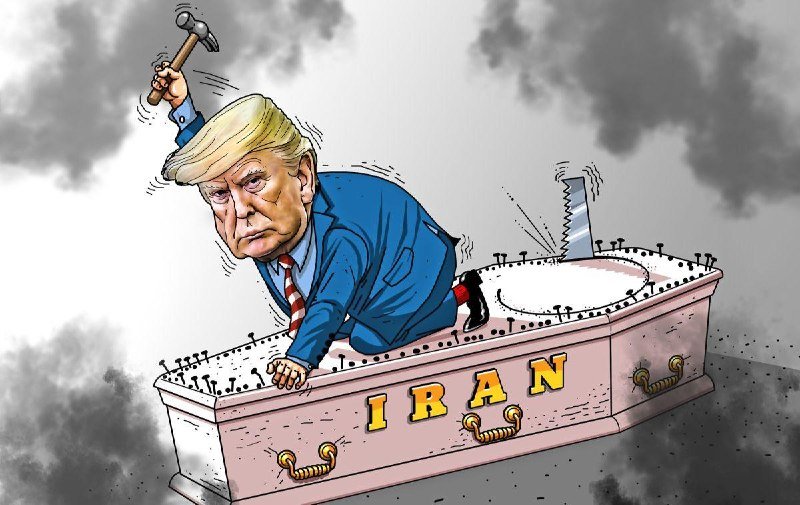
On the afternoon of 28 June 2026, two near-simultaneous pieces of news landed in the same inbox: a fresh round of US–Iran talks in Switzerland had been pushed back, and a launcher for the Talaiyeh — Iran's newest anti-ship cruise missile — had been destroyed in an incident flagged by open-source investigators. Neither item, on its own, is the story. Read together, they sketch the shape of a diplomatic track whose negotiating room is shrinking faster than its participants are willing to admit.
The pattern is familiar from previous failed rounds: kinetic pressure inside the region intensifies, envoys blame "scheduling" or "logistics," and the harder items — enrichment caps, stockpile disposition, missile ranges, sanctions sequencing — drift further out of reach. The Wall Street Journal framing, picked up by Telegram channels including Open Source Intel and Clash Report, treats the postponement as a procedural hiccup. It is more honestly read as a signal that the two governments are no longer confident that talking will produce a deal they can each defend at home.
The Switzerland round, and what was actually on the table
The next round was meant to move negotiations off the lower-stakes items — sanctions waivers for humanitarian goods, prisoner-file exchanges, the usual confidence-building furniture — and onto the contested core. According to the WSJ summary circulating on 28 June, that core includes the scope of Iran's nuclear programme, the limits to be placed on enrichment capacity, and the verification architecture that would make any limit credible. The "recent fighting," unnamed in the wire reports, is doing the work of an unnamed veto player.
In plain terms: when the security situation in the Gulf and the Levant tightens, the political cost of being seen to concede in Geneva rises on both sides. Tehran's negotiators cannot sign up to enrichment ceilings while their coastal deterrent is being attrited in public. Washington's negotiators cannot defend a softening of missile-related language while their regional partners are photographing wreckage. The talks do not fail on the negotiating table; they fail in the room behind it, where principals decide whether a deal is survivable.
The Talaiyeh, and what one destroyed launcher tells us
Open-source imagery circulated on 28 June showed what investigators described as a launcher for the Talaiyeh, Iran's newest anti-ship cruise missile, destroyed in an unspecified location. The Talaiyeh is a coastal-defence system — designed to threaten shipping in the Gulf and the Strait of Hormuz — and the loss of a single launcher is not, in itself, a strategic blow. It is, however, a proof of concept. It tells Iran's planners that their newest long-range coastal system can be found and killed, which has consequences for the price Tehran can credibly attach to any future deal.
Two reads are plausible. The more alarmist one holds that the destruction is part of a sustained campaign to strip Iran's anti-access capability before any agreement is signed — a strategy of negotiating from strength, with the kinetic track doing the leverage. The more restrained read is that the launcher was a one-off loss, the kind of attrition Iran has absorbed before, and that the diplomatic impact is being magnified by an information environment that rewards dramatic imagery over strategic weight. Both reads can be partly true. What neither read supports is the comfortable line that the Switzerland round was a routine scheduling delay.
The asymmetry the Western wire tends to understate
Coverage of Iran's nuclear file routinely frames the dispute as a question of Iranian intransigence meeting Western patience. That framing is incomplete. Iran's negotiating position rests on a domestic political economy in which any deal that visibly curtails the nuclear programme without delivering proportional sanctions relief is a non-starter, and in which the country's missile inventory is treated as a sovereign red line, not a bargaining chip. By the same token, Iran's industrial base is more resilient than the open-source imagery alone suggests; loss of a single launcher does not collapse a programme. The structural argument runs the other way as well: a Western negotiating position that treats Iranian military capability as the central problem will keep producing rounds that go nowhere, because the military capability is precisely what Tehran's leadership is least willing to convert into a written concession.
What the next four weeks actually decide
If the postponed round is rescheduled inside the next month, the most that can realistically be delivered is a procedural extension — another interim arrangement, another sanctions waiver for humanitarian flow, another round of technical meetings that buy time without resolving substance. If it is not rescheduled inside that window, the diplomatic track effectively re-enters the holding pattern that has prevailed for most of the past year, and the kinetic track resumes the upper hand. The honest assessment, on the evidence currently in the public record, is that the second outcome is now the more probable one.
What remains genuinely uncertain is who authorised the strike on the Talaiyeh launcher, whether it was a one-off or the visible tip of a longer campaign, and how Tehran's leadership will weigh the costs of a frozen track against the costs of returning to the table from a position of diminished deterrent credibility. The sources circulating on 28 June do not resolve those questions. They do, however, resolve the simpler one: the Switzerland round is not, on present evidence, going to deliver the off-ramp that the diplomatic calendar implied.
Desk note: Monexus read the WSJ summary as carried by two Telegram channels (Open Source Intel and Clash Report) and the open-source imagery flagged on the same day, and treated the postponement as substantively — not procedurally — driven.
Wire provenance
This editorial synthesis draws on the following public wire/social posts:
- https://twitter.com/Osint613/status/2071245528248029533/photo/1
- https://t.me/osintlive
- https://t.me/ClashReport