Iran's pensioners are not protesting a budget line — they are protesting a settlement
Coordinated demonstrations across at least five Iranian cities on 28 June 2026 point to a constituency the Islamic Republic cannot co-opt and cannot silence: retirees whose contracts with the state have been unilaterally re-priced.
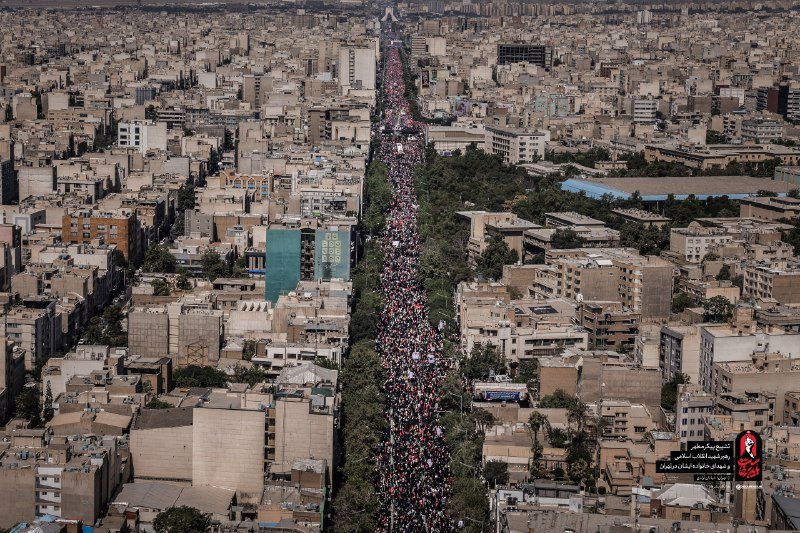
On the morning of 28 June 2026, retirees assembled outside branches of the Iranian National Insurance organisation in Tehran, Kermanshah, Shush, Isfahan and Ahvaz, repeating a demand that has now become routine in the Islamic Republic: pay us what you owe. The protests are not new. They are not sporadic. They are the visible surface of a structural conflict between a state that has effectively devalued its pension obligations and a constituency — older, organised, impossible to demonise — that has no leverage except its own presence on the street.
The pensioners are not protesting a single budget line. They are protesting a settlement — the unspoken social contract in which the Islamic Republic exchanges subsidised bread, cheap fuel and a defined-benefit pension for political quiescence. That contract has been re-priced, slowly and unilaterally, for the better part of a decade. Inflation has compounded; rial-denominated incomes have not. Retirees who once occupied the comfortable middle of Iranian society now find themselves on the wrong side of a calculation the state made without asking them.
The geography of a recurring protest
What distinguishes 28 June from earlier rounds is not the demand but the geography. Tehran is expected. Kermanshah, a Kurdish-majority western city, carries its own political weight — and its own history of sustained street politics. Shush, in Khuzestan, places the protest inside the Arab-Iranian heartland where questions of service delivery have, in past cycles, escalated far beyond pensions. Isfahan adds an old bazaar-capital centre of gravity. Ahvaz, again in Khuzestan, completes a pattern: this is not a Tehran story. It is a multi-ethnic, multi-city movement with a single grievance.
That distribution matters. The Iranian state's preferred frame for dissent is to localise it, contain it, and dismiss it as the work of foreign-backed agitators. Five cities, organised around a single institution, on a single morning, make that frame harder to sustain.
Why this constituency is hard to manage
The Iranian security apparatus has refined tools for managing students, bazaaris and ethnic-minority protesters. Retirees sit awkwardly across those categories. They are too old and too numerous to treat as students; too integrated into the formal economy to bazaar-shame; too often Persian-speaking and central-province to ethnic-profilable. They are also, by construction, the generation that built the post-revolutionary state — military service, public-sector employment, decades of contribution to the National Insurance fund. Their claim is contractual, not ideological.
That is precisely what makes them dangerous to a system that has spent the last decade substituting printed rial for the real purchasing power it once guaranteed. You can arrest a student leader. You can raid a bazaar. You can barely arrest a million retirees without making the contract explicit in a way the state would rather keep implicit.
The settlement the state is actually defending
Western coverage of Iran tends to read the country's economic distress through sanctions, oil prices and nuclear-file diplomacy. All three matter. None of them explain why retirees, whose liabilities are denominated in domestic currency and whose employers are domestic institutions, are protesting at all.
The structural fact is simpler. The Islamic Republic has chosen, repeatedly and explicitly, to fund current expenditure — subsidies, security services, proxy-adjacent commitments across the region — by allowing the real value of its domestic-currency obligations to erode. Pension liabilities are the largest single pool of such obligations. Inflation is the mechanism. Retirees are the residual claimants on a system that has decided, in effect, that their claims can wait.
Calling this a "pension dispute" is a category error. It is a fiscal-choice dispute, and the choice has been made.
What remains uncertain
The 28 June demonstrations, as currently reported by activist channels monitoring Iranian civil society, describe the action but do not yet publish turnout figures, casualty counts, or specific demands beyond adjustment to current payments. The state-aligned outlets that might supply those numbers have not, as of the time of writing, broken from the routine pattern of non-coverage. Whether the protest produces a formal response — a one-off bonus, a public statement, a quiet security round-up — usually becomes visible only forty-eight to seventy-two hours later. For now, the verifiable fact is narrower: organised retirees, in at least five cities, outside branches of an institution they paid into for decades, asking for what they were promised.
That is enough. It is enough because the constituency is wrong for the state's standard playbook, the geography is wrong for the usual containment strategy, and the demand is wrong for any frame that treats Iran as a story about foreign policy alone. The pensioners are not a side-effect of sanctions diplomacy. They are the invoice.
This publication framed the 28 June pension protests as a fiscal-choice dispute rather than a humanitarian one, on the view that the latter framing is the one the Iranian state itself prefers — and that the harder, more accurate question is who is being asked to absorb the cost of current policy.
Wire provenance
This editorial synthesis draws on the following public wire/social posts:
- https://t.me/englishabuali/1357
- https://t.me/englishabuali/1356
- https://t.me/abualiexpress/9128