Tehran draws a line around Hormuz — and tests who pays for the chokepoint
Iran's foreign minister says the Strait of Hormuz is Tehran's to administer and reopen — a sovereignty claim that puts Gulf monarchies, US naval power, and global crude flows on the same collision course.
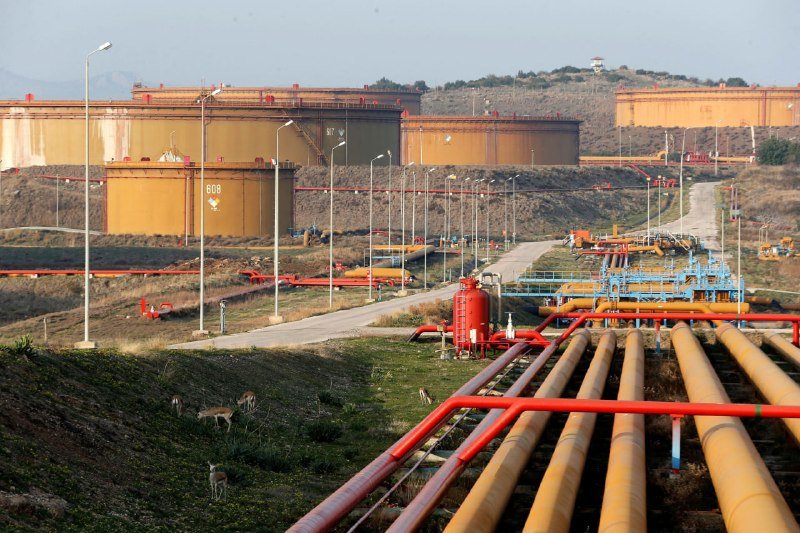
On 28 June 2026, Iran's Foreign Minister Abbas Araghchi did two things in quick succession that, taken together, amount to a more assertive posture than Tehran has shown in months. First, he demanded that regional states bar what Iranian state media described as "US-Zionist aggressors" from using their territory or airspace to strike Iran, according to PressTV reporting at 19:14 UTC. Less than an hour earlier, at 18:38 UTC, PressTV carried Araghchi's warning against any foreign interference in Iran's administration of the Strait of Hormuz — including, he insisted, the timetable and manner of its reopening. The twin messages land in the same week as the wider regional fallout from the June Israeli-US campaign against Iran, and they amount to a test of who actually gets to govern the world's most important oil chokepoint.
The pattern is unmistakable: Tehran is not simply protesting strikes; it is laying legal-political groundwork to claim exclusive stewardship of the waterway through which roughly a fifth of global oil trade passes. The claim is unlikely to be recognised by the United States or by the Gulf monarchies that flank the strait. But it is being made openly, in English, on Iranian state channels — a deliberate signal to shipping insurers, to Asian buyers of Iranian crude, and to Beijing and New Delhi, whose energy planners treat Hormuz as a permanent vulnerability.
A sovereignty claim, not a slogan
Araghchi's framing — that Iran bears "sole responsibility" for administering Hormuz — borrows the language of customary maritime law even as it stretches it. International maritime convention treats the strait as a corridor in which transit passage must remain unimpeded for all comers. Iran's argument runs the other way: that the security situation around the waterway has been shaped by the presence of extra-regional militaries, and that those forces — not Iran's navy and IRGC units — are the destabilising variable. The OSINT-focused channel OSINTdefender flagged Araghchi's position at 17:22 UTC on 28 June, noting that the foreign minister was "doubling down on the current Iranian position."
The asymmetry is deliberate. By claiming administrative primacy, Iran creates a parallel legal grammar in which any US or allied naval movement through the strait can be recast, in Tehran's telling, as a violation of Iranian-managed space rather than an exercise of freedom of navigation. The line is not new — Iranian officials have advanced versions of it since the 1980s — but it is being made with unusual explicitness, in the same week that Iranian territory was struck.
The Gulf states are the pressure point
The corollary of Araghchi's Hormuz claim is the demand, published on the same day, that regional states deny airspace and basing to the United States and Israel. That is where the message actually bites. The Gulf monarchies — Saudi Arabia, the United Arab Emirates, Bahrain, Qatar, Oman — host the bases and overflight rights that any sustained air campaign against Iran requires. Iranian diplomacy has spent three decades trying to peel those monarchies away from the US security umbrella; the demand, made openly, is the same project wearing a sharper face.
Whether the demand has any operational traction is another matter. Washington's force posture in the Gulf is not a courtesy — it is the spine of a security architecture the Gulf states have bought into since the British withdrawal from east of Suez in 1971. Bahrain hosts the US Naval Forces Central Command; Al Udeid in Qatar hosts CENTCOM's forward headquarters; the UAE hosts US fighter aircraft and has hosted Israeli strikes in the current conflict cycle. None of those arrangements unwind on Iranian demand. But the demand does create political cover for Gulf parliaments and publics to re-litigate the basing question — slowly, in budget cycles, in sovereignty language that now has an Iranian template attached.
Why the strait matters more than the rhetoric
Roughly twenty per cent of globally traded oil moves through the Strait of Hormuz, alongside a large share of the LNG trade. The insurance market reacts to legal ambiguity faster than to physical closure: war-risk premiums for tankers transiting the strait respond to diplomatic language as well as to Iranian fast-boat activity. Araghchi's claim, made in English and amplified through PressTV, is calibrated for that audience as much as for Western capitals. By asserting an Iranian administrative role over the waterway, Tehran raises the legal surface area on which any future incident — a boarding, a seizure, a missile test — can be defended as Iranian sovereign action rather than as piracy.
The corollary for buyers matters. China imports the bulk of its seaborne crude through Hormuz; India and Japan are similarly exposed; South Korea takes a significant share of its energy through the strait. A legal claim of Iranian stewardship is, in effect, an invitation to those buyers to treat Tehran as the counterparty whose consent matters for transit. That is not a trivial offer in a market that is already trading around sanctions enforcement and shadow-fleet logistics.
What remains contested
Three things are unclear from the day's statements. First, what "reopening" actually means in Iranian usage: the framing implies a closure event of some scale, but the source material does not specify whether Araghchi is referring to a current disruption, a contingency plan, or a rhetorical posture. Second, whether the demand on Gulf states is meant as an opening negotiating position or as a non-negotiable red line; the language is absolute, but Iranian diplomacy has historically packaged absolute language inside longer negotiating arcs. Third, how the US Fifth Fleet, headquartered in Bahrain, and the UK's maritime presence in the region read the claim operationally — neither has responded, in the materials available, with anything beyond standard freedom-of-navigation rhetoric.
The pattern that this publication is watching is straightforward. Iran is using the post-strike moment to convert military exposure into legal-political leverage, framing the strait as Iranian-administered space and the Gulf monarchies as Iranian sovereign equals whose cooperation is now a precondition for regional security. The line will be tested the next time a tanker is boarded, a mine is found, or a fast-boat incident is recorded. Whoever controls the diplomatic narrative on that day will set the price of insurance for the next quarter.
Desk note: Where Western wire reporting tends to read Iranian claims of Hormuz stewardship as bluster, Monexus treats the legal architecture as the substance — the claim is being made in the language international maritime lawyers and oil traders actually use, and the audience is as much Beijing and Mumbai as it is Washington.
Wire provenance
This editorial synthesis draws on the following public wire/social posts:
- https://t.me/presstv/
- https://t.me/presstv/
- https://t.me/s/osintlive