Iran strikes US Gulf bases, and the war no one can name enters its loudest phase
Iranian ballistic missiles and drones reportedly hit eight US targets in Kuwait and Bahrain, and Washington answered with a pledge to 'finish what we started' — a phrase that concedes, almost in passing, how far the war has already gone.
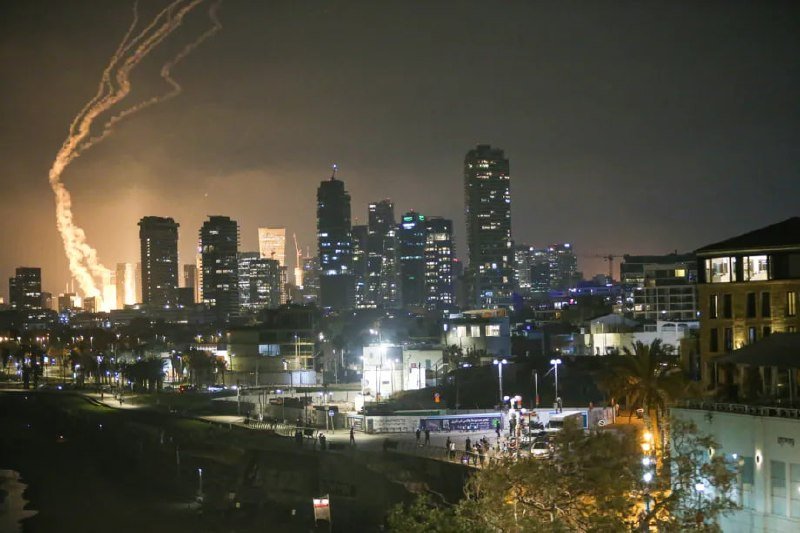
At 05:22 UTC on 28 June 2026, accounts circulating on the OSINTdefender Telegram channel reported that Iranian ballistic missiles and drones struck eight United States military targets in the Gulf, including Ali Al Salem Air Base in Kuwait and the US Navy's Fifth Fleet base in Bahrain. The same channel, minutes earlier, carried a statement attributed to President Donald Trump that the United States "will continue its military operations in Iran" and intends to "finish what we started" in response to what it characterises as ongoing threats from Tehran. The combination — strikes on two Gulf hosts of US power, paired with an open-ended US commitment to escalate — is the clearest signal yet that the conflict has broken out of Iran's borders and into the energy corridors on which the rest of the world depends.
The reporting so far is one-sided. It comes from a single Telegram account that aggregates open-source intelligence and from the US president's own remarks, neither of which is a neutral arbiter of what exploded, where, and at what cost. What can be said with the evidence on hand is that a state-on-state exchange of fire across the Gulf is no longer hypothetical, and that the bases struck are not backwaters. Ali Al Salem is one of the largest US air installations in the region; the Fifth Fleet base at Manama is the headquarters for American naval operations in the Persian Gulf, the Arabian Sea, and the western Indian Ocean. Striking them is a deliberate choice of target — infrastructure whose loss degrades the United States' ability to project power into the entire western Asian littoral.
What Iran is signalling
A missile-and-drone complex attack on two allied hosts is not a tactical spasm. It is the kind of move a state makes when it has decided that the cost of absorbing further strikes at home exceeds the cost of widening the war. Tehran's choice of targets — runways, hangars, radar and naval infrastructure rather than population centres — suggests a calibrated message: that Iran can hit the machinery of US reach without triggering the kind of mass-casualty escalation that would invite full regime-change operations. The Gulf sheikdoms are being told, again, that their territory is a launch pad for someone else's war.
That reading is necessarily provisional. The Telegram-sourced reports do not specify munition types, intercept rates, or damage assessments, and OSINTdefender has a track record of amplifying claims before they are independently verified. The framing here is the one that fits the geometry of the strike — and it is worth naming the geometry, because the dominant Western wire line has so far tended to treat Iranian retaliation as theatre. Strikes on two sovereign US bases in third countries are not theatre.
What Washington is signalling back
President Trump's statement — "finish what we started" — does two things at once. It commits the United States to continued bombing inside Iran, and it concedes, almost in passing, that a campaign is already underway. That matters for the legal and political frame. A discrete retaliatory action against specific Iranian assets is one category of war; an open-ended operation of indefinite scope, publicly described in continuing tenses, is another. The language used inside the United States to describe the campaign — "military operations," "finish what we started" — is closer to the vocabulary of a sustained air war than to a contained response.
There is a counter-reading, and it deserves airtime. The phrase may also be read as bargaining: signalling to Tehran that escalation carries the risk of an extended campaign, in the hope of drawing the Iranian side back to a negotiation table. Presidents under domestic political pressure to look tough have historically oscillated between escalation and deal-making in the same news cycle. The structural fact, however, is that each round of escalation has so far produced the next round of escalation, and neither the Telegram reporting nor the presidential statement points to a diplomatic off-ramp.
The Gulf as the world's most exposed corridor
Iran sits on one side of the Strait of Hormuz, through which a substantial share of seaborne crude oil and liquefied natural gas transits each day. Kuwait and Bahrain sit on the other, hosting the bases whose ability to keep that transit open is the unspoken premise of the global energy market. If those bases are now active targets, the question of whether tanker traffic continues at scale is no longer academic. Insurance war-risk premia, naval escort decisions, and rerouting through longer pipelines all become live policy questions within hours of a confirmed strike.
This is the structural frame that the daily news cycle tends to obscure. A war between the United States and Iran is not a bilateral event; it is a war over the price of energy, the reliability of dollar-denominated oil sales, and the right of third-country capitals to remain neutral. Bahrain's royal family did not choose to host the Fifth Fleet in order to absorb Iranian missiles. Kuwait's parliament did not endorse a US presence to become a forward operating base in a war between Washington and Tehran. The Gulf's smaller monarchies are about to discover, in the most literal way, the limits of strategic hedging.
What remains uncertain
The reporting on which this analysis rests is thin and one-directional. The OSINTdefender channel aggregates and sometimes amplifies before independent verification, and the Telegram summary does not specify the basis on which the eight-target figure was reached. Casualty counts, infrastructure damage, and whether the strikes were intercepted in part or in whole are not in the available record. The Iranian side has not, in the material on hand, confirmed or denied the operation through a named spokesperson. The Gulf hosts have not, on the evidence available here, issued statements. The next 24 to 48 hours of wire reporting — Reuters, AP, BBC, Al Jazeera, and the regional outlets cited above — will determine whether 28 June 2026 is remembered as the day the war widened, or as the loudest false alarm of a long and noisy summer.
What is not in doubt is the direction of travel. A US president has publicly committed to continuing military operations inside Iran. Iran has reportedly struck eight US targets across two allied countries. The two statements are not consistent with a story in which either side is about to climb down. The honest reading is that the war has entered a phase in which the infrastructure of global energy is now inside the targeting cycle, and that the rest of the world — which imports Gulf hydrocarbons and underwrites Gulf security guarantees — is a participant in that cycle whether its parliaments have voted for it or not.
This article draws on OSINTdefender Telegram reporting and the on-record statement attributed to President Trump; corroboration from wire outlets was not available at the time of writing and will be folded in as it arrives.
Wire provenance
This editorial synthesis draws on the following public wire/social posts:
- https://t.me/s/OSINTdefender
- https://t.me/s/OSINTdefender
- https://en.wikipedia.org/wiki/Ali_Al_Salem_Air_Base
- https://en.wikipedia.org/wiki/United_States_Fifth_Fleet
- https://en.wikipedia.org/wiki/Strait_of_Hormuz