The Iran-US ceasefire is holding — barely — and the Gulf's smallest states are paying the price
A weekend of reciprocal strikes between Tehran and Washington has left a nominally agreed framework intact — but only because Bahrain and Kuwait absorbed the rounds that were supposed to land elsewhere.
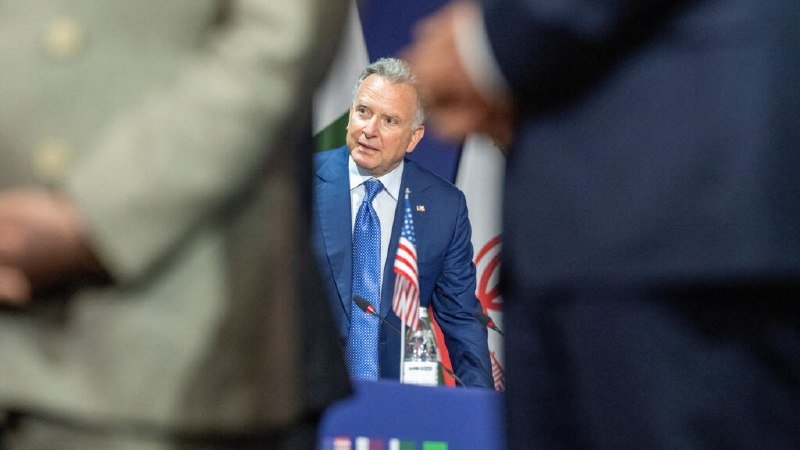
The ceasefire that Washington and Tehran spent the spring constructing is still nominally in force as of 28 June 2026, but only in the narrow sense that both sides have continued to describe it as such. By early evening UTC the framework had survived a fresh exchange of strikes: Iranian missiles and drones aimed at Bahrain and Kuwait, and US counter-strikes on targets in the Strait of Hormuz. The pattern is now familiar enough to be worth naming. The two principals keep talking; their neighbours keep catching shrapnel.
The framing matters because it determines whose sovereignty counts as a pressure valve. Bahrain and Kuwait are not parties to the Iran-US memorandum. They are, however, host to US naval and air assets, members of the Gulf Cooperation Council, and geographically positioned in the path of any Iranian retaliatory salvo that prefers to avoid a direct hit on a US base. That structural fact is doing more work than any diplomatic communique this weekend.
What actually happened, in sequence
According to France 24's reporting on 28 June 2026, Iran launched missiles and drones at Bahrain and Kuwait in the hours after US strikes hit targets around the Strait of Hormuz. The exchanges came against a backdrop of renewed US-Iran nuclear negotiations and a memorandum of understanding that, until this weekend, had been presented by both governments as the framework holding the escalatory ladder in place.
The Iranian strikes landed on the territory of two US-allied Gulf monarchies that had no obvious role in triggering them. Kuwait's foreign ministry and Bahrain's government had not been the addressees of any Iranian demand in the public read-outs of the talks. They were, in the blunt language of regional security, soft targets with high symbolic value: US-aligned, hosting Western forces, and located close enough to the Iranian coast that a salvo could plausibly be framed as a warning shot.
The Western wire frame, and what it omits
Mainstream coverage has tended to treat the strikes as another round in an Iran-US tit-for-tat — a frame that protects the bilateral negotiation but erases the third parties absorbing the cost. The France 24 report follows that template: the lead is the ceasefire's fragility; the strikes are the symptom; the read-out is about whether the framework holds.
That framing is not wrong, but it is incomplete. A ceasefire whose enforcement mechanism is calibrated to two capitals while its kinetic effects land in a third sovereign's airspace is, by any honest accounting, a ceasefire that exports risk. Bahraini and Kuwaiti air defences have been engaged in a war they did not declare, in defence of a diplomatic track they were not invited to join. The wire's instinct to keep the story centred on Washington and Tehran is structurally convenient for both governments, neither of whom benefits from a public accounting of what their neighbours have absorbed.
The structural read: small states as pressure valves
What this weekend illustrates is the durable pattern of great-power negotiation in the Gulf: the principals bargain, the littler states cushion the impact. Bahrain and Kuwait occupy a position that diplomats euphemise as "strategic depth" — close enough to Iran to register as a credible target, dependent enough on US security guarantees that their airspace is functionally an extension of the US forward posture. When Tehran wants to signal that it can hurt the US without striking the US, Bahrain and Kuwait are the natural venue. When Washington wants to demonstrate reach into Iranian-facing waters, it does so from bases in those same countries.
There is a long history of this. The 2019 attack on Saudi Arabia's Abqaiq facility, the recurring drone interceptions over the Gulf of Oman, the 2023 Houthi strikes that forced rerouting through the Cape — each instance turned smaller Gulf economies into the physical surface area of someone else's argument. The current episode is the same logic in compressed form: a memorandum survives the weekend because the strikes that would have broken it landed on someone other than the signatories.
What the neighbours are saying
The diplomatic response from the two struck governments has been muted in ways that deserve scrutiny. According to Telegram-channel reporting carried by JahanTasnim and Tasnim English on 28 June 2026, both Britain's Foreign Office and Canada's foreign ministry issued statements calling for the Iran-US memorandum to be implemented in full, with explicit reference to the Bahrain and Kuwait strikes. That is a notable alignment: two Western governments publicly acknowledging that the strikes on third-party sovereigns strengthen, rather than weaken, the case for the bilateral framework.
The Bahraini and Kuwaiti responses are less visible in the public wire, which is itself a piece of information. When a small ally absorbs a strike and its principal security patron frames the response as "implementation of the memorandum," the smaller state's own sovereignty has been reclassified — from co-belligerent to instrument. That reclassification is the news, even if the wire consensus treats it as background.
What remains uncertain
The sources disagree on what would constitute a meaningful Iranian concession in the next negotiating round. Iran has presented the strikes as retaliation for US action; the US has framed its own strikes as defensive. Neither framing is independently verifiable from the publicly available reporting on 28 June, and the Iranian state-aligned outlets cited above carry that line without independent corroboration. The weekend's exchanges also do not yet establish whether the memorandum's compliance mechanisms — which were never publicly detailed in full — include any enforcement role for the struck Gulf states themselves. That detail will determine whether Bahrain and Kuwait continue to function as the framework's pressure valve or whether, over time, they extract a price for the role.
The most honest read of the weekend is that the Iran-US framework is less a ceasefire than a managed contest, in which the cost of each round is socialised onto sovereigns that were not at the table. That is not sustainable indefinitely. It is, however, the equilibrium both principals appear to prefer on 28 June 2026.
— Monexus has framed this as a sovereignty-and-pressure-valve story rather than the bilateral "ceasefire holding or not" frame that dominates the Western wires. The strikes on Bahrain and Kuwait are not background to the Iran-US story; they are the Iran-US story, told from the third parties absorbing it.
Wire provenance
This editorial synthesis draws on the following public wire/social posts:
- https://t.me/tasnimnews_en/...
- https://t.me/JahanTasnim/...