A War, a Memorandum, and the Strike That Broke Both
A memorandum of understanding was days old when the US and Iran traded strikes, and Tehran walked out of scheduled technical talks. The Slovenian president's read of the moment is harder to ignore than the cable traffic suggests.
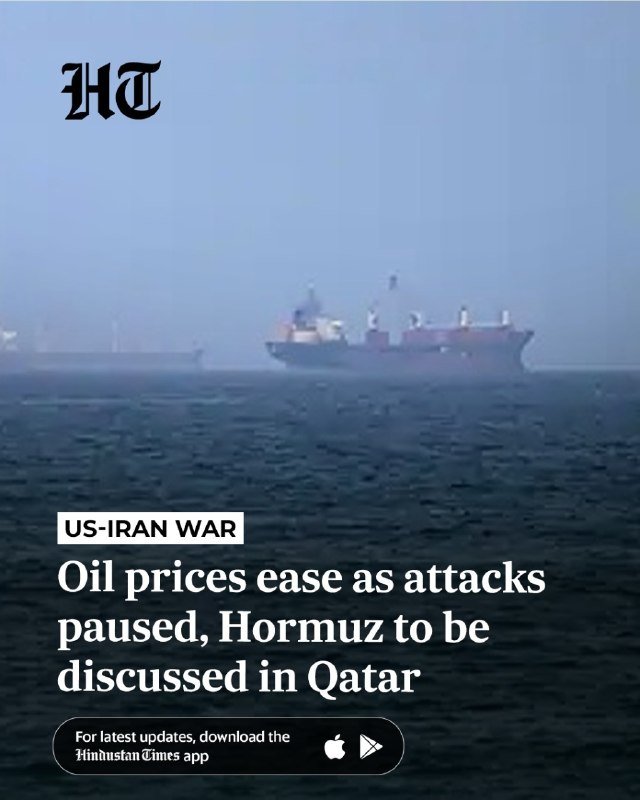
A memorandum of understanding signed days ago is now in operational free fall. On 28 June 2026 at 18:55 UTC, Al Jazeera reported that the United States and Iran have traded strikes just days after the two sides signed a memorandum of understanding — the kind of document that is supposed to buy time, not burn it. By 19:45 UTC the same day, the BRICS-affiliated Telegram channel @BRICSNews carried an Iranian statement that the Islamic Republic did not attend scheduled technical talks with Washington, citing the recent attacks as the reason. A war that was supposed to be winding down is, by any honest reading of the day's traffic, accelerating.
The lesson is not that diplomacy failed. Diplomacy was always a thin skin stretched over a much heavier confrontation. The lesson is that the architecture of the deal — MoU, technical channel, confidence-building gestures — was load-bearing in name only. Once kinetic action resumed, the structure collapsed in hours, not weeks.
What actually broke
The Al Jazeera report is careful with its sequencing: a memorandum, then strikes, then the political centre of the deal collapses under its own weight. The Iranian non-attendance at the technical track, reported on Telegram by @BRICSNews at 19:45 UTC, is the operative signal. Technical talks are where the boring, indispensable work of any diplomatic settlement happens — sanctions sequencing, verification modalities, escrow arrangements, reciprocal release schedules. Skipping them is not a procedural shrug. It is the deal saying out loud that it has no working engine.
A second data point complicates the picture. At 18:20 UTC, the same Telegram channel reported that Slovenian President Robert Golob stated that US President Donald Trump had concluded the war with Iran was a "mistake." That is not a neutral observation from a small European capital. Slovenia holds the rotating presidency of the Council of the European Union in the first half of 2026, and a sitting president's characterisation of the war travels as a quasi-official European reading of the American position. If the United States itself is signalling buyer-internal remorse about the conflict, the Iranian walkout looks less like hardline theatre and more like a calibrated refusal to keep talking to someone who may not be able to deliver.
The framing trap
Western wire coverage of US-Iran escalations tends to default to a single template: a reasonable United States, an unreasonable Iran, a diplomacy that almost worked until Tehran walked away. That template has the chronology backwards in this case. Strikes came first, on both sides, against a backdrop of an MoU whose text was never published. The Iranian non-attendance is a reaction to kinetic action, not a cause of it.
There is a counter-reading worth taking seriously. A state that signs an MoU and is then struck has a domestic incentive to be seen walking out — any Iranian negotiator who sat down after the attacks would be politically finished at home. So the walkout is both genuine and performative, and treating it as evidence that Iran is the unconstructive party mistakes the optics for the substance. The structural fact is that kinetic operations and a working technical channel cannot coexist for long. Something had to give, and what gave was the channel.
What "technical talks" were actually doing
Strip the jargon away and the technical track is where the United States and Iran were supposed to be doing the unglamorous arithmetic of de-escalation: which sanctions unlock against which nuclear constraints, what the verification cadence looks like, how frozen funds move, which third-country intermediaries carry which messages. None of that survives a strike on either side. The walkout reported at 19:45 UTC is the most basic possible signal that the working-level diplomats on both ends have lost political cover to keep meeting. When the technicians lose cover, the principals lose the deal.
The Slovenian observation, if accurate, sharpens the point. If the US side itself has decided, at presidential level, that the war was a mistake, the question is no longer whether the MoU survives but who inside the American system has the authority to enforce it against the parts of the US architecture — military planners, sanctions hardliners, domestic political constituencies — that benefit from the war continuing.
Stakes, and what remains uncertain
If the trajectory holds, the immediate losers are the working-level diplomats on both ends whose careers are now hostage to a chain of decisions made above their pay grade. The medium-term losers are the European and Gulf intermediaries — Slovenia, Oman, Qatar, Iraq — whose credibility as back-channels depends on deals that actually hold. The winner, in the short run, is the segment of the US security apparatus that never wanted the MoU in the first place.
What the open sources do not yet settle is the scale and target of the strikes reported by Al Jazeera, and whether the Slovenian characterisation of US regret is a private remark or a coordinated European signal. The Iranian side has framed its non-attendance as a response to attacks; the US framing, to the extent it appears in the day's traffic, has not been fully laid out in the items available. The most that can be said with confidence is that on 28 June 2026 the diplomatic architecture announced days earlier stopped working, and that the slippage was visible inside a single news cycle.
This article has been written without a US-side readout or an Iranian foreign ministry briefing beyond the items cited above; the framing rests on the day's wire and channel traffic, and would shift materially if either government publishes a fuller account.
Wire provenance
This editorial synthesis draws on the following public wire/social posts:
- https://t.me/bricsnews
- https://t.me/bricsnews