Iran exits the 2026 World Cup in three minutes of Austrian–Algerian chaos
A six-goal swing inside three minutes in the Austria–Algeria group fixture has ended Iran’s 2026 World Cup, with elimination decided not on Iranian soil but by results in Innsbruck and elsewhere.
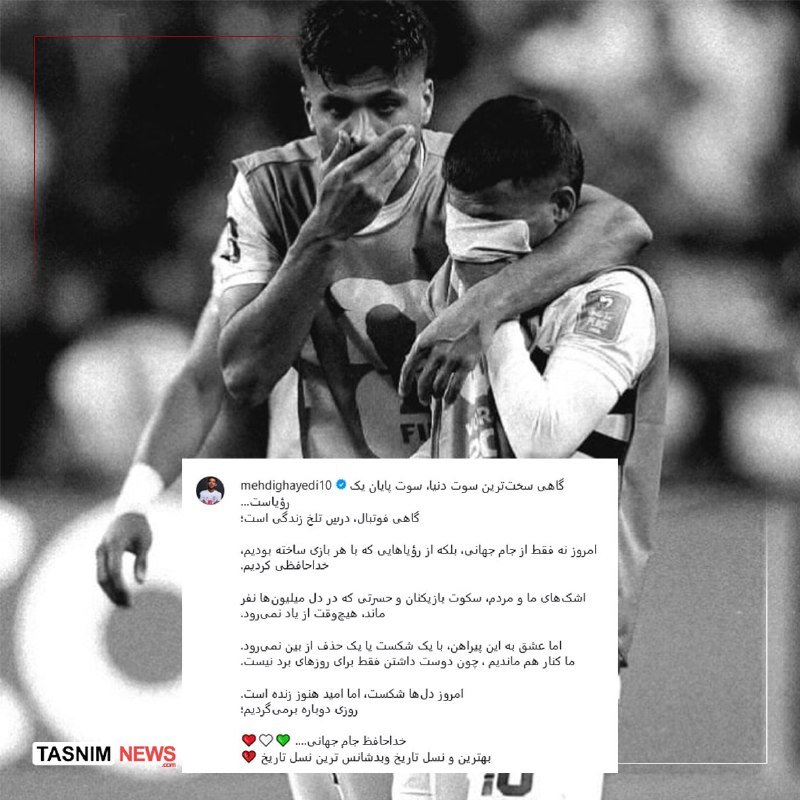
Iran’s national football team is heading home from the 2026 World Cup, eliminated not by anything that happened on the pitch in their own group match but by three minutes of madness in Innsbruck. The Austria–Algeria fixture, played on 28 June 2026, swung from a 2–1 Algerian lead to a 3–3 final scoreline in a late burst of goals that flipped Iran’s tournament mathematics inside out, according to Telegram channels tracking the group in real time.
By the time the final whistle blew in the Austrian Alps, Iran were out — a result that owed as much to algebra as to football. The team’s exit confirms how narrow the margins have become in FIFA’s expanded 48-team World Cup, and how little room a politically fraught federation has to absorb even one bad evening elsewhere in the group.
How Iran went out
The mechanics were simple and brutal. Iran needed at least one of three things on the final matchday, as listed by the Fotros Resistance Telegram channel at 07:52 UTC on 28 June 2026: Ghana to beat Croatia; the Austria–Algeria match not to end in a draw; or Uzbekistan not to lose to Congo. None of those scenarios materialised in Iran’s favour once the late games settled.
Indian Express reporting picked up by the channel at 07:52 UTC described how three minutes of goals in the Austria–Algeria match effectively ended Iran’s tournament, a frame echoed by Middle East Spectator’s 08:11 UTC post noting that a draw between Austria and Algeria would be enough to send Iran home. The knock-on implication is direct: under the tournament’s tiebreaker rules, the points and goal-difference arithmetic locked Iran out of the knockout stage.
The fact that Iran’s fate was decided in Innsbruck rather than on their own field underlines a structural feature of the modern World Cup. In a 48-team field split across twelve groups, every group-stage match becomes a referendum on six other teams’ results. Iran’s players could not influence the outcome in Austria; they could only watch.
Why this one stings harder
Iran has spent the better part of two decades trying to build a credible football identity on the world stage — a project that has run in parallel with, and often underneath, a political backdrop that makes every appearance into a small foreign-policy event. A World Cup, for any federation, is a piece of soft-power infrastructure; for Tehran, where stadium access for women remained a contested domestic question until FIFA pressed the issue publicly, an early exit carries more than sporting weight.
This is also a tournament Iran entered with quiet expectations. The draw had been kind on paper, and the squad featured enough European-based players to suggest that a knockout-stage place — Iran’s first since 2014 — was a realistic target rather than a fantasy. The loss of that opportunity, decided by other teams’ results, is the kind of tournament narrative that lingers longer than an honest on-pitch defeat.
The structural read
What we are watching, beyond the goals, is the geometry of a larger World Cup. The expansion from 32 to 48 teams was sold by FIFA as a wider door for the game’s global periphery — more African teams, more Asian teams, more representation. The trade-off is exactly what hit Iran on 28 June: qualification paths now lead through more concurrent fixtures, and a federation’s tournament life depends on results it cannot directly shape. The expanded format amplifies interdependence. It also amplifies the cruelty of tiebreakers.
For Global South federations, this is a double-edged development. More slots mean more visits to the world’s biggest sporting stage; the expanded group also means more matches decided by the form of teams in distant time zones. Iran’s exit is the most visible version of a calculation that will play out across the tournament — and one that pitches the romance of the World Cup against the bureaucratic mechanics of a 104-match group stage.
What remains uncertain
The specifics of the late Austrian–Algeria goal sequence are still filtering through fan channels rather than the major wires, and the official FIFA match report will be the load-bearing source once it is published. Iranian federation officials had not, as of the early UTC hours of 28 June, issued a public statement through the channels Monexus is monitoring; that, too, is likely to land in the next 24 hours, in Persian and English. There is also a small but real possibility that the head coach’s position will be re-examined in Tehran — a familiar post-tournament reflex that travels faster than any official communiqué.
The structural questions, though, do not depend on the next press release. They are about whether the expanded World Cup rewards the federations it claims to include, or whether it simply adds layers of arithmetic between them and the knockout rounds. Iran’s 2026 tournament is now the cleanest data point in that argument — three minutes in Innsbruck, and a federation that did everything right on its own pitch, gone.
Wire provenance
This editorial synthesis draws on the following public wire/social posts:
- https://t.me/Middle_East_Spectator
- https://t.me/FotrosResistancee