Iran’s Foreign Ministry honours a team already out of the World Cup — and exposes the political freight it carried into the tournament
Tehran’s Foreign Ministry has publicly thanked Iran’s players for withstanding "inhumane and unprecedented pressures" — language that turns a group-stage exit into a statement about who controls the world’s most-watched sporting event.
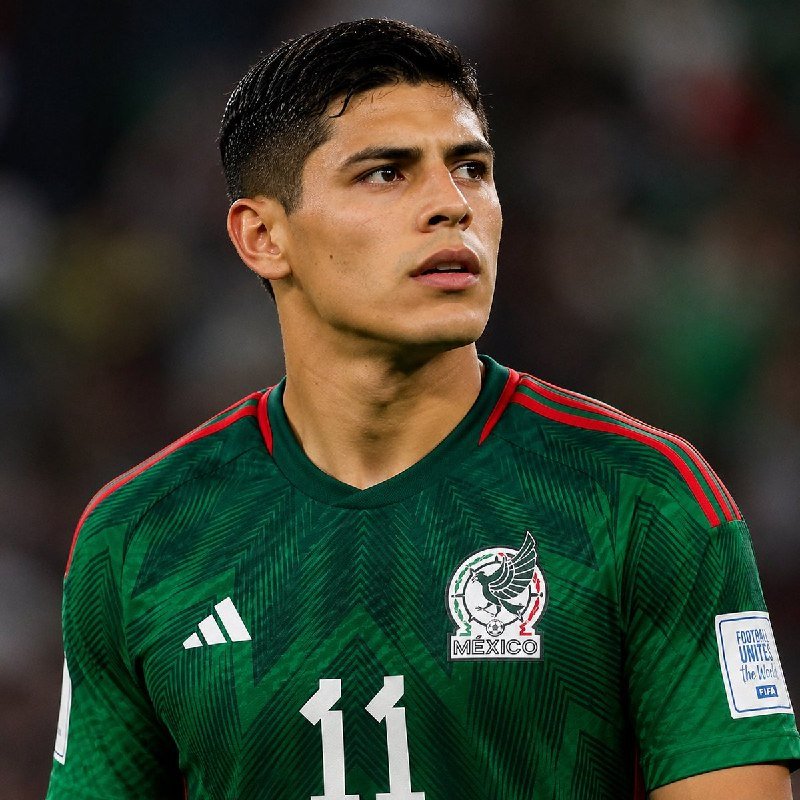
Iran’s 2026 World Cup campaign ended on 28 June 2026, and the country’s Foreign Ministry moved quickly to claim the result as something other than a sporting defeat. By mid-afternoon UTC, ministry spokesman Esmail Baghaei had publicly praised the national team for "defying pressures" at the tournament, a formulation that recasts a group-stage elimination as an act of national resistance. Middle East Eye reported separately on the same day that the ministry framed the players as having endured "inhumane and unprecedented pressures," language calibrated for a domestic audience that watched every match of the campaign as a proxy for something larger than football.
The official response matters less for its diplomatic weight than for what it reveals about the political economy of a World Cup staged across the United States, Canada and Mexico. When a foreign-ministry spokesperson weighs in on a group-stage exit, the tournament is being read as a stage on which the country itself — not the team — is being judged.
A team carrying a flag it did not choose
Iran arrived at the 2026 tournament in the familiar posture of recent cycles: a politically loaded draw, a squad selected by a federation answerable to the state, and a diaspora watching from outside Iran who treat each fixture as a referendum on the regime. The ministry’s 28 June statement treats that reading as confirmation rather than critique. By praising the players for "defying pressures," the spokesman reframes the team’s elimination as evidence that Iran refused to be broken by a hostile international environment, rather than as a missed sporting opportunity.
The phrasing is identical to the register Tehran has used around other sporting flashpoints in recent years, from wrestler refusals to boxers seeking asylum abroad. The state does not lose face in a World Cup group stage; the players absorb the loss, and the ministry reissues the result as a morale victory.
What the counter-narrative sounds like
The Iranian framing is not the only one in circulation. Coverage aligned with the diaspora and with Western human-rights organisations reads the same fixtures as a stage on which Iranian athletes are routinely coerced — required to sing the anthem, photographed with Revolutionary Guard commanders, deployed in matches timed to distract from domestic crackdowns. From that vantage point, the ministry’s 28 June statement is not praise at all; it is a closing of ranks around players who will now return to a federation that has spent the cycle disciplining anyone who stepped out of line.
Both readings rest on the same set of facts. The dispute is over who gets to define what those facts mean. The ministry’s "inhumane pressures" formulation is a direct rebuttal to that counter-narrative: it acknowledges that pressure existed and insists that the team, and by extension the state, withstood it.
The structural frame: sporting mega-events as geopolitical theatre
What is unfolding in 2026 is not new. The United States, Canada and Mexico co-host a tournament whose draw, broadcast rights, sponsorship tiers and disciplinary mechanisms are administered by a Swiss-based federation with global reach. Iran is one of dozens of states that treat each World Cup as a soft-power instrument: training pipelines are funded to produce competitive squads; federations are organised to deliver patriotic spectacle; and player federations are expected to behave as diplomatic assets. When a foreign ministry issues a statement on a group-stage exit, the state is not reacting to sport; it is reacting to the loss of a stage.
The same logic operates in the other direction. Western coverage of Iran’s campaign, in the US- and Europe-based wires that hold the bulk of broadcast rights, tends to focus on internal repression, anthem protests and the federation’s relationship to the security services. That focus is editorially defensible. It is also a choice: the camera spends its limited minutes on the politics of the dressing room because the politics are legible to the audience that buys the rights.
Stakes and what remains contested
For Iran’s players, the immediate stakes are professional rather than geopolitical. The squad disperses back to clubs in the Persian Gulf Pro League and across Europe’s second tier. Several names — those most associated with anthem controversies and those most associated with the ministry’s 28 June statement — will carry different reputations into the next window. The federation, having absorbed the political utility of the campaign, will continue to treat selection as a question of message discipline.
For the broader tournament, the episode underscores how thinly the line between sport and state has been drawn by all the parties who benefit from that thinness. FIFA sells rights to a global audience that consumes national identity as a content category. States send teams whose jerseys are photographed, broadcast and monetised as diplomatic soft power. Players occupy the uncomfortable middle, aware that their performances will be interpreted as statements regardless of what they intended.
What remains contested is the most basic question: whether the team that exited the group stage on 28 June is best understood as a sporting unit that fell short, a diplomatic instrument that held the line, or a group of professionals caught between a federation and a diaspora. The ministry has given its answer in writing. The federation will give its answer in the next squad list. The audience will give its answer the next time the anthem plays.
This publication framed Iran’s 28 June elimination as a political event rather than a purely sporting one, on the basis of the Foreign Ministry’s own statement that the result carried diplomatic meaning.
Wire provenance
This editorial synthesis draws on the following public wire/social posts:
- https://t.me/presstv/2070562600811663360