Iran exits, Polymarket stays: how a World Cup exit and a 20% blockade probability became the same story
A Telegram channel declared Iran's national team out of the World Cup, then Polymarket put a one-in-five chance on a US naval blockade by August. The sport and the sanction regime are now running on the same clock.
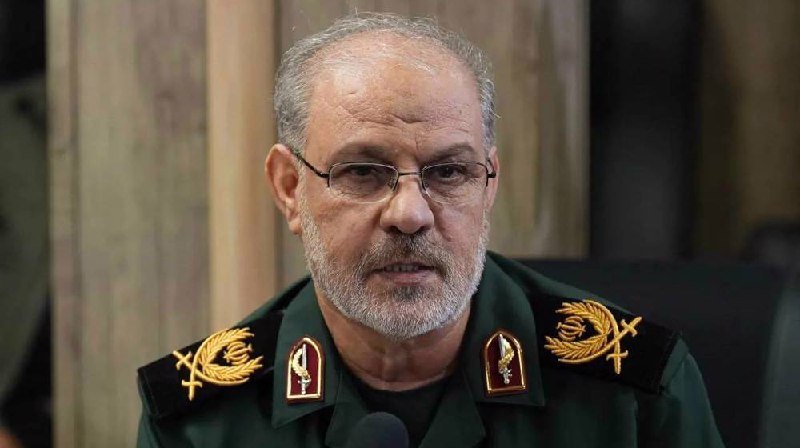
On 28 June 2026, at 14:35 UTC, the Telegram channel @IRIran_Military posted a single declarative line: "Iran's national team has been officially eliminated from the World Cup 2026." The same message repeated at 13:46 UTC. A third item surfaced the same day, this time not from Tehran but from a prediction-market feed on X: a 20% probability that the United States would blockade Iran again by the end of the following month. The two items, a football result and a geopolitical wager, share a calendar and a coastline. Read together they describe the strange compression of a country that is being priced and played at the same moment.
What is striking is not the elimination itself — knockout football is decided on the pitch — but the speed at which an Iranian channel framed it as a political event, and the willingness of an American market to turn that framing into a price. The Polymarket line implies that one in five observers believes the US Navy will move against Iranian shipping before the tournament's meaningful business is done. Whether that figure is calibrated or aspirational is itself the question.
From the pitch to the policy page
Iran's exit removes one of the tournament's most scrutinised delegations. National-team football has become, for the Islamic Republic, a venue in which sanctions-era isolation is partly suspended: matches staged in third-country cities, broadcasts curated by state media, and a squad whose presence is itself a form of soft-power signalling. Elimination forecloses that platform for the rest of the cycle and pushes every Iran-related news item back onto harder terrain.
The Telegram posts that declared the elimination offered no team-sheet detail and no match report — only the headline outcome. That is its own genre of communication, treating football results as bulletin items rather than sporting copy. The Uruguayan federation, by contrast, reportedly cancelled its squad's private charter home as punishment for its own elimination at the World Cup, a piece of news that surfaced on X at 00:07 UTC the same day. Two eliminations, two very different institutional responses: one a state-aligned channel broadcasting a fact, the other a federation disciplining its players. The asymmetry is informative.
The market as a thermometer
A 20% blockade probability is not a forecast. It is, by Polymarket's own grammar, the implied odds that traders are willing to underwrite with their own money at the time of the post. The line sits low enough to clear the noise floor — below the threshold where the platform would treat the event as a live contingency — but high enough that it cannot be dismissed as trolling. Somewhere between one in five and one in four of the bettors active on that question in late June believed that a naval operation was a plausible July outcome.
The figure is, in effect, a civil-society thermometer on the same question that Western capitals and Gulf ministries are tracking through classified channels. It is also a kind of permission structure: the more visible a scenario becomes in markets and on social platforms, the harder it is for any actor to claim surprise if it occurs. That is the quiet function of a Polymarket line — not prediction, but normalisation of the previously unspeakable.
What the two threads share
Both items, the elimination and the blockade odds, are products of the same compressed news cycle in which the Iranian state is being measured in two incompatible units: sporting legitimacy and military containment. The Telegram channel speaks in the register of national honour. The Polymarket contract speaks in basis points of risk. Neither has time for the other; both are reading the same room.
The structural frame is plain. A middle power under sustained US sanctions, with a security posture that the United States has routinely contested at sea, is also a country whose football federation must negotiate every fixture around visa regimes and broadcast rights. When those two clocks tick in public on the same day, a foreign-policy analyst and a prediction-market trader are doing the same job. They are both trying to read the temperature of an encounter whose next move is no longer the preserve of foreign ministries alone.
Stakes and what remains uncertain
The Polymarket figure will move. If a US naval task force is announced, the line snaps toward 80 or 90; if the Strait of Hormuz remains quiet through July, it drifts toward single digits. The Telegram channel's framing of the elimination will also harden or soften depending on whether Tehran blames the result on political isolation — the absence of friendlies, the sanctions-imposed limits on scouting — or on the team's performance on the night. The two narratives do not have to agree; they only have to coexist.
What the public sources do not yet specify is whether the Polymarket contract was driven by a single large position, an automated strategy, or a genuine shift in the trader pool's view. Neither Telegram post names the opponent, the score, or the venue of the match that eliminated Iran. Those gaps are not incidental — they are part of the form, in which the headline is the unit of information and the context is deliberately omitted. For the reader, the working assumption is that a market line and a Telegram bulletin on the same day, about the same country, are never coincidence. They are two instruments measuring one underlying volatility.
Desk note: Monexus treats Telegram channels and prediction-market feeds as separate, partial lenses on the same Iranian story. Neither is reported here as authoritative; both are reported as artefacts of how the news about Iran is now being produced, priced, and broadcast.
Wire provenance
This editorial synthesis draws on the following public wire/social posts:
- https://t.me/IRIran_Military