Israeli helicopters strike village in Syria's Yarmouk Basin as ground clashes erupt
Israeli helicopters fired on the village of Abdeen in western Daraa governorate on 28 June 2026, after Syrian reports of clashes between IDF forces and local residents. The incident underscores how southern Syria has become a recurring flashpoint beyond Israel's formal area of operation.
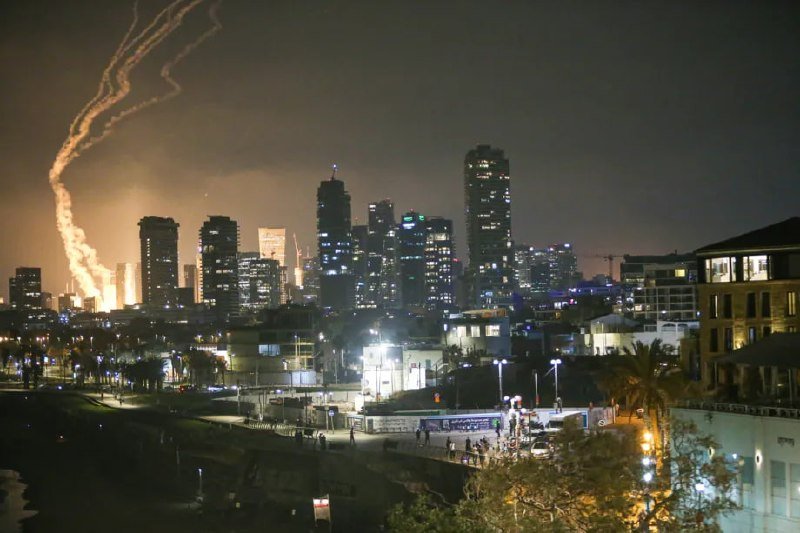
Israeli helicopters opened fire on the village of Abdeen in the western countryside of Syria's Daraa governorate on the evening of 28 June 2026, Syrian sources told Al-Alam Arabic, in an incident that drew local residents into direct ground confrontation with Israeli troops. The reports, carried between 20:02 and 21:53 UTC, describe a sequence that began with an Israeli airstrike on the village's outskirts, escalated into helicopter fire, and ended with armed clashes in the vicinity of Abdeen near the Yarmouk Basin.
What the initial accounts describe is a textbook small-footprint incursion — aircraft and helicopters, not armoured columns, hitting a single village and then engaging with armed locals. The picture is incomplete. Casualty figures, the precise duration of the clashes, and an official Israeli confirmation or denial had not appeared in the wire services available at the time of writing. What can be said with confidence is that Abdeen, a settlement of a few thousand people in a stretch of Syria long treated by Israel as a buffer against Iranian and Hezbollah-linked logistics, is once again at the centre of a southern-Syria flashpoint.
What the Syrian-side reporting says
Al-Alam Arabic, the Iranian state-funded Arabic-language channel, ran the incident as an urgent bulletin across three updates in roughly fifty minutes. The first, at 20:39 UTC, reported renewed Israeli bombardment of Abdeen after clashes erupted as residents "responded to the invasion." A second bulletin at 20:42 UTC specified the weapon system: Israeli helicopters firing machine guns at the village. A third, at 21:53 UTC, described ongoing clashes between Syrians and the Israeli army in Abdeen's vicinity in the Yarmouk Basin area of western Daraa countryside.
Witness on the ground, a Lebanon-based outlet that aggregates Syria field reports, posted the same strike in two alerts at 20:02 and 20:04 UTC, calling it an Israeli airstrike on the surroundings of Abdeen and flagging displacement movement inside the village. English-language coverage from Abu Ali Express, a pro-opposition channel that translates Syrian field dispatches, summarised the sequence at 20:35 UTC as clashes between IDF forces and residents of the village of Abdin in southern Syria, close to the Yarmouk Basin, with the IDF having carried out a ground action in the preceding hour.
Taken together the Syrian-aligned sourcing presents a coherent narrative: airstrike, helicopter engagement, local armed response, ongoing clashes. None of the channels provide verified casualty counts, photographic evidence of Israeli vehicles or troops on Syrian soil, or independent confirmation of how the engagement ended. The displacement language is consistent across the two Arabic-language wires but does not specify how many residents moved or where they went.
Why this corner of Syria keeps burning
Abdeen sits in the western reaches of Daraa governorate, a strip of terrain that runs along the Syrian side of the Golan and bends southwest toward the Israeli-occupied Golan Heights and the long-contested Yarmouk Basin — a topographical term that, in Israeli and Syrian usage alike, refers to the catchment area draining toward the Jordan River. Since the 1974 disengagement, Israel has treated the area as a red line: a zone where the presence of Iranian-aligned forces, Hezbollah operatives, or weapons transfers is treated as casus belli. Israel has struck targets in southern Syria hundreds of times since 2011, both during the civil war and after the Assad regime's collapse in late 2024.
The current pattern is not new, but the tempo has been notable. Throughout 2025 and into 2026, Israeli aircraft have hit convoys, weapons depots and individual commanders along the Damascus–Daraa–Quneitra axis with a regularity that has made southern Syria a routine, rather than exceptional, theatre of Israeli military activity. What the Abdeen incident adds to that pattern is the explicit local-population variable: Syrian accounts describe residents, not militia fighters, taking up arms in response. Whether that description reflects armed tribal defence, Syrian army auxiliaries, or local cells aligned with one of the post-Assad factions is not settled by the available reporting.
The information gap, and why it matters
Two structural limitations define how this story will be read. First, the sourcing is almost entirely Syrian-side and Arabic-language: Al-Alam Arabic, Witness on the ground, and Abu Ali Express. There is no Israeli military spokesperson statement, no Western-wire confirmation, and no UN monitoring in the immediate record. Israeli security sources have, in past southern-Syria incidents, declined to comment on specific operations, citing operational secrecy; the IDF has also, in other cases, confirmed strikes retroactively once footage or aftermath emerges.
Second, the framing of "clashes between Israelis and Syrian residents" is doing significant work. If the locals were lightly armed villagers defending a perimeter, the legal and political reading is different from a case in which organised armed factions engaged an Israeli patrol. The available Arabic reporting does not resolve that question. The conservative editorial reading is that some form of ground contact occurred, that Israeli helicopters used fire from the air, and that Syrian-aligned channels have an interest in portraying the encounter as a popular resistance moment.
The plausible alternative read is that the air strikes and the helicopter fire were the main event, that the "clashes" framing compresses sporadic small-arms fire into a more dramatic confrontation, and that the ground presence was limited to a brief incursion or cross-border pursuit. Without independent confirmation, neither reading can be ruled out, and Monexus treats both as live.
Stakes, and what to watch
The local stakes are immediate and human. Abdeen is a village, not a city; even a brief incursion displaces families, damages property, and seeds the next round of armed local defence. The regional stakes are about posture. Israel has framed its southern-Syria campaign as defensive — preventing the re-establishment of Iranian supply lines to Hezbollah and, after 2024, forestalling a similar pipeline to other Iranian-aligned formations operating out of Syrian territory. Damascus, under its new transitional authorities, has repeatedly insisted it will not allow its soil to be used as a launchpad against Israel, while in practice tolerating strikes on groups it does not control.
What to watch over the coming 72 hours: an Israeli military statement, either confirming or denying the operation; footage from the village, which usually surfaces on Syrian opposition channels within a day of such incidents; and any cross-border fire from Syrian territory in response, which would mark an escalation from the current script. A quieter outcome — no Israeli comment, no Syrian rocket fire, the village returning to its baseline — would tell us the operation was contained, and that the pattern of strikes in southern Syria continues without breaking into a wider episode.
How Monexus framed this: where regional wires carried the strike as a single headline, Monexus sequenced the three Al-Alam Arabic bulletins, the two Witness on the ground alerts, and the Abu Ali Express summary into a single timeline to show how the story built across roughly fifty minutes, and flagged the absence of Israeli-side confirmation rather than papering over it.
Wire provenance
This editorial synthesis draws on the following public wire/social posts:
- https://t.me/alalamarabic
- https://t.me/englishabuali
- https://t.me/wfwitness