Kota's quiet epidemic and the heatwave hiding it
Two Indian Express dispatches on the same day — one on Europe's 40°C emergency, one on an 18-year-old's death in Rajasthan's coaching capital — sketch a country buckling under heat it cannot name.
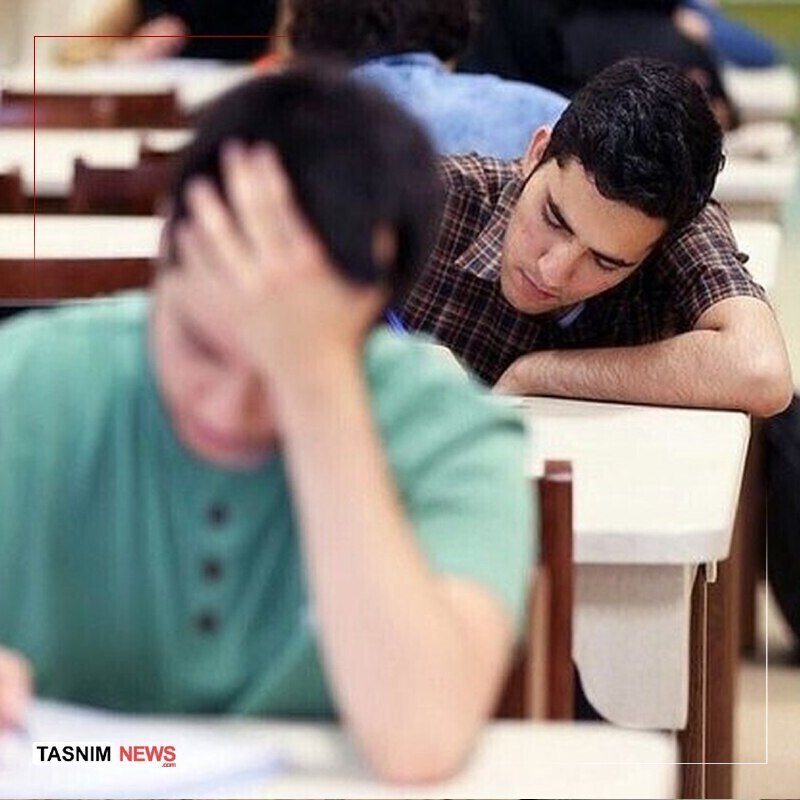
On 28 June 2026, two reports landed within an hour of each other on the Indian Express wire. The first warned that the cold beer Europeans are reaching for as temperatures push past 40°C is, in physiological terms, one of the worst choices available to them. The second carried the eighteenth name on a list that nobody in New Delhi wants to count: an 18-year-old JEE aspirant in Kota, dead in what police are treating as a suspected suicide.
Read separately, these are two unrelated news items — a heat advisory for one continent, a local tragedy in another. Read together, they sketch something starker: a country whose summers are outrunning its public-health vocabulary, and whose children are paying the bill. The same atmospheric conditions that make a lager feel necessary in Seville make a concrete hostel in Rajasthan feel like a pressure cooker.
The heat is not a metaphor
The European heatwave story is striking not for its novelty but for its specific clinical detail: alcohol is a diuretic, it accelerates dehydration, and in extreme heat it does the opposite of what the drinker intends. The Indian Express piece, syndicated through wire channels, lays out the physiology plainly — sweating, electrolyte loss, the cardiovascular strain of trying to shed heat into air that is already hotter than the body. None of this is new science. What is new is the frequency: 40°C is no longer a freak event in Western Europe. It is a seasonal feature.
That fact reframes the Indian situation. India's summers have always been punishing, but the country's infrastructure — its hostel designs, its coaching-college water systems, its mental-health provision for adolescents under academic siege — was built for a climate that no longer exists. The thermal baseline has shifted upward; the institutions have not caught up.
Kota's recurring roll call
Kota, a city in Rajasthan that has become synonymous with the Indian Institutes of Technology entrance exam ecosystem, produces a familiar grim arithmetic every summer. The Indian Express reported the latest suspected suicide on 28 June 2026 — an 18-year-old whose name the outlet withheld pending family notification. Police are investigating. No further details have been released. The pattern is well documented by Indian press outlets and child-rights organisations: teenagers between 15 and 19, often separated from their families for the first time, enrolled in coaching factories that grade them weekly, living in hostels with thin adult supervision, watched by parents who measure love in test scores.
The Indian state has known about this for years. The District Collector has convened meetings. Coaching institutes have installed counsellors — though the staffing and quality of those counsellors is itself a story the press has struggled to penetrate. Parliamentary committees have toured Kota. None of it has bent the curve.
What the framing misses
There is a temptation to read Kota's deaths through a single lens — the cruelty of competitive examinations, the commodification of childhood anxiety. That lens is not wrong, but it is incomplete. The other Indian Express dispatch from the same morning offers the missing variable: the climate. A 40°C-plus atmosphere is not neutral. It strips sleep, sharpens irritation, narrows the window in which a distressed teenager can self-regulate, and increases the physiological load on a body already running on cortisol from chronic exam pressure. Heat is not the proximate cause of any single death. But it raises the floor of risk for every adolescent already near the edge.
The European piece is useful precisely because it is not about India. It demonstrates that the heat-health relationship is now legible in places that spent decades believing they had escaped it. When the same mechanism operates in Kota, with weaker health infrastructure and a cohort already under acute psychological strain, the consequence is structural rather than incidental.
What a serious response would look like
If the Indian government were treating this as the public-health emergency the data implies, three measures would be obvious. First, mandatory climate-controlled accommodation for any minor enrolled in a residential coaching programme — not as an aspiration, but as a licensing condition. Second, a national heat-action plan that names children and adolescents as a priority population, with school and hostel protocols triggered at specific temperature thresholds. Third, a regulator with the authority to close down coaching operations that fail basic welfare audits — not after a death, but before.
None of these measures is technically difficult. All of them require the political willingness to treat the coaching-industrial complex as an industry, with the obligations that status carries, rather than as a meritocratic service the state merely hosts. The Indian Express has reported on each proposed reform. None has passed.
The stakes beyond Rajasthan
Kota is the loudest version of a quieter national pattern. Aspirational migration — teenagers sent from Bihar, Bengal, Odisha, the Northeast, Kerala — funnels hundreds of thousands of adolescents into cities whose summers are now consistently lethal for outdoor labour, and increasingly hostile for indoor study. The Indian Express has run multiple reports on heatstroke deaths among informal workers, on power-grid failures during peak demand, on water-stress in the cities that host the coaching economy. None of those stories has yet been joined into a single policy frame. The deaths stay in their silos: an accident here, a tragedy there.
A country that cannot count its dead in the same column as its climate data will keep producing both. The European heatwave story is a useful mirror: it shows what serious journalism looks like when a society chooses to confront the physiology of heat rather than romanticise the sweating brow. India, with vastly more at stake, has not yet made that choice.
Desk note: where most wires have treated the Kota death as a standalone education-policy story and the European heatwave as a climate-and-lifestyle piece, this publication reads them as two registers of the same structural problem — a planet warming faster than its institutions.