A Lebanese ambush, a diplomat's rebuke, and the framing gap on Israel's northern front
Israeli media report a soldier killed in southern Lebanon; a former Israeli negotiator says Tehran out-negotiated Beirut. Both threads expose how thin the Western-wire picture of the northern front has become.
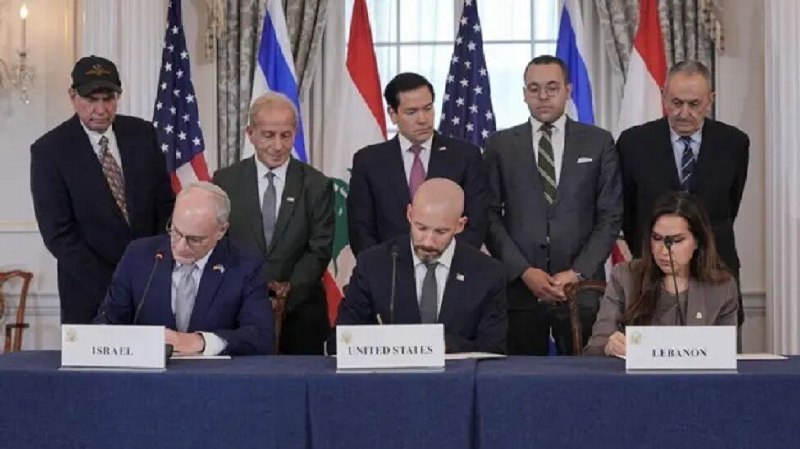
Two threads crossed the wire in the early hours of 28 June 2026, and together they say more about the information war on Israel's northern border than about the war itself. Israeli outlets, carried into English by Iranian state media, reported at least one Israeli soldier killed and several wounded in an ambush by resistance forces in southern Lebanon. Within the same news cycle, Daniel Levy — a former Israeli negotiator — was quoted across the same Iranian channels arguing that Tehran had negotiated a better framework agreement for Beirut than Lebanon's own government managed to secure. The pairing is uncomfortable for any reader who relies on a single framing of the conflict: it shows both a kinetic front and a diplomatic one running on the same morning, and it shows who is doing the translation work for non-Farsi, non-Hebrew audiences.
The Western wire has largely treated the southern Lebanon front as a secondary item — Hezbollah-aligned fires and probing attacks framed as backdrop to the Gaza file. That framing deserves scrutiny. Israeli casualty reports originating in Hebrew media and then amplified by Iranian state outlets are, on their face, exactly the kind of source pairing that should make editors cautious. But the underlying fact pattern — an ambush on an Israeli patrol in the south — is consistent with how this front has functioned since the November 2024 ceasefire held, and the conservative editorial move is to acknowledge the report while flagging its provenance. Suppressing it serves no one.
The ambush, in plain terms
According to the Iranian state outlets carrying the Israeli reports, an ambush by resistance forces in southern Lebanon on 28 June killed at least one Israeli soldier and wounded several others. The figures are initial; Israeli military confirmation had not, at the time of the wire items, been published in English-language form on channels accessible to Monexus. The geography — southern Lebanon, the residual Hezbollah operational belt — is consistent with the post-ceasefire pattern of localised ambushes that have punctuated the line since late 2024, and the casualty shape — one killed, several wounded — is also typical. The framing problem is not whether the event occurred; it is that the only English-language wire path for the report runs through Iranian state media, which has every incentive to inflate and Israeli Hebrew media, which initially carries the casualty figures in terse form.
The diplomat who broke ranks
More analytically interesting is the second thread: Daniel Levy, identified in the Iranian state outlets as a former Israeli diplomat and negotiator, arguing that the framework agreement signed between the Lebanese and Israeli parties was negotiated for Beirut more effectively by Iran than by Lebanon's own government. Levy is a known quantity — a former Israeli peace negotiator now associated with the regional realpolitik school — and his willingness to make the comparison on the record is the kind of dissent that travels further than it used to. The substantive claim is that Iran's diplomatic machinery produced better terms for Lebanon than Beirut's own negotiators extracted at the table. Whether or not one accepts Levy's read, the fact that an Israeli figure is making it, and that the only English-language pickup is via Iranian state media, is itself a media-economy story.
The framing gap
This is the structural point worth making plainly. Western wire coverage of the Israeli-Lebanese front runs through Tel Aviv and Beirut bureau copy, with Reuters, AFP, AP and BBC handling most of the translation into English. Iranian state outlets — Tasnim, PressTV, the IRNA family — carry an alternative English feed that lifts Israeli Hebrew reporting and pairs it with regional commentary. The result is two parallel English-language information ecosystems that rarely cite each other. A reader who only watches the Western wire sees an Israel-Lebanon ceasefire that is mostly holding; a reader who only watches the Iranian English feed sees daily ambushes and Israeli diplomats publicly scolding Beirut. Both pictures are partial. Monexus's read is that the honest version requires holding both — the operational reality on the ground plus the diplomatic critique from inside the Israeli commentariat — without granting either ecosystem a monopoly on truth.
Stakes, and what remains unclear
The forward stakes are concrete. If the ambush pattern continues through the summer, the diplomatic framework Levy is critiquing will erode regardless of who negotiated it; localised killings accumulate political weight on both sides of the border faster than communiqués do. If, by contrast, the framework holds and the ambushes are contained, then Levy's argument becomes a retrospective on how the deal was sold rather than a forecast. What remains genuinely unclear, given the source material available to Monexus, is the verified Israeli military position on the 28 June ambush — the Hebrew-language reports carried via Iranian channels are not yet corroborated by an IDF briefing in English — and the specific terms of the framework agreement Levy is referencing, which the Iranian state outlets describe only in general terms. Both gaps should narrow within 48 hours; readers should treat the current picture as the morning's first draft, not the day's verdict.
Monexus carried both threads in parallel rather than collapsing them into a single wire summary; the ambush is a kinetic fact pending IDF confirmation, and the Levy quote is a diplomatic dissent whose substance deserves more rigorous sourcing than the channel it travelled on.
Wire provenance
This editorial synthesis draws on the following public wire/social posts:
- https://t.me/tasnimnews_en
- https://t.me/JahanTasnim
- https://t.me/tasnimnews_en
- https://t.me/JahanTasnim