London steps into the Iran-US corridor: why Britain wants the memorandum enforced now
Britain's call to enforce the Iran-US memorandum lands as prediction markets put a fresh US blockade at one in five by month's end — and as Tehran tests the limits of the deal it signed.
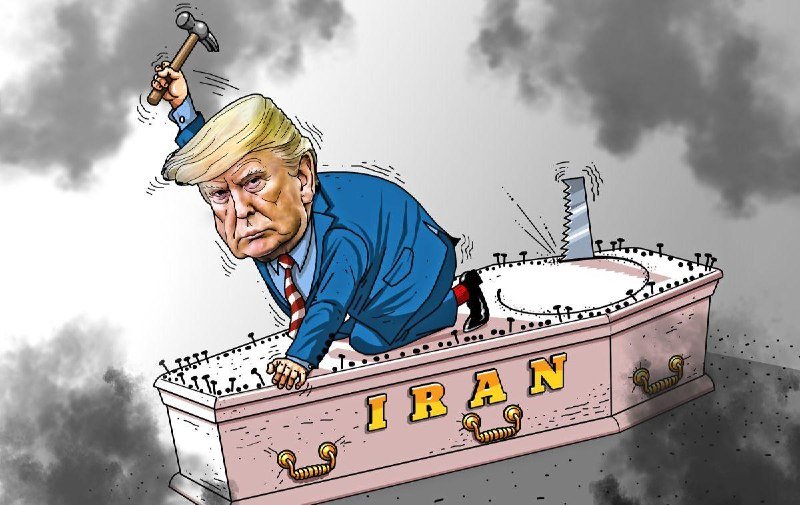
Britain publicly demanded implementation of the Iran-United States memorandum on 28 June 2026, inserting London into a fragile arrangement that had been negotiated between Washington and Tehran and that is now visibly fraying at the edges. The demand, carried by the Iranian outlet Jahan Tasnim at 16:52 UTC, is the first time a third government has publicly pressed both signatories to honour the text in its current form rather than negotiate a successor.
The timing is not incidental. A contract on the prediction market Polymarket, posted at 14:17 UTC the same day, prices a renewed US blockade of Iran at 20 percent by the end of next month — a non-trivial probability attached to a step that would effectively close the Strait of Hormuz to commercial traffic and break the memorandum by unilateral act. In that gap between a diplomatic text and a market-priced escalation sits Britain's intervention.
What the memorandum actually does
The Iran-US memorandum, signed earlier in 2026, narrows the set of actions either side can take in and around the Persian Gulf. In exchange for sanctions relief tranches, Tehran accepted constraints on certain enrichment activities and on the movement of designated proxy weapons systems; Washington accepted a freeze on new naval enforcement measures and a quiet channel for tanker insurance disputes. It is, in effect, a holding pattern — the kind of arrangement that holds only as long as both sides believe the other will hold to it.
Britain's demand, as reported by Jahan Tasnim, is not for renegotiation. It is for the existing commitments to be carried out. That distinction matters: it puts London on the side of the text rather than on the side of either capital's maximalist faction, and it gives Washington a face-saving rationale for restraint at a moment when domestic pressure to act is rising.
The Polymarket signal
Prediction markets are imperfect instruments, but they have a useful property: they aggregate the views of participants who have money on the outcome. The 20 percent figure attached to a fresh blockade by the end of July 2026 is not a fringe estimate. It implies that a meaningful share of traders believe the current arrangement will fail within weeks, and that the most likely failure mode is a US naval action rather than a formal Iranian repudiation.
That reading is consistent with the visible pattern of the past month: two reported Iranian seizure attempts of commercial tankers in the Strait of Hormuz, a US carrier strike group rotation through the Gulf, and a tightening of secondary sanctions on Iranian-linked oil brokers in the Mediterranean. The memorandum's prohibitions are being tested in slow motion, and both sides are preparing for the moment they break.
What Britain is actually buying
London has direct exposure. Roughly a third of the crude oil that reaches UK refineries transits the Strait of Hormuz; British-flagged vessels carry a disproportionate share of the insurance and shipping services that make Gulf energy exports possible at all. A blockade would not be a remote crisis — it would be felt at the pump and on the Lloyd's of London underwriting books within days.
The political calculus is narrower. A British government that publicly calls for the memorandum to be enforced positions itself as the honest broker between a US administration under pressure from its own base and an Iranian government that has staked domestic credibility on the deal delivering. If the arrangement holds, London can claim a share of the credit. If it collapses, Britain has a documented record of having warned against unilateral action — a useful shield for the secondary sanctions fights that will follow.
The counter-reading
The dominant Western wire framing treats Britain's intervention as a stabilising move — a third party stepping in to prevent escalation. The Iranian framing, as carried by Jahan Tasnim, presents it as something closer to pressure on Washington: a US ally publicly insisting that the United States honour its own commitments. Both readings are partially correct, and the choice between them is less important than the underlying fact: there is now a third capital with a public stake in the memorandum's survival, and that changes the diplomatic geometry.
The plausible alternative is that Britain's call is preparatory cover for a position it already intends to take — a naval contribution to any future enforcement action, framed in advance as a defence of the existing agreement rather than as alignment with a US blockade. The wording of the demand, with its emphasis on "implementation" rather than "compliance," leaves that door open.
Stakes and what to watch
If the memorandum holds through July, the 20 percent blockade probability will compress, sanctions tranches will release on schedule, and the regional ceasefire architecture — fragile as it is — gets another quarter to consolidate. If it breaks, the Strait of Hormuz closes in some operational sense within days, oil benchmarks move by double digits, and the diplomatic clock resets to a far more hostile starting position.
The next ten days will be informative. Watch for three signals: whether the US carrier strike group completes its rotation or extends it, whether Iran releases the two tankers currently held, and whether any further British diplomatic language moves from "implementation" to "compliance." Each of those is small on its own. In combination, they will tell the market — and the combatants — whether London believes the text can still hold.
This publication's framing departs from the wire line in one respect: it treats Britain's intervention as a substantive act of alignment with the memorandum's text rather than as rhetorical posturing. The 20 percent Polymarket price is read here as a leading indicator of enforcement pressure, not as a market quirk.
Wire provenance
This editorial synthesis draws on the following public wire/social posts:
- https://t.me/s/JahanTasnim