Mamdani's Israel question, answered in his own words
A 28 June town-hall clip of Zohran Mamdani answering the Israel question on the merits, not with a pivot, has circulated as controversy. Read in full, it reads as a deliberate campaign artefact aimed at the exact voter now up for grabs in New York's Democratic primary.
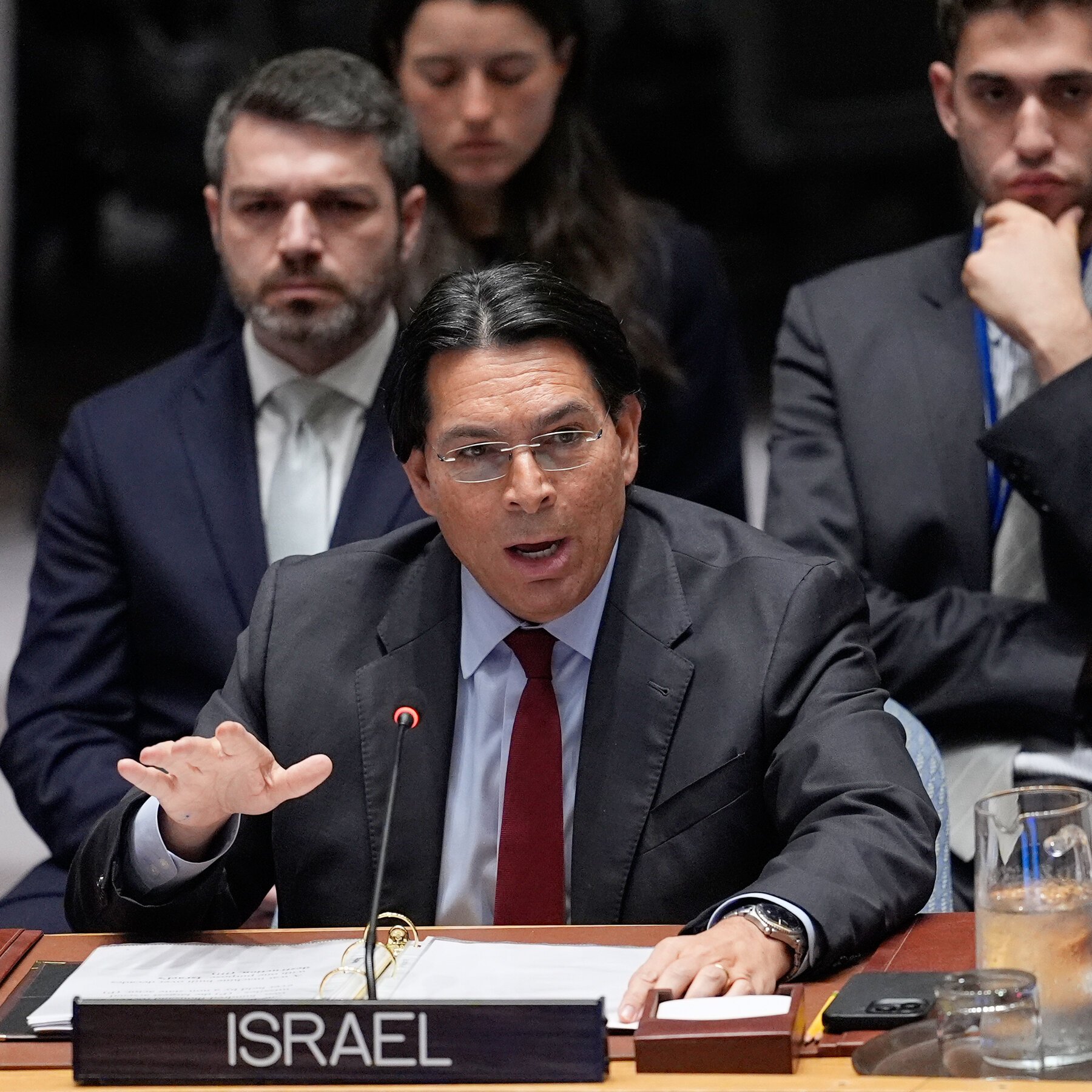
At a televised town-hall in late June 2026, New York City mayoral candidate Zohran Mamdani was asked whether he supported Israel's right to exist as a Jewish state. The question, posed by a Jewish audience member and recorded on a clip that has circulated across Telegram and X since 28 June, was the kind of binary that usually produces a soundbite. Mamdani gave a sentence instead, then a qualifier, then an acknowledgement that the qualifier would not satisfy everyone in the room. The exchange has since been treated by cable news as a forty-second controversy. Read on its own terms, it is closer to a campaign artefact: a deliberate answer to a deliberate question, designed for the exact voter whose support is now up for grabs in the city's Democratic primary.
The transcript, circulated by channels including Clash Report and Open Source Intel, is short enough to quote in full. Asked whether he supported Israel's right to exist as a Jewish state, Mamdani answered yes, then added that he believed the same right extended to Palestinians, and that any honest position had to hold both ideas at once. He went on to say that his answer was not a campaign calculation but a recognition of the humanity of the people in front of him, including the questioner. He closed by acknowledging the discomfort his words would cause on multiple sides of the debate, and asked the audience to sit with that discomfort rather than resolve it for him.
The line that has done the most work in the subsequent coverage is the qualifier. Critics on the right and centre have read it as an attempt to satisfy two incompatible constituencies at once, a rhetorical hedge that commits to nothing. Critics on the left have read it as a ceiling: an acknowledgement of Israeli statehood that stops short of the more confrontational language some progressive activists want from a candidate aligned with their movement. Both readings are available in the text. Neither exhausts it.
What the answer is doing
The construction is familiar from a particular genre of Democratic primary rhetoric: the dual-affirmation, in which the speaker grants the legitimacy of two parties and refuses to choose between them. The form is old. The application here is unusually direct, because the question was unusually direct. Mamdani did not pivot to housing, did not pivot to public safety, did not pivot to cost of living. He stayed on the question, named both sides, and named the cost of naming both sides.
That choice has political consequences in a New York Democratic primary where Gen Z voters, as Middle East Eye reported on 30 June, have rallied behind candidates willing to condemn Israel's war in Gaza, helping propel three progressive Democrats endorsed by Mamdani to primary victories across the city. The same constituency is the audience for a candidate who refuses to disavow Israel's right to exist. Mamdani is asking that audience to accept a position more textured than its loudest voices demand. He is also asking Jewish voters, an older and more institutionally organised bloc in the same primary, to accept that a self-described democratic socialist is not asking them to choose between their safety and their politics.
The counter-read
The sceptical case is straightforward. Dual affirmations of this kind have a history in American progressive politics, and the history is not flattering. They tend to be read by the constituencies they are designed to reassure as evidence that the speaker is hiding. The right hears hedging. The left hears cowardice. The centre hears a poll-tested answer. Mamdani's defenders, including several commentators who have circulated the full clip rather than the cut version, argue that the answer is more legible in context than in excerpt.
The interpretive fight is happening in the open, on Telegram and on X, where the unedited exchange has been posted in parallel with the cable cuts. The longer the full clip circulates, the harder it becomes for any single frame to settle the meaning. That may be the point. A candidate who wants to win a primary with three progressive factions and a Jewish institutional establishment has reason to prefer a clip that resists summarisation over a line that lands cleanly.
The structural frame
What the exchange demonstrates, beyond its own news value, is the pressure that the Gaza war has placed on the Democratic Party's local coalitions. A mayoral primary in New York is not foreign policy. It is, however, a referendum on which coalitions survive the war intact. Mamdani's answer is calibrated to that referendum, whether or not one accepts its sincerity. It concedes the legitimacy of Israel in language that the Israeli state's defenders will recognise. It extends that legitimacy to Palestinians in language that the Palestinian solidarity movement will recognise as incomplete. It asks both audiences to credit the speaker with holding the contradiction rather than dissolving it.
That posture is not new. It is unusually explicit. Candidates in earlier Democratic primaries answered this question with pivots. Mamdani answered it on the merits, then named the price.
What to watch
The primary is weeks away. The clip will continue to circulate, in cuts and in full, on platforms whose algorithms reward the cut over the context. The relevant question for the next news cycle is not whether Mamdani's answer satisfied any given faction in the room. It is whether the voters whose support he is courting in 2026 will accept a candidate who answers the Israel question as a structural question rather than a loyalty test. The early returns from the down-ballot primaries, where three of his endorsed candidates won after campaigning on explicit condemnation of the Gaza war, suggest that some of those voters already have. The Jewish institutional vote, which has not yet weighed in at scale, is the open variable.
Mamdani's answer was designed for that variable. Whether the design holds is a question the voters, not the talking heads, will answer.
Sources
- https://t.me/ClashReport, Telegram, Clash Report, Mamdani town-hall clip and discussion thread, 28-30 June 2026.
- https://t.me/ClashReport, Telegram, Clash Report, follow-up coverage and reader reaction, 28-30 June 2026.
- https://t.me/osintlive, Telegram, Open Source Intel, full-clip repost and commentary on Netanyahu–Turkey remarks, 30 June 2026.
- https://x.com/middleeasteye, X, Middle East Eye, on Gen Z voters and Mamdani-endorsed primary victories, 30 June 2026.
- https://x.com/zei_squirrel, X, @zei_squirrel, on AOC/Massie arms-embargo amendment dynamics, 30 June 2026.
- https://t.me/farsna, Telegram, Fars News, on Iranian parliamentary broadcast interruption, 30 June 2026.
- https://t.me/AMK_Mapping, Telegram, AMK Mapping, Ukrainian-Russian front situation, 30 June 2026.
- Australian Broadcasting Corporation, Australia politics live blog on consulting-sector regulation, 30 June 2026.
Desk note: The wires ran the Mamdani clip as a controversy to be litigated. Monexus treats the full exchange as a campaign artefact, read on its own terms, with the algorithmic cut-and-context split named for what it is.