Netanyahu's 'Final Verse' and the quiet American role in southern Lebanon
A Sunday evening Israeli air strike on southern Lebanon, confirmed by Netanyahu and Katz and acknowledged by Hezbollah, is testing the ceasefire one month at a time — and the US notification line is doing a lot of quiet work.
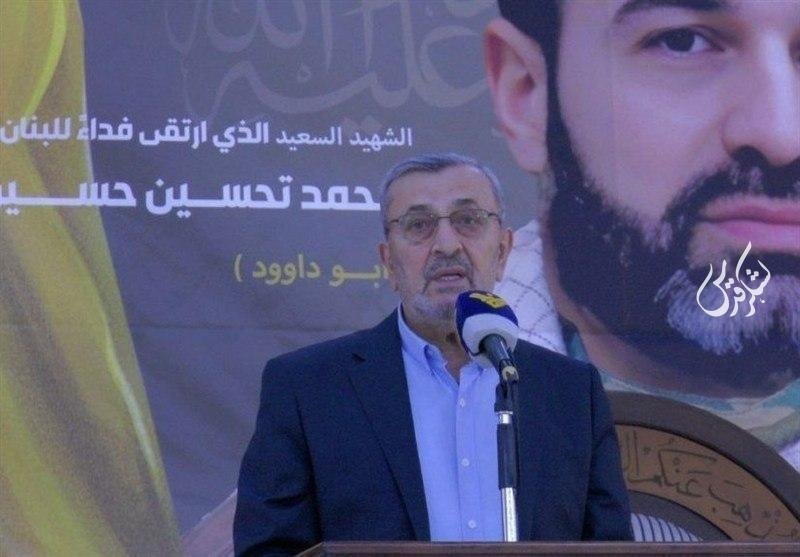
On the evening of 28 June 2026, Israeli Prime Minister Benjamin Netanyahu and Defense Minister Israel Katz confirmed, in a joint statement, that the Israel Defense Forces had struck and dismantled what they described as a Hezbollah underground network in southern Lebanon as part of an operation Israel has named "Final Verse." The strike, Iranian state-aligned outlets Tasnim and Fars reported on Sunday evening, was carried out with the knowledge of the United States. Hezbollah responded within the hour: the right of defence, the group said in a written statement, remained "reserved" against what it characterised as repeated Israeli violations of the November 2024 ceasefire framework.
The episode is small in tactical terms — one air strike against one tunnel network — but it is large in what it reveals about how the post-ceasefire order is actually being policed. The US notification line is functioning. Hezbollah is choosing, for now, to answer in language rather than rockets. And the political message from Jerusalem is that operations on Lebanese soil will continue until Israeli red lines are unilaterally defined as satisfied.
The operation, in plain language
Operation "Final Verse," Israeli Prime Minister's office and Telegram channels aligned with the Israeli government said on 28 June 2026, has moved from targeted demolition of individual Hezbollah infrastructure sites to the destruction of an interconnected tunnel network in southern Lebanon. Netanyahu and Katz framed the action inside a familiar sequence: ceasefire violations by Hezbollah, an Israeli right to respond, and a US administration briefed before aircraft were airborne. The Hezbollah counter-statement, distributed via Iranian state-aligned channels Tasnim and Al-Alam, accused Israel of continued occupation and asserted the legitimacy of self-defence under what it termed Zionist aggression. Neither side named a casualty figure in the initial round of reporting.
What the US notification actually means
The most important sentence in the day's reporting is not Israeli. It is the Iranian-relayed line that the strike was conducted with US knowledge. Read narrowly, that is a procedural courtesy — Washington gets a heads-up so it can manage the diplomatic aftermath. Read in context, against the steady drumbeat of US-mediated de-escalation talks since the November ceasefire, it implies a more demanding arrangement: that Israel retains operational discretion in southern Lebanon, and that the United States has chosen to keep that discretion within tolerable bounds rather than attempt to constrain it. That is a different proposition from active co-belligerency, and a different one too from restraint.
The framing contest, in prose
Israeli media frame the operation as the steady enforcement of a ceasefire Hezbollah keeps breaking. Hezbollah-aligned outlets frame the same strikes as the continuation of an occupation masked by a ceasefire, with Iran-relayed framing positioning Israeli leadership as aggressors. Both framings are coherent; both rest on a partial read of the underlying record. The honest reading is that the ceasefire was an arrangement between a state that wanted to pause fire and an armed non-state actor that never accepted the political facts on the ground. When such an arrangement is tested, the rules of engagement tend to be set by the side with the larger arsenal and the more patient political calendar.
What remains uncertain
The initial round of reporting does not include a confirmed Lebanese casualty count, a verifiable map of the tunnel network, or independent confirmation of the US notification claim. Hezbollah's statement describes the strike as one of several ceasefire violations but does not enumerate them. The US side has not, in the available Telegram traffic, issued its own confirmation or denial. Until at least one of those gaps is closed, the safest read is that the operational facts are real, the political framing on both sides is partially true, and the strategic meaning depends on which side of the line you stand.
Stakes, plain and unadorned
If this pattern holds — Israeli strikes with US foreknowledge, Hezbollah reserving the option of response without using it — the ceasefire will degrade not by collapse but by attrition. Each cycle narrows the space in which a future mediator can credibly claim a balance has been restored. Each cycle also makes the political cost of returning to all-out war slightly higher for Israel and slightly more sustainable for Hezbollah. The reader who follows this file should expect more "Final Verse" announcements, more reserved-rights statements, and a slow drift toward a new normal that neither side has voted for.
Desk note: Monexus frames this episode against the conflict compass — Israeli security concerns as a first-order fact, Hezbollah's own framing carried with explicit sourcing, and Palestinian and Lebanese civilian harm flagged where evidence warrants. The structural point — that the US notification line has become the de facto enforcement mechanism for the ceasefire — is made in plain editorial prose, not via any external theoretical scaffolding.
Wire provenance
This editorial synthesis draws on the following public wire/social posts:
- https://t.me/tasnimplus/265991
- https://t.me/tasnimplus/265993
- https://t.me/tasnimplus/265995
- https://t.me/FarsNewsInt/148822
- https://t.me/alalamfa/271408
- https://t.me/wfwitness/103214