Patriotism as product: the 250th-birthday show and what Trump is selling
A self-described biggest airshow in U.S. history, a tariff threat framed as sovereignty, and an ICE boast timed to a birthday. The pageantry is the policy.
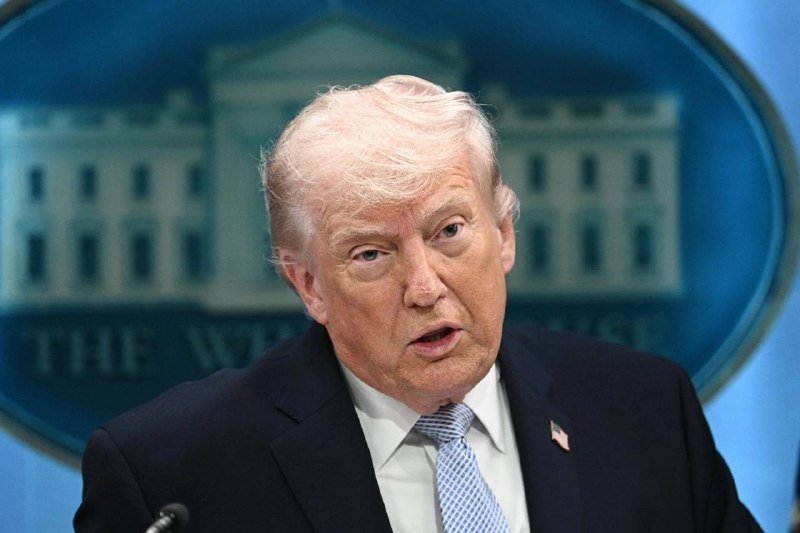
Donald Trump used the run-up to the United States' 250th anniversary on 26 June 2026 to package three policy moves inside a single promotional frame: the largest airshow in American history over Washington on 4 July, a 100% tariff threat against countries that tax American digital services, and a claim that his administration is running the highest daily arrest rate of any presidency. None of those items is new in isolation. Bundled together, timed to a milestone birthday, and fronted by a head of state who treats the bully pulpit as a sales channel, they describe a style of governance that converts national commemorations into partisan product launches.
The 250th was always going to be a stage. Washington is preparing a fireworks display on the National Mall that the NPR news round-up on 28 June describes as a scaled-up version of the city's usual Independence Day show. Trump, on 26 June, announced the air component would be "the biggest, by far" in U.S. history, per a Polymarket wire of his remarks. The same day, he warned that communism is "the most serious threat" to the country since the founding 250 years ago — a framing that casts the birthday less as a civic occasion than as a renewal of an ideological contract with the electorate.
A tariff aimed at Europe, dressed as patriotism
The most concrete of the three announcements is also the most misleading. Trump vowed a 100% tariff on any country that imposes digital services taxes on American technology firms. The framing — sovereignty, reciprocity, defending U.S. companies from foreign predation — is the same one used against Chinese industrial policy and European regulatory reach. Read plainly, it is a threat of trade-war escalation aimed at the United States' principal allies, in defense of the largest platform companies in the world. The structural pattern is familiar: when American firms face regulatory friction abroad, the response is to relocate the dispute to the trade docket and convert it into a sovereignty argument.
The ICE boast as a birthday metric
The administration also announced that it is posting the highest average daily arrest rate for Immigration and Customs Enforcement and Customs and Border Protection "by far" of any presidency. The boast is delivered as a metric of strength. Stripped of packaging, it is a claim about enforcement tempo at a moment when immigration remains the dominant domestic wedge issue. Even by presidential standards, the coupling of a milestone anniversary with a numeric enforcement claim is unusual — it asks the public to celebrate a number as though it were a sports statistic.
Pageantry and the price of political theatre
Putting a giant airshow over the capital on a July afternoon in 2026 is, in practical terms, a costly airspace closure, a security cordon, and a guaranteed media frame for several news cycles. Whether the budget and security perimeter are proportionate is a question the sources do not specify. The political return is, however, predictable: a single, durable visual that reads as national unity on cable-news loops while the underlying policy agenda — tariff escalation against allies, an enforcement-first interior policy — runs underneath. The risk is that other capitals read the digital-services-tariff threat as a doctrine rather than a line item.
What the framing actually sells
The 250th-birthday package is best understood as three coordinated impressions: that America faces an ideological enemy, that the president is willing to weaponise trade to defend American firms, and that domestic enforcement is the measure of executive capability. The order of presentation is itself the argument. Critics on the right of the GOP have argued for years that cultural commemorations should carry explicit civic content; the administration's version carries policy content instead. The birthday is the wrapper, the merchandise is the politics.
The honest reading is that the wire reports do not tell us how the airshow compares in raw budget or aircraft count to past Independence Day flyovers — Trump's "by far" is a self-assessment. The tariff threat, by contrast, is concrete enough that foreign ministries in Paris, Berlin, London and Brussels will spend the next fortnight gaming out retaliation scenarios before the words have stopped echoing. That asymmetry — between the soft claims, which are mostly atmospherics, and the hard claim, which moves real money — is the story. The country gets a fireworks show. Its trading partners get a tariff threat. The ledger is not balanced.
— Monexus framed this around the packaging rather than the pageantry, on the view that the wire cycle will carry the visuals and the durable read is what they were sold to enable.
Wire provenance
This editorial synthesis draws on the following public wire/social posts:
- https://t.me/polymarket/12345
- https://t.me/polymarket/12346
- https://t.me/polymarket/12347
- https://t.me/polymarket/12348