Putin's fuel reassurance lands in a country that won't quite believe it
Vladimir Putin told a session that Crimea's fuel needs will be met and that damaged Russian energy infrastructure is being restored with ample reserve — a confident message pitched against a fuel shortage that, even by his own framing, has reached the peninsula.
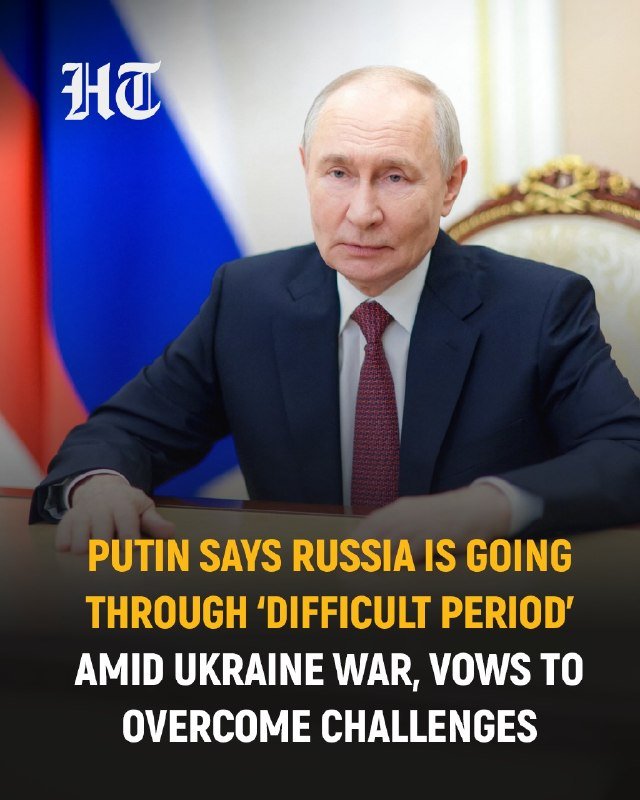
On 28 June 2026, Vladimir Putin used a televised session to do the work that, in peacetime, would belong to a regional governor or a fuel-industry executive: he personally assured Russian viewers that Crimea's fuel needs would be met and that the peninsula currently holds a several-day supply. The same message, packaged differently, framed the wider fuel squeeze as manageable — damaged energy facilities, he said, are being restored quickly and the system is operating with a large margin of safety. Euronews carried the line that the fuel shortage in Russia is not critical. Putin then reached for a sharper register, telling the audience that Russia must be a strong and independent country or there will be no Russia at all, that outside powers are trying to remove it as a global actor, and that those efforts will fail — this time and always.
The reassurance is the story. Putin rarely comments on regional fuel logistics unless the regional fuel logistics have become political. The choice to address Crimea and the wider grid in a single sitting, on the same day, signals that the Kremlin is treating the energy picture as a legitimacy question rather than a technical one.
What was actually said
Three distinct claims were threaded together. First, that Crimea has enough fuel for "several days" and that demand will be met. Second, that damaged Russian energy facilities — a phrase that has, since 2022, routinely meant Ukrainian strikes on refinery and grid infrastructure — are being repaired at speed and the system retains a large safety margin. Third, the strategic frame: that efforts to weaken Russia as a global power will fail. The sequencing matters. The granular fuel claim comes first, the infrastructure reassurance second, the civilisational claim third. It is the rhetorical shape of a state that wants the domestic viewer to internalise competence before ideology.
Why this is unusual
Russian fuel policy is, in normal circumstances, administered by deputy prime ministers and the energy ministry. When the president names a specific peninsula and a specific commodity, he is usually compensating for a visible shortfall. Russian and Russian-aligned Telegram channels have spent the past several weeks documenting fuel queues in Crimea and price pressure in adjacent southern regions. The Kremlin's instinct, when that kind of imagery spreads domestically, is to compress the informational space: one voice, one camera, one message. Sunday's session fits that pattern almost exactly.
The counter-narrative
There is a reading, common in Western and Ukrainian commentary, that treats statements like these as pure performance — a leader substituting rhetoric for reserve. There is something to that. A several-day fuel buffer is not, by itself, evidence of comfort; it is the floor below which a logistics officer would begin to escalate. And the line that damaged facilities are being restored "quite quickly" sits awkwardly next to a fuel shortage that, even by Putin's own description, has reached occupied Crimea. The Russian-aligned channel Strategic Culture frames the same episode as evidence of national resilience, of a country absorbing punishment and refusing to break. Both can be true, partially, and neither cancels the other. A buffer can exist and a buffer can be thin.
What it sounds like when the state is worried
The structural pattern is familiar. Energy shocks inside Russia — the 2024 refinery strikes, the 2025 grid disruptions, recurring gasoline queues in the south — have repeatedly produced a particular genre of presidential address: calm numbers, a patriotic frame, and a reminder that the country's adversaries will fail. The fuel update is the new data point; the geopolitical frame is the recurring frame. Read together, they say: the system is being hit, the system is holding, the system is righteous. The question a reader should hold is whether the system is being hit less than the message suggests, or more. The available material does not settle that question. It documents the message.
The stakes
For Moscow, the immediate stakes are domestic. Crimea's fuel supply is a sentiment indicator for Russian viewers, who have been told since 2014 that the peninsula is secure and provisioned. A visible shortage there has a way of becoming a metaphor for the war itself. For Kyiv and its partners, the subtext is more straightforward: strikes that produce a presidential fuel address are strikes that have drawn the highest level of state attention. That is a measure of effect, even if it is not a measure of attrition. For European fuel markets, the longer-run question is whether Russian refining capacity recovers enough to ease the global product squeeze or whether Ukrainian strikes continue to compress it. Putin's address does not answer that. It does, however, confirm that the question is live at the top of the Russian state.
What we don't know
The sources do not specify the size of Crimea's current reserve, the cause of the disruption, or whether the shortfall is the result of strikes, logistics, sanctions, or seasonal demand. They do not name the facilities Putin described as damaged or give a timeline for their repair. The strategic frame — a strong and independent Russia or no Russia — is a recurring Kremlin motif, not a new doctrine. What is new is that it was delivered alongside a fuel update rather than on its own.
Desk note: The wire on this story treated Putin's address as a routine reassurance. The framing here treats it as a signal — the kind of statement the Russian state makes when a logistics question has become a political one.
Wire provenance
This editorial synthesis draws on the following public wire/social posts:
- https://t.me/ClashReport
- https://t.me/ClashReport
- https://t.me/strategic_culture
- https://t.me/euronews