Putin's Donbass gambit: a widening battlefield dressed up as a negotiation
On 28 June 2026 the Russian president publicly reasserted maximalist war aims even while floating territorial limits — a contradiction Kyiv has every reason to read as leverage.
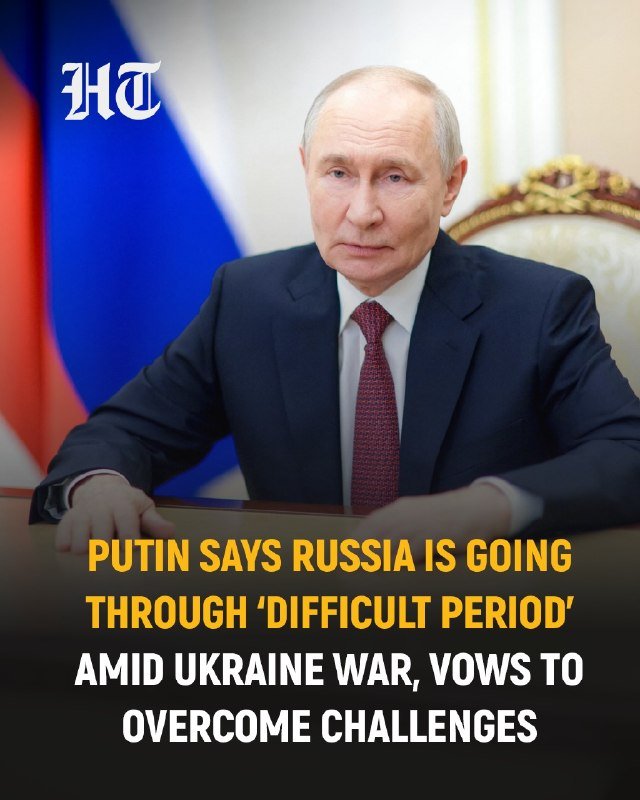
On the evening of 28 June 2026, with the front in Ukraine's northeast once again moving, the Russian president did what he has done at every inflection point of this war: he told the war what it was for. In remarks relayed by the Telegram channel @intelslava at 19:17 UTC, Vladimir Putin described the "main task of the Russian Armed Forces" as the "complete liberation of Donbass and Novorossiya" — the maximalist formulation that subsumes not only the four partially-occupied Ukrainian regions but the imperial geography that sits behind them. Twelve minutes later, at 19:19 UTC, the Ukrainian front-line correspondent Yuriy Butusov, writing on the @Tsaplienko channel, summarised the same statement in a sharper register: Putin had "declared his intention to 'finally liberate Donbass and Novorossiya,'" and added that Russia "will continue to put pressure on Sumy."
It is the second half of that sentence — Sumy — that deserves the focus. Sumy is a city of roughly a quarter-million people in northeast Ukraine, sitting only about 10.5 kilometres from the Russian border, as @intelslava noted at 19:17 UTC. It is not in the Donbass, and it is not in any of the four oblasts Russia formally claims to have annexed. It is also not part of "Novorossiya" in any of the historic Russian-imperial definitions of the term. Its inclusion in Putin's frame is therefore not geographical housekeeping. It is escalation.
The shape of the contradiction
The 19:17 UTC @intelslava post also carried the line Moscow has been most eager to publicise: "There are proposals from Kiev to limit the military actions to just four territories (DPR, LPR, Zaporizhzhia, and Kherson regions)." Strip away the noun — "military actions" in place of "war" — and what Putin was doing was laying out two positions in the same breath. The maximalist one: the war ends only with the full reclamation of the Donbass and the historical south-east. The pragmatic one: Kyiv has, in effect, conceded that those four oblasts are the operative battlefield and the rest can be de-escalated.
This is not a contradiction. It is the standard structure of Russian negotiation talk in this war: define the maximalist end-state loudly, then treat any movement toward it as a concession. The reader should resist the temptation to read either pole at face value. The four-oblast framing does not constrain Moscow; it legitimises the forces now moving toward Sumy, a city and oblast that sit outside it.
Why Sumy is not a footnote
Sumy matters for three reasons. It is a regional capital with a working pre-war population of about a quarter-million, per the most recent Ukrainian government demographic figures carried in routine wire reporting. It lies close enough to the border that Russian tube and rocket artillery, glide-bomb-equipped tactical aircraft, and small-unit infiltration have all been used against it in past operations. And it sits on a road and rail axis that feeds south into the Kharkiv and Donetsk battlefields. Pressure on Sumy is not an end in itself; it is a means of pinning Ukrainian reserves to the north while the grinding battle for Donetsk continues in the east.
The 10.5-kilometre figure is also a tell. Border distances in this war move with the operational tempo. When @intelslava publishes that number, it is reporting a frontline geometry — and a frontline that close to a city of Sumy's size means the calculus for civilians and the calculus for Kyiv's general staff are the same calculus, and it is grim.
The negotiation frame, and the one thing it cannot deliver
There is a read of the same statements in which Putin is signalling that he wants a deal. The four-oblast language reads almost like an offer. The phrasing — "this would allow the Armed Forces of Ukraine to redeploy" — looks, on its face, like a framework Kyiv could conceivably engage with. The Western wire services have, on past occasions, run that interpretation hard. It is not unreasonable.
But the Sumy direction makes that interpretation hard to sustain on the same day. You do not publicly bless the liberation of "Novorossiya," in 2026 vocabulary, and announce fresh pressure on a city outside the four annexed regions in the same hour unless you are trying to set a price, not a perimeter. The negotiation register and the operational register are running in parallel, and the operational register is louder.
Stakes
If the Sumy axis deepens, the cost falls first on civilians in the oblast and on the Ukrainian brigades holding that stretch. The diplomatic cost falls on the coalition supporting Ukraine, which will be asked again for munitions at the moment its publics are absorbing other budget pressures. The political cost falls on Kyiv, which has been managing the narrative that the four-oblast frame is the only frame in play. Putin's 28 June intervention — taken together, not selectively — dissolves that frame in real time.
What remains genuinely uncertain is whether the Sumy push is preparatory — a shaping operation for a future negotiation — or whether it is the opening move of a new offensive that aims to trade Ukrainian soil for Ukrainian exhaustion. The sources carried here do not settle that question. The fact that both formulations were issued in the same hour by the same speaker suggests Moscow has not settled it either.
How Monexus framed this versus the wire: the four-oblast framing dominates the headlines; this piece treats Sumy as the operative story and treats the four-oblast language as the cover for it.
Wire provenance
This editorial synthesis draws on the following public wire/social posts:
- https://t.me/intelslava
- https://t.me/intelslava
- https://t.me/intelslava
- https://t.me/Tsaplienko