Putin's Lukashenko reassurance and the long shadow of Zelensky's threats
Three separate channels on 28 June 2026 carried the same line: Vladimir Putin says Alexander Lukashenko is not panicking over Volodymyr Zelensky's sharp remarks. The framing says more about Moscow's information strategy than about Belarus.
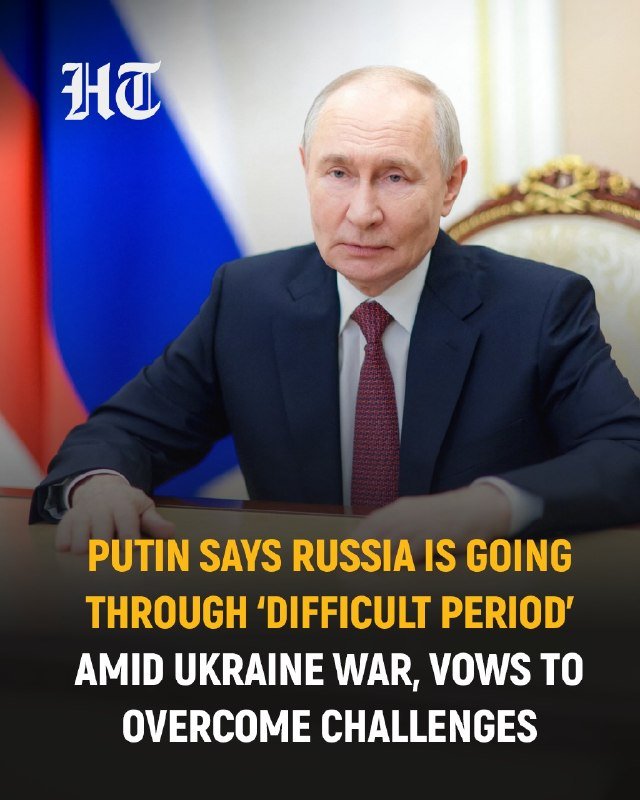
On 28 June 2026, three separate open-source channels carried the same line in quick succession: Vladimir Putin says Alexander Lukashenko is not panicking over Volodymyr Zelensky's sharp remarks. The translation account @war_translated posted the line at 19:55 UTC via Clash Report; the same beat appeared on the Wartranslated feed at 20:28 UTC; and the OSINTLive Telegram channel echoed it at 20:54 UTC. The convergence is the story. What looks like a single offhand Kremlin remark is in fact a coordinated piece of information choreography, designed to do three things at once: reassure Minsk, deter Kyiv, and reassure Western capitals that Belarus will not be a launchpad for escalation in the near term.
The substance behind the choreography is thin. Putin's framing — Lukashenko calm, Lukashenko unmoved — tells a reader almost nothing about Belarusian force posture, air-defence readiness, or the disposition of the Southern Operational Command in Gomel. It tells a reader a great deal about how the Kremlin wants the war's information environment to look on a Sunday evening in late June. That is worth examining on its own terms.
What was actually said
The circulated quote is a single sentence: that Lukashenko is not panicking because of Zelensky's sharp remarks. No source item sets out what those remarks were, when they were made, or what specific capability or action Kyiv was threatening. Without that, the line functions less as a factual claim and more as a piece of theatre. The Russian read is straightforward: Zelensky blusters; Lukashenko, backed by Moscow, absorbs. The Ukrainian read — that Zelensky's public warnings have a coercive function aimed at constraining Belarusian use as a staging ground — does not appear in the items, but is the structural reason such remarks are made in the first place.
Three independent channels carrying the same line within an hour is unusual. It suggests an active push from Russian-aligned communicators rather than organic reporting. @war_translated's 20:28 UTC post sits beside the 19:55 UTC Clash Report version and the 20:54 UTC OSINTLive line, and the wording is nearly identical. In wartime information environments, repetition is itself a signal.
Why Belarus matters at this moment
Belarus's role in the Russia–Ukraine war has been quieter in 2026 than at the invasion's outset, but it has not gone away. Belarusian territory hosted the initial northern thrust toward Kyiv in February 2022, and Minsk continues to provide logistics, training space and permissive airspace for Russian operations. The standing question for Western planners — and for Kyiv — is whether Minsk would host a new offensive, accept Russian nuclear assets on its soil under the terms of the announced deployment, or be drawn more directly into the conflict through a provocation incident. The Lukashenko-is-calm line is meant to push that question to the margins for at least one news cycle.
The counter-narrative, in plain language, is that calm on the surface is the default Belarusian posture regardless of circumstances. Minsk has every incentive to project composure, both to discourage Western sanctions tightening and to signal to Moscow that it remains a reliable partner. A reading that takes the Kremlin's reassurance at face value would mistake a managed public-facing posture for genuine strategic restraint.
What the framing does
Three audiences are being addressed simultaneously. The first is Belarusian — the message that Moscow does not see Minsk as exposed, and that support is unconditional. The second is Ukrainian — the message that threats from Kyiv will not move the Belarusian leadership, and that escalation in rhetoric will be matched by escalation in tone from Moscow. The third is Western — the message that the war is being managed, that no second front is imminent, and that headlines about Belarusian panic are misplaced.
Each audience gets a tailored reassurance packaged inside the same sentence. That is the structural point worth holding onto: in the Russia–Ukraine information environment, a single line can do three jobs at once, and the absence of detail in the source items is itself a tell. Reporting that quotes the line without naming its audience architecture leaves the reader with the Kremlin's preferred framing intact.
Stakes and what remains uncertain
The near-term stakes are familiar but real. If Minsk does host a fresh Russian push, the war's geographic scope widens and NATO's eastern flank — Poland, Lithuania, Latvia — moves closer to direct confrontation. If Minsk remains a quiet rear base, the front stays where it is. The Lukashenko-is-calm framing is designed to keep Western publics and policymakers in the second scenario by default.
What the sources do not specify is whether Zelensky's "sharp remarks" referred to specific Belarusian actions — a recent airspace violation, a missile transit, a movement of forces — or were a more general warning. The source items are not detailed enough to adjudicate that, and a reader relying only on these channels would be wise to hold the question open. The one thing that can be said with confidence is that the line travelled widely and quickly on 28 June 2026, and that travel pattern is the news.
This article reflects how Monexus reads the same three Telegram channels that drove the wire; the framing here treats the Kremlin's reassurance as a communications artefact rather than as a neutral report on Belarusian sentiment.
Wire provenance
This editorial synthesis draws on the following public wire/social posts:
- https://t.me/osintlive
- https://t.me/wartranslated
- https://t.me/ClashReport